Quick Answer: What is the best 3 week Egypt itinerary for 2027?
The best 3 week Egypt itinerary combines Cairo, the Pyramids of Giza, Alexandria, Luxor, a Nile cruise to Aswan, Abu Simbel, and the Red Sea over 21 days. Spend your first week exploring Cairo and Alexandria, your second week discovering ancient temples along the Nile, and your final week enjoying southern Egypt and the Red Sea before returning to Cairo for departure.
Three weeks in Egypt gives you something shorter itineraries rarely offer: enough time to visit the country’s most important archaeological sites without spending every day rushing between attractions.
You can stand beside the Great Pyramid of Khufu, explore the treasures of Tutankhamun at the Grand Egyptian Museum, walk through decorated royal tombs in Luxor, sail past Nile villages, and visit the enormous rock-cut temples of Abu Simbel. You can also discover Alexandria’s Mediterranean character and spend several days swimming or snorkeling in the Red Sea.
The challenge is not finding enough things to do. It is organizing them efficiently.
Egypt stretches across a large geographic area, and journeys that look short on a map can require several hours of driving, a domestic flight, or a scheduled cruise departure.
This 21-day Egypt itinerary for 2027 is designed around those realities. It includes realistic sightseeing days, practical transportation advice, alternative routes, budget estimates, hotel recommendations by area, seasonal considerations, and ways to customize the journey without making it exhausting.
3 Week Egypt Itinerary at a Glance
The recommended route begins and ends in Cairo, making it practical for international visitors arriving through Cairo International Airport.
| Day | Location | Main experience | Overnight |
| 1 | Cairo | Arrival, hotel check-in, relaxed evening | Cairo |
| 2 | Giza | Pyramids, Sphinx, Grand Egyptian Museum | Cairo |
| 3 | Saqqara and Dahshur | Step Pyramid and early pyramid history | Cairo |
| 4 | Cairo | Egyptian museums, Islamic and Coptic Cairo | Cairo |
| 5 | Alexandria | Bibliotheca Alexandrina, Qaitbay Citadel | Alexandria |
| 6 | Alexandria to Cairo | Catacombs, return journey | Cairo |
| 7 | Luxor | Fly south, Nile waterfront and Luxor Temple | Luxor |
| 8 | Luxor | Karnak Temple and the East Bank | Luxor |
| 9 | Luxor | Additional West Bank sites or Dendera | Luxor |
| 10 | Luxor | Board a four-night Nile cruise | Nile cruise |
| 11 | Luxor to Edfu | Valley of the Kings, Hatshepsut Temple, sailing | Nile cruise |
| 12 | Edfu to Aswan | Edfu Temple, Kom Ombo Temple | Nile cruise |
| 13 | Aswan | Philae Temple, High Dam, Nile scenery | Nile cruise |
| 14 | Aswan | Disembark, Elephantine Island and felucca | Aswan |
| 15 | Abu Simbel | Visit the temples of Ramses II | Aswan |
| 16 | Aswan to Hurghada | Travel to the Red Sea | Hurghada |
| 17 | Hurghada | Snorkeling or diving | Hurghada |
| 18 | Hurghada | Beach relaxation and optional excursion | Hurghada |
| 19 | Hurghada | Free day, marine activities or resort | Hurghada |
| 20 | Cairo | Return flight, final sightseeing or shopping | Cairo |
| 21 | Cairo | Departure from Egypt | — |
Total duration: 21 days and 20 nights.
Best for: First-time visitors, couples, families, cultural travelers, and visitors who want both ancient history and relaxation.
Recommended transport: Domestic flights, one Cairo–Alexandria round trip, private transfers where helpful, and a four-night Nile cruise.
Planning note: This is a sample sequence rather than a fixed sailing schedule. Most Nile cruises operate on particular departure days. Arrange the cruise first, then adjust the surrounding dates to match the vessel’s actual itinerary.
Is Three Weeks Enough to Explore Egypt?
Three weeks is enough to experience Egypt’s major historical regions, enjoy a Nile cruise, explore the Mediterranean coast, and spend time at the Red Sea.
It is not enough to see every interesting place in Egypt, nor should that be the goal.
Egypt contains several distinct travel regions, each offering a different experience.
Greater Cairo and Giza provide the country’s most famous pyramids, major museums, medieval architecture, historic neighborhoods, and a lively modern capital.
Alexandria offers a Mediterranean atmosphere shaped by ancient Egyptian, Greek, Roman, and later Egyptian history.
Luxor contains some of the world’s most important surviving temples and royal burial grounds, including Karnak Temple and the Valley of the Kings.
Aswan and Abu Simbel reveal the landscapes and monuments of southern Egypt, including Nubian cultural heritage and temples associated with Ramses II and Isis.
The Red Sea coast offers a different kind of vacation, with coral reefs, marine life, swimming, snorkeling, and beach resorts.
A carefully planned three-week journey connects these regions while leaving space for meals, rest, unexpected delays, and spontaneous experiences.
Why 21 days can be better than a faster itinerary
A typical one-week Egypt trip may concentrate on Cairo and Luxor. A two-week vacation can usually include Aswan and a Nile cruise.
With 21 days, you gain flexibility rather than simply adding more attractions.
You can spend a full morning at the Pyramids instead of rushing through a short photo stop. You can visit the Grand Egyptian Museum without immediately heading to the airport. You can explore Luxor beyond the standard temple circuit and dedicate several days to the Red Sea.
Three weeks also makes it easier to recover from an overnight international flight, avoid sightseeing during the hottest part of the day, and organize a more comfortable pace for children or older travelers.
What should you avoid trying to fit into three weeks?
The biggest mistake is assuming that three weeks means you must visit every famous Egyptian destination.
Trying to combine Cairo, Alexandria, Siwa, the White Desert, Luxor, Aswan, Abu Simbel, Hurghada, Sharm El Sheikh, Dahab, and Mount Sinai can turn a vacation into a succession of long transfers.
A more rewarding plan focuses on several complementary regions and explores them properly.
Travelers especially interested in desert landscapes can replace Alexandria or part of the Red Sea stay with a properly organized desert excursion, subject to current safety advice and permit requirements.
For additional inspiration beyond this route, explore the most interesting places to visit in Egypt.
Week One: Cairo, the Pyramids of Giza, Saqqara, and Alexandria
The first seven days introduce Egypt’s ancient history, urban culture, and Mediterranean heritage.
Cairo is the best starting point for many international travelers because of its airport connections, broad accommodation choices, and proximity to the Giza pyramid complex.
Allowing several nights in the capital also reduces the pressure to visit important attractions immediately after arrival.
Day 1: Arrive in Cairo and Settle Into Egypt
Your three-week Egypt itinerary begins at Cairo International Airport.
After immigration, baggage collection, and any necessary arrival procedures, transfer to your hotel. Depending on traffic and your accommodation’s location, reaching central Cairo or Giza may take considerably longer than the distance suggests.
For a first visit, arranging an airport transfer in advance can simplify your arrival, particularly if your flight lands late at night.
Touring In Egypt offers Cairo airport transfers for travelers who prefer an organized arrival.
Choose your first accommodation based on what matters most.
If you want easy access to restaurants, museums, and central neighborhoods, consider Downtown Cairo, Garden City, or Zamalek.
If seeing the pyramids early is a priority, accommodation in Giza can make sense, although some pyramid-view hotels are farther from central Cairo’s other attractions.
Do not schedule the Pyramids or an important museum visit immediately after a long international flight unless you have a very comfortable arrival time.
Instead, keep the afternoon flexible.
A short walk along the Nile, dinner at your hotel, or a relaxed meal at a nearby restaurant is enough for the first evening.
Traditional dishes worth trying include koshari, molokhia, grilled kofta, and Egyptian-style rice dishes. Choose a reputable restaurant and give yourself time to adjust to the local food and climate.
Suggested schedule:
- Arrival and transfer to the hotel.
- Check-in and rest.
- Short neighborhood walk if time allows.
- Dinner and an early night.
Where to stay: Cairo or Giza.
Practical tip: Keep your passport, hotel address, and airport transfer contact information readily accessible. Do not place essential medication or valuables in checked luggage.
Day 2: Explore the Pyramids of Giza, the Great Sphinx, and the Grand Egyptian Museum
Your first major sightseeing day introduces one of the most recognizable archaeological landscapes in the world.
The Pyramids of Giza stand on the Giza Plateau west of central Cairo. The three principal royal pyramids were constructed during Egypt’s Fourth Dynasty.
The largest, the Great Pyramid of Khufu, is the only surviving Wonder of the Ancient World.
Nearby stand the pyramids of Khafre and Menkaure, smaller royal pyramids, tombs, temple remains, and the Great Sphinx.
Start your visit early to avoid the strongest midday sunshine and to give yourself enough time to appreciate the entire archaeological site.
Do not underestimate the distances between monuments. Exploring the plateau involves substantial walking, and some areas are exposed to direct sunlight.
Begin with the Great Pyramid and surrounding archaeological landscape.
Next, explore the panoramic viewpoints where the major pyramids can be seen together. Finish the outdoor portion of your visit near the Great Sphinx and its associated temple.
Entering a pyramid can be memorable, but it is not essential for everyone.
Interior passages are generally narrow, physically demanding, and sometimes uncomfortable for visitors with claustrophobia or mobility limitations. Separate admission may be required for particular interiors.
The standard plateau ticket and special pyramid-interior tickets should not be assumed to cover the same experiences.
After a break for lunch, continue to the Grand Egyptian Museum.
The museum is located near the Pyramids and has become an essential part of a modern Cairo itinerary.
Its visitor experience includes major galleries devoted to ancient Egyptian civilization, the Grand Hall, the Grand Stairs, the Tutankhamun Galleries, and the Khufu’s Boats Museum.
Official Ticketing Website
+1
The museum deserves several hours, particularly if you want to understand the historical context behind the monuments you will see later in Luxor and Aswan.
Consider arranging a guided museum visit if you want detailed explanations of ancient Egyptian religion, royal authority, funerary traditions, and major archaeological discoveries.
Suggested schedule:
| Time | Activity |
| Early morning | Depart your Cairo or Giza hotel |
| Morning | Great Pyramid, Giza Plateau, panoramic viewpoints |
| Late morning | Great Sphinx and surrounding complex |
| Midday | Lunch and rest |
| Afternoon | Grand Egyptian Museum |
| Evening | Return to your hotel and dinner |
These times are flexible planning blocks, not guaranteed attraction appointments.
Where to stay: Cairo.
What to skip if time is limited: A pyramid-interior visit, additional photo stops, or optional shopping appointments. Give priority to the outdoor monuments and museum.
Important: Confirm your museum admission time and the latest visitor procedures before your trip. The Grand Egyptian Museum and Giza Plateau use separate ticketing systems, and admission arrangements may change before 2027.
Day 3: Discover Saqqara, Dahshur, and the Evolution of Egyptian Pyramids
After seeing the pyramids of Giza, travel south to explore the earlier stages of royal pyramid construction.
This day explains an important question: how did Egyptian builders develop the engineering techniques that eventually produced the Great Pyramid?
Start at the Saqqara Necropolis.
Saqqara served as an important burial region for ancient Memphis and contains monuments dating across many periods of Egyptian history.
Its most famous structure is the Step Pyramid of Djoser, associated with the Third Dynasty and the architect Imhotep.
Unlike the smooth-sided pyramids at Giza, the Step Pyramid rises in a series of superimposed levels.
It represents a major development in monumental stone architecture and helps illustrate the transition from earlier rectangular tomb forms, known as mastabas, toward increasingly ambitious royal tomb complexes.
Spend time exploring the surrounding architectural remains, where accessible.
Depending on which monuments are open during your visit, you may also be able to see beautifully decorated tombs that illustrate agriculture, hunting, craft production, food preparation, and everyday life in ancient Egypt.
These smaller monuments often provide historical detail that is less obvious at the much larger pyramids.
Continue to Dahshur, another important pyramid field south of Cairo.
Two major attractions are the Bent Pyramid and the Red Pyramid, associated with Pharaoh Sneferu.
The Bent Pyramid is especially interesting because its exterior angle changes partway up the structure.
The Red Pyramid demonstrates a later stage in the development of smooth-sided pyramid construction.
Together, Saqqara, Dahshur, and Giza form an unusually clear architectural story.
The wider Memphis necropolis, including the pyramid fields from Giza to Dahshur, forms part of a UNESCO World Heritage property.
UNESCO World Heritage Centre
Should you visit Memphis as well?
Memphis can be included if your schedule allows, particularly if you want to explore the archaeological remains of the ancient capital.
However, there is a difference between historic importance and the amount a visitor can see today.
Saqqara and Dahshur generally offer the more extensive pyramid and tomb experiences.
For travelers who prefer not to rush, prioritize those two archaeological sites and treat Memphis as an optional addition.
Where to stay: Cairo.
Recommended transport: Private driver or guided excursion. Combining all three areas using multiple ride-hailing journeys can be inefficient.
Allow: Most of a day, including road transfers.
Practical tip: Bring drinking water, sun protection, and comfortable footwear. Archaeological sites outside central Cairo may have limited facilities.
Day 4: Explore Islamic Cairo, Coptic Cairo, and Egypt’s Museums
Ancient monuments are only one part of Egypt’s story.
Day four focuses on the development of Cairo as a religious, cultural, political, and commercial center.
Begin in historic Islamic Cairo.
One of the most impressive landmarks is the Saladin Citadel, a major medieval defensive complex overlooking the city.
Within the Citadel, the Mosque of Muhammad Ali is particularly recognizable for its Ottoman-inspired architecture and prominent domes and minarets.
From the elevated terraces, you can appreciate the scale of Greater Cairo.
Continue to the historic streets around Al-Muizz Street, where monumental gateways, mosques, schools, and historic buildings reflect different periods of Islamic Egyptian history.
A visit to the Khan El Khalili Bazaar adds a different atmosphere.
The district contains traditional shops, workshops, souvenir sellers, cafes, and busy pedestrian streets.
Rather than treating the bazaar as a compulsory shopping stop, spend time observing the architecture and the commercial life of the surrounding neighborhood.
In the afternoon, explore Coptic Cairo.
The area includes churches and historic religious sites associated with Egypt’s long Christian history.
One of the best-known monuments is the Hanging Church, famous for its position above an ancient Roman gatehouse.
Nearby religious landmarks offer additional context about the development of Christianity in Egypt.
Which Cairo museum should you visit?
If your main priority is the Grand Egyptian Museum, Day 2 already provides a major archaeological experience.
For Day 4, choose the museum that best matches your interests.
The National Museum of Egyptian Civilization, often abbreviated NMEC, is particularly relevant for visitors interested in Egypt’s broader historical development and royal mummies.
The Egyptian Museum in Tahrir Square offers a different museum atmosphere and an extensive collection of ancient artifacts.
The two institutions should not be confused with the Grand Egyptian Museum in Giza.
Visitors who want detailed historical interpretation may enjoy the National Museum of Egyptian Civilization.
However, fitting Islamic Cairo, Coptic Cairo, and a large museum into one day can be demanding.
Choose two primary areas, then make the third optional.
Best balanced schedule: Citadel and Islamic Cairo in the morning, followed by Coptic Cairo or NMEC in the afternoon.
Best museum-focused schedule: NMEC in the morning, Coptic Cairo afterward, and Khan El Khalili in the evening.
Where to stay: Cairo.
Practical tip: Dress respectfully when visiting active religious buildings, and check prayer-time restrictions or visitor access arrangements before arriving.
Day 5: Travel to Alexandria and Explore Egypt’s Mediterranean Coast
Leave Cairo for Alexandria, Egypt’s major Mediterranean city.
Alexandria was founded by Alexander the Great in 331 BC and later became one of the Mediterranean world’s most influential cultural and intellectual centers.
Its atmosphere feels different from Cairo.
While the capital is known for its dense urban landscape and proximity to ancient pyramid fields, Alexandria is closely associated with the sea, its waterfront, and a blend of Greek, Roman, Egyptian, and later architectural influences.
Travel between Cairo and Alexandria is possible by train or private vehicle.
Fast rail services can take approximately two and a half to three hours, although schedules, train categories, station choices, and journey times vary. Allow additional time for transfers at either end.
After arrival, check into your hotel and begin exploring the waterfront.
The modern Bibliotheca Alexandrina is an appropriate first stop.
It is a contemporary cultural institution inspired by Alexandria’s historical association with the ancient Library of Alexandria, rather than a surviving building from that original institution.
The complex includes important cultural and exhibition spaces, with access depending on current programs and ticket arrangements.
Continue to the Citadel of Qaitbay.
This fifteenth-century fortress stands near the location traditionally associated with the ancient Lighthouse of Alexandria, one of the Seven Wonders of the Ancient World.
The lighthouse no longer survives as an intact monument, but the location remains historically significant.
Spend time enjoying views of the Mediterranean and Alexandria’s waterfront.
Later, walk along a suitable section of the Corniche and enjoy a seafood dinner.
Why stay overnight in Alexandria?
Although Alexandria can be visited as a long day trip from Cairo, staying overnight offers a more comfortable experience.
You avoid spending much of one day traveling in both directions.
An overnight stay also provides an opportunity to explore the waterfront in the evening, visit additional archaeological sites the following morning, and experience the city beyond its main attractions.
Where to stay: Alexandria, preferably in a convenient waterfront or central location.
Recommended duration: One night for this route, although two nights are worthwhile if you can shorten another section.
Practical tip: Alexandria can feel more humid and windy than inland Egypt. During cooler months, bring a light jacket for the evening.
Day 6: Visit Alexandria’s Catacombs and Return to Cairo
Begin the morning with one of Alexandria’s most distinctive archaeological monuments.
The Catacombs of Kom El Shoqafa are an underground funerary complex dating to the Roman period.
Their architectural and decorative features reflect the interaction of Egyptian, Greek, and Roman cultural traditions.
This blending is especially important to understanding Alexandria’s identity during the centuries after Alexander the Great.
The catacombs include subterranean spaces and stone carvings associated with burial practices.
Visitors should expect stairs and enclosed underground areas, which may not be suitable for everyone.
Afterward, consider visiting Pompey’s Pillar, a monumental Roman column standing within the archaeological area of the Serapeum.
Despite its familiar name, the column was not erected in honor of Pompey the Great. It is associated with the Roman emperor Diocletian.
If you prefer a slower morning, replace the second monument with additional waterfront time or a visit to a local cafe.
Return to Cairo by train or private vehicle in the afternoon.
Stay overnight in the capital, ideally somewhere convenient for your flight to Luxor the following day.
This return to Cairo may appear to involve backtracking, but it makes practical sense when using a direct domestic flight from Cairo to Luxor.
You can also avoid transporting all your luggage between Cairo and Alexandria if your Cairo accommodation allows secure storage and you are returning to the same hotel.
Where to stay: Cairo.
Recommended activity level: Moderate, with one main archaeological stop before traveling.
What to avoid: Scheduling a late return to Cairo followed immediately by a very early flight without sufficient rest.
Week Two: Luxor, the Valley of the Kings, and a Nile Cruise to Aswan
The second week is the historical centerpiece of this three-week Egypt itinerary.
After returning from Alexandria, travel south to Luxor and begin exploring the monuments of ancient Thebes.
The city contains extraordinary evidence of ancient Egyptian religious life, royal power, temple construction, and funerary traditions.
It also provides one of the most popular starting points for a Nile cruise to Aswan.
Day 7: Fly from Cairo to Luxor and Explore the Nile Waterfront
Take a domestic flight from Cairo to Luxor.
Direct flights generally take around one hour in the air, but the complete journey requires additional time for airport transfers, security, baggage collection, and hotel check-in.
Traveling by air is usually the most convenient choice if you want to maximize your sightseeing time.
An overnight sleeper train is another possibility, especially for travelers who enjoy train travel. However, it should be regarded as a transportation experience rather than a guaranteed substitute for a comfortable hotel night.
After arriving in Luxor, transfer to your hotel.
Most visitors choose accommodation on the East Bank, where many restaurants, shops, and hotels are located.
The West Bank is generally quieter, with more rural surroundings and convenient access to several major archaeological sites.
Spend the afternoon exploring Luxor at a relaxed pace.
You might walk near the Nile, enjoy lunch overlooking the river, or take a short boat ride when conditions permit.
If your arrival time allows, visit Luxor Temple.
This major temple complex stands near the center of modern Luxor and was developed during different periods of ancient Egyptian history.
It is particularly associated with Amenhotep III and Ramses II.
The temple’s monumental entrance, columns, statues, and courts provide an excellent introduction to the architecture of the New Kingdom.
Luxor Temple also has a strong historical connection to the annual Opet Festival, during which sacred images were transported between Karnak and Luxor.
Is Luxor Temple worth visiting in the evening?
Yes. An evening visit can be especially atmospheric when illuminated areas create dramatic contrasts between the massive stone columns and surrounding darkness.
However, evening visiting opportunities depend on the attraction’s current opening arrangements.
Confirm the available entry times before planning your day.
If you arrive too late or feel tired after traveling, save Luxor Temple for another suitable time rather than rushing.
Where to stay: Luxor.
Recommended pace: Light sightseeing after a domestic flight.
Important: Coordinate your independently planned Luxor visits with the sightseeing included in your future Nile cruise. Many cruise programs already include Luxor Temple and Karnak, so avoid paying for the same guided visit twice.
Day 8: Explore Karnak Temple and the Historic East Bank
Dedicate much of the morning to one of ancient Egypt’s largest and most important religious complexes.
The Karnak Temple complex developed over many centuries and contains monuments associated with numerous pharaohs.
Its best-known area is the Precinct of Amun-Re.
Here, enormous columns, gateways, obelisks, statues, sacred spaces, and decorated walls illustrate the political and religious importance of ancient Thebes.
The Great Hypostyle Hall is among Karnak’s most impressive architectural achievements.
Its forest of massive stone columns makes the scale of ancient Egyptian temple construction immediately apparent.
Rather than rushing from one famous monument to another, allow time to examine the carved inscriptions and reliefs.
A knowledgeable guide can explain how the temple functioned, why successive kings expanded it, and how religious ceremonies reinforced royal authority.
Karnak was not constructed as a single project.
Different rulers contributed buildings, inscriptions, renovations, and ceremonial spaces over a long historical period.
This is why the complex can feel less like one temple and more like an entire sacred landscape.
What should you look for at Karnak?
Begin with the monumental approach and entrance.
Continue toward the major courts and the Great Hypostyle Hall.
Pay attention to the differences between architectural styles, inscriptions, and royal names.
If open and included in your chosen route, explore the Sacred Lake area and additional temple structures.
Allow approximately two to three hours for a meaningful visit, potentially longer for travelers with a strong archaeological interest.
After Karnak, take a lunch break and avoid scheduling an overly demanding afternoon.
If you already visited Luxor Temple on Day 7, consider spending the afternoon exploring Luxor Museum, enjoying the Nile waterfront, or visiting a local market.
If your cruise includes a mandatory Karnak tour, exchange today’s Karnak visit for Luxor Museum or another attraction that will not be repeated.
Where to stay: Luxor.
What to prioritize: Karnak’s principal monuments rather than attempting to cover every corner of the complex.
Practical tip: Large temple courtyards offer limited shade. Begin early, wear suitable footwear, and carry enough water.
Day 9: Discover More of Luxor’s West Bank or Visit Dendera Temple
Most short Egypt itineraries concentrate on the Valley of the Kings and Hatshepsut Temple.
With three weeks in Egypt, you have time to explore less frequently visited areas of Luxor’s archaeological landscape.
One option is Medinet Habu, the mortuary temple complex particularly associated with Ramses III.
Its monumental entrance, courtyards, reliefs, and architectural remains provide important evidence of New Kingdom royal ideology and temple decoration.
Another option is the Ramesseum, the mortuary temple of Ramses II.
The surviving columns, courts, and remnants of colossal royal statues offer an interesting contrast to the better-preserved temples of Karnak.
Depending on current visitor access, you could also visit the ancient workers’ village at Deir el-Medina.
The settlement was associated with artisans and workers involved in constructing and decorating royal tombs in the Theban necropolis.
Its surviving remains help explain the lives of people who worked on some of ancient Egypt’s most elaborate burial monuments.
Alternative: Take a day trip to Dendera Temple
If you prefer another major temple rather than several West Bank sites, consider visiting the Temple of Dendera.
Dendera lies north of Luxor, near Qena.
The temple complex is especially associated with the goddess Hathor and is celebrated for its architectural decoration, columns, astronomical imagery, and preserved ceiling reliefs.
A visit provides an opportunity to compare temple decoration from different periods of Egyptian history.
However, Dendera requires a substantial road journey. Do not assume it can be casually combined with several major Luxor attractions.
Choose one of the following approaches:
| Travel interest | Best Day 9 plan |
| Deep archaeology | Medinet Habu, Ramesseum, and selected West Bank remains |
| Temple architecture | Dendera Temple day trip |
| Slower sightseeing | Luxor Museum, a short Nile excursion, and a relaxed afternoon |
| Photography | Carefully timed temple visits with a less crowded schedule |
| Family travel | One archaeological site followed by rest |
Where to stay: Luxor.
Important: If your cruise itinerary does not include the Valley of the Kings, use this day to visit it instead of the optional sites.
Day 10: Board Your Nile Cruise in Luxor
Today marks the beginning of one of the most enjoyable parts of a three-week Egypt vacation.
Board a Nile cruise ship in Luxor for a scheduled four-night journey toward Aswan.
The classic Luxor-to-Aswan cruise normally takes five calendar days and four nights, with sightseeing at major archaeological sites along the route.
A typical program includes Luxor, the West Bank, Edfu, Kom Ombo, and Aswan.
The actual sequence depends on the ship, departure date, river navigation, and tour arrangements. Operators publish different schedules, so do not treat the sample itinerary as a confirmed sailing timetable.
Solaris Nile Cruises
+1
You can explore available options through Touring In Egypt’s Nile cruise itineraries.
What happens on the first cruise day?
Many vessels arrange embarkation before lunch.
After check-in, guests usually receive their cabin assignments and information about meals, sightseeing, and ship facilities.
Some cruise programs include a guided East Bank visit on the first day.
Others may have different arrangements depending on their sailing schedule.
Because this three-week plan already provides several independent days in Luxor, ask whether included excursions can be customized or adjusted.
You may decide to skip a repeated guided visit and use the afternoon to enjoy the ship instead.
Keep in mind that cruise excursions are often organized as group activities with fixed departure times.
Skipping an included excursion does not necessarily result in a refund.
What makes a Nile cruise different from a land tour?
A Nile cruise combines accommodation, transportation along the river, meals, and scheduled sightseeing.
It also introduces travelers to the landscape between the major archaeological cities.
You will see cultivated riverbanks, agricultural settlements, boats, palm groves, and everyday activity along the Nile.
These scenes provide a geographical context for the ancient civilization that developed around the river.
Most standard cruise ships are floating hotels rather than small traditional sailing vessels.
If you want a quieter or more intimate experience, investigate smaller boats or dahabiyas, while recognizing that their routes, prices, and schedules can differ.
Where to stay: Nile cruise ship in Luxor.
Practical tip: Confirm whether your booking includes temple entrance tickets, guiding, transfers, beverages, tips, and optional excursions. An advertised cruise price may not cover every expense.
Day 11: Visit the Valley of the Kings and Sail Toward Edfu
The Valley of the Kings is one of Egypt’s most significant archaeological sites.
Located on Luxor’s West Bank, it served as a royal burial area during the New Kingdom.
Its rock-cut tombs contain passages, chambers, painted religious scenes, and funerary texts associated with the ancient Egyptian understanding of the afterlife.
The tomb of Tutankhamun was discovered here in 1922 by the archaeological team led by Howard Carter.
Although Tutankhamun is internationally famous, his tomb is relatively small compared with several other royal burials in the valley.
Different tombs offer different combinations of architectural scale, wall decoration, and preservation.
Explore the Valley of the Kings with enough time to appreciate the details rather than attempting to enter every available tomb.
Which tombs should you choose?
Your selection depends on the tombs open during your visit.
Some have exceptionally vivid wall paintings. Others are notable for long corridors, unusual burial architecture, or important royal associations.
The standard entry ticket generally covers a specified selection of available tombs, while certain special tombs require separate tickets.
These arrangements can change, so choose your tombs after checking the current official ticketing information.
Do not assume that purchasing a general Valley of the Kings ticket grants entry to every burial chamber.
Continue to the Mortuary Temple of Hatshepsut.
The temple stands beneath dramatic limestone cliffs at Deir el-Bahari and is associated with one of ancient Egypt’s most important female pharaohs.
Its terraces, colonnades, reliefs, and natural setting make it architecturally distinctive.
Hatshepsut’s reign is particularly associated with ambitious building projects and an expedition to the land of Punt.
Afterward, stop at the Colossi of Memnon, two immense seated statues originally associated with the mortuary temple of Amenhotep III.
Depending on the cruise schedule, the ship may begin sailing toward Esna and Edfu later in the day.
What is the Esna Lock?
The Esna Lock is part of the navigation infrastructure used by vessels traveling along this section of the Nile.
Cruise ships may pass through the lock during their journey between Luxor and Edfu.
The timing depends on navigation conditions, vessel schedules, and operational requirements.
Some passengers enjoy watching the lock passage, but it may happen at night or at a time that is inconvenient for viewing.
Where to stay: Nile cruise ship, following the scheduled route.
Recommended activity level: High during the morning, usually more relaxed during river navigation.
What to skip if necessary: Extra tomb tickets or optional sightseeing that would reduce your time at the main monuments.
Day 12: Explore Edfu Temple and Kom Ombo Temple
Today introduces two temples with very different architectural and religious significance.
The first major stop is usually Edfu.
The Temple of Edfu is dedicated to Horus and is among Egypt’s best-preserved ancient temple complexes.
Much of the surviving structure dates to the Ptolemaic period, when rulers of Greek descent governed Egypt while continuing many traditions of Egyptian kingship and religion.
Its monumental entrance, courtyards, decorated walls, and sanctuary reveal how traditional Egyptian religious architecture continued into the later periods of ancient history.
The temple’s inscriptions and reliefs contain information about rituals, mythological traditions, and religious ceremonies.
Allow time to examine its architectural proportions.
Although the temple is associated with Horus, it should not be interpreted simply as a building from the earliest pharaonic periods.
Its principal surviving form reflects much later Egyptian history.
After visiting Edfu, return to the cruise ship and continue sailing toward Kom Ombo.
Why is Kom Ombo Temple unusual?
The Temple of Kom Ombo is unusual because of its dual religious dedication.
It is associated with Sobek, the crocodile god, and Horus the Elder.
The temple’s architectural arrangement includes paired elements connected with these two deities.
Its location overlooking the Nile also makes it visually distinctive.
The archaeological complex contains reliefs, inscriptions, architectural remains, and displays associated with the local religious traditions.
A visit may also include the nearby Crocodile Museum, depending on admission and operating arrangements.
Kom Ombo offers a useful opportunity to understand how local cults and religious identities shaped temple design.
What should you expect during the cruise?
Cruise itineraries often involve early starts for archaeological excursions.
The sightseeing schedule is determined partly by the need to navigate between destinations.
This means you may have one morning with several planned activities followed by long periods on board.
Bring a small day bag containing water, sunscreen, a hat, tickets or identification when needed, and any essential medication.
Where to stay: Nile cruise ship.
Highlight: The contrast between Edfu’s monumental architecture and Kom Ombo’s riverside location.
Day 13: Explore Aswan, Philae Temple, and the Nile Islands
Your cruise reaches Aswan, one of the most attractive cities along the Nile.
The surrounding landscape differs noticeably from Cairo and Luxor.
Here, the river flows among islands, granite formations, and desert hills, creating some of Egypt’s most recognizable Nile scenery.
Aswan also has a long history as an important connection between ancient Egypt and lands farther south.
Depending on your ship’s itinerary, today may include the Aswan High Dam and Philae Temple.
The Temple of Philae is particularly associated with the goddess Isis.
The surviving temple complex stands on Agilkia Island, where monuments were relocated during the international campaign to protect Nubian heritage from the rising waters associated with dam construction.
Philae’s elegant columns, courts, and inscriptions make it one of southern Egypt’s most impressive archaeological sites.
Its setting on an island adds to the experience because reaching the complex requires a boat journey.
The relocation of Philae and the temples of Abu Simbel forms part of one of the twentieth century’s most significant international archaeological preservation efforts.
UNESCO World Heritage Centre
What about the Aswan High Dam?
The Aswan High Dam is a major modern engineering project associated with controlling Nile water flow and generating hydroelectric power.
Its construction transformed Egypt’s water management and contributed to the creation of Lake Nasser.
It also caused major changes to local environments, settlements, and archaeological landscapes.
Visiting the dam provides context for understanding why monuments such as Philae and Abu Simbel were relocated.
However, travelers primarily interested in ancient history may prefer to spend more time at Philae or along the Nile.
Should you visit a Nubian village?
A Nubian cultural visit can be worthwhile when organized respectfully.
Look for opportunities that support local residents, such as a community-led experience or a locally owned guesthouse.
Nubian culture includes distinctive languages, artistic traditions, architecture, music, and cuisine.
It should not be reduced to colorful buildings and souvenir photographs.
Ask permission before photographing residents, especially children, and respect any request not to take pictures.
If the ship’s schedule permits, finish the day with time on deck enjoying the Nile.
Where to stay: Nile cruise ship in Aswan.
Practical tip: Check your cruise excursion schedule before arranging any independent boat journey. Some visits may already be included.
Week Three: Abu Simbel, the Red Sea, and Your Final Days in Egypt
The final portion of this three-week journey combines southern Egypt’s extraordinary temples with time to relax by the Red Sea.
After several demanding archaeological days, the pace gradually becomes slower.
This balance is particularly valuable for visitors traveling a long distance from North America, Europe, or Australia.
Day 14: Disembark in Aswan and Explore Elephantine Island
After breakfast, disembark from your Nile cruise and transfer to a hotel in Aswan.
If your cruise finishes early in the morning, you may have most of the day available.
Avoid immediately scheduling another major excursion.
Instead, focus on experiences that show a quieter side of Aswan.
One option is Elephantine Island, located in the Nile opposite the city.
The island has a long history of settlement and contains archaeological remains associated with different phases of Egyptian civilization.
It also provides opportunities to observe the relationship between the Nile, island communities, and the surrounding landscape.
Depending on access and your interests, you might explore archaeological areas or enjoy a shorter local visit.
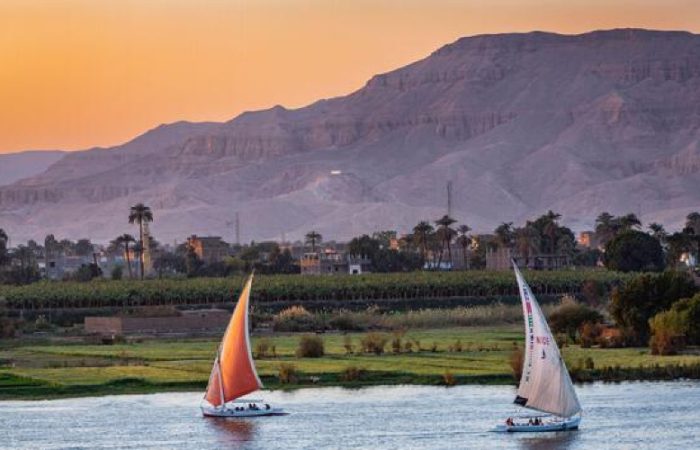
Take a traditional felucca ride
A felucca is a traditional sailing boat that uses wind power rather than a conventional motor.
A short felucca trip is one of the most enjoyable ways to experience Aswan’s river setting.
Sailing between the granite islands can provide views of the Nile that are very different from those seen aboard a large cruise ship.
However, felucca trips depend on wind and weather conditions.
Strong winds, unusually calm conditions, or operational restrictions may affect the route or duration.
Agree on the price, route, and duration before boarding.
If you prefer a more predictable journey, arrange an appropriate motorboat excursion instead.
In the evening, explore the local market area or enjoy dinner overlooking the water.
For more ideas, see this guide to Aswan’s main attractions.
Where to stay: Aswan.
Recommended pace: Relaxed.
Why an extra hotel night matters: It gives you time to experience Aswan outside your cruise’s fixed sightseeing schedule.
Day 15: Visit the Temples of Abu Simbel
For many travelers, Abu Simbel is one of the most memorable experiences of an Egypt vacation.
The Temples of Abu Simbel stand near Lake Nasser in southern Egypt.
They were commissioned during the reign of Ramses II in the thirteenth century BC.
The larger temple is especially famous for the four colossal seated statues of Ramses II that dominate its facade.
Inside, decorated halls and sanctuary spaces reflect royal power and religious traditions.
The smaller temple is associated with Queen Nefertari and the goddess Hathor.
The relationship between the two temples makes Abu Simbel particularly important for understanding the presentation of royal authority during the reign of Ramses II.
Why were the Abu Simbel temples moved?
The temples originally stood at a lower location that was threatened by rising water following the construction of the Aswan High Dam.
During the international Nubian monument rescue campaign, the temples were dismantled and reconstructed at a higher site.
The operation preserved much of their architectural appearance and decorative significance.
Today, the temples remain one of the best-known examples of international cooperation in archaeological conservation.
How do you get to Abu Simbel from Aswan?
The most common option is an organized road excursion.
Abu Simbel is approximately 280–300 kilometers from Aswan by road, depending on the starting point and route.
Allow roughly three to four hours each way, with additional time for the temple visit and stops.
As a result, a road excursion can occupy much of the day.
Some travelers choose to fly, but flight schedules and availability must be checked for the specific travel date.
For this itinerary, a private or shared road excursion is generally the most straightforward option.
Start early when appropriate, particularly during warmer months.
Confirm the departure schedule with a reputable operator who understands current road restrictions and visitor arrangements.
Should you stay overnight in Abu Simbel?
For most first-time visitors, a day trip from Aswan is sufficient.
However, staying overnight can make sense for travelers who want additional time near Lake Nasser or who prefer not to complete the round trip in one day.
With only 21 days and several other destinations included, this itinerary recommends returning to Aswan.
If you are planning a slower or more specialized archaeological trip, an overnight stay may be worthwhile.
What about the Abu Simbel Sun Festival?
Abu Simbel is associated with sunlight entering the larger temple’s interior on dates traditionally celebrated around February 22 and October 22.
These events attract additional visitor interest.
If your journey coincides with the celebrations, check the actual event arrangements, ticket categories, opening procedures, and transportation requirements.
Do not assume standard-day admission arrangements will apply.
Where to stay: Aswan.
Recommended activity level: High because of the long road journey.
Practical tip: Take a light breakfast, water, sun protection, and comfortable shoes. Keep the evening free for rest.
Day 16: Travel from Aswan to Hurghada
After exploring the ancient monuments of the Nile Valley, travel toward Egypt’s Red Sea coast.
Hurghada is a major resort city known for its beaches, marine activities, and access to the coral reefs of the Red Sea.
Getting from Aswan to Hurghada requires more planning than traveling between Cairo and Luxor.
Although the two cities appear relatively close on a map, convenient transportation connections are not always available.
There are three main possibilities.
Option 1: Direct domestic flight
Limited nonstop Aswan–Hurghada services have appeared in airline schedules, but they are not necessarily daily and may change seasonally.
Do not design your entire 2027 trip around an assumed direct flight unless the airline confirms it for your dates.
Option 2: Connecting flight through Cairo
A connecting domestic itinerary may be practical when schedules align.
However, the total travel time can be much longer than the flying time because of the connection, airport procedures, and possible delays.
Option 3: Private road transfer
A private transfer via the Nile Valley and the Eastern Desert is another possibility.
This can be a long day, potentially taking around eight to ten hours or more depending on the approved route, stops, traffic, and road conditions.
Confirm the route with an experienced, licensed transport provider and avoid informal arrangements for lengthy desert-road journeys.
Which option is best?
| Transport option | Main advantage | Main disadvantage |
| Direct flight, when operating | Shortest air journey | Limited dates and schedule uncertainty |
| Connecting flight | Avoids a very long road journey | Airport connection and extra travel time |
| Private vehicle | Door-to-door transportation | Long journey and fatigue |
| Combination of train and road transport | Possible alternative | More coordination and transfers |
For most travelers, choose the best confirmed flight connection or a professionally arranged private vehicle.
Treat Day 16 as a transportation day rather than a sightseeing day.
After reaching Hurghada, transfer to your resort, check in, and enjoy a relaxed dinner.
The next several days are deliberately less structured.
Where to stay: Hurghada.
Important: If a direct Aswan–Hurghada flight is essential to your preferred route, confirm its operating day before selecting the Nile cruise and hotel dates.
Day 17: Discover the Red Sea’s Coral Reefs
The Red Sea offers some of Egypt’s most rewarding marine experiences.
Its warm-water environments support a variety of coral formations and marine species, although reef conditions vary by location and are affected by environmental pressures.
Hurghada provides access to organized snorkeling and diving excursions suitable for different experience levels.
For first-time snorkelers, a supervised boat trip can be a good introduction.
An organized excursion may include transport from the hotel, snorkeling equipment, boat transfers, and selected reef stops.
However, inclusions differ between operators.
Ask about safety equipment, group size, the condition of the boat, and whether the trip is appropriate for your swimming ability.
You can explore the different options in this guide to snorkeling in Egypt.
Do you need to know how to swim?
Snorkeling is generally most suitable for people who are comfortable in the water.
Life jackets and flotation equipment may be available, but they do not replace supervision or basic water safety.
If you are not confident swimming, choose an operator offering appropriate assistance or consider a different marine experience.
Never enter deep or unfamiliar water beyond your ability.
What makes a good snorkeling excursion?
A good excursion emphasizes safety and environmental responsibility rather than simply visiting as many locations as possible.
Look for operators that:
- Explain safety procedures before departure.
- Provide suitable flotation equipment.
- Maintain boats and snorkeling equipment.
- Avoid overcrowding swimming areas.
- Respect protected marine environments.
- Prohibit touching or standing on coral.
- Adjust activities when weather conditions are unsuitable.
The objective should be to observe marine life without damaging its habitat.
After returning to Hurghada, spend the afternoon relaxing by the beach or swimming pool.
Where to stay: Hurghada.
Recommended activity: One well-organized snorkeling excursion rather than several rushed water activities.
Day 18: Enjoy a Relaxed Beach Day or Optional Red Sea Excursion
By this stage of your three-week Egypt itinerary, you will have visited numerous museums, temples, archaeological sites, and cities.
Day 18 is deliberately flexible.
One of the advantages of spending 21 days in Egypt is that you do not have to fill every morning with a scheduled excursion.
If you are staying at a beachfront resort, enjoy the hotel’s facilities.
Swim, read, rest, or spend time beside the sea.
Travelers interested in diving can investigate beginner experiences or certified diving trips, provided they meet the operator’s health and qualification requirements.
Others may enjoy a boat trip, a suitable coastal excursion, or a quieter day at the resort.
Should you visit Giftun Island?
Excursions to the Giftun Island area are popular among visitors staying in Hurghada.
Activities can include boat trips, beach stops, and snorkeling, depending on the itinerary and permitted areas.
Not all excursions offer the same experience.
Some emphasize organized beach facilities and social activities, while others focus more on marine life.
Choose according to your interests rather than assuming every island excursion is a wilderness experience.
Weather, marine regulations, environmental protection rules, and visitor access can affect operating arrangements.
Alternative: Explore Hurghada itself
If you prefer to remain on land, spend some time exploring the city.
You might visit the marina area, enjoy a seafood restaurant, or explore selected shopping districts.
Hurghada is primarily a coastal resort destination rather than an archaeological city, so do not expect the same concentration of historic monuments found in Cairo or Luxor.
For additional coastal ideas, explore Hurghada and its visitor attractions.
Where to stay: Hurghada.
Recommended pace: Flexible and unhurried.
Day 19: Spend Your Final Full Day on the Red Sea
Keep Day 19 relatively free.
This is your last complete day on the coast, so choose activities based on what you have enjoyed most.
If the weather prevented an earlier snorkeling trip, today may provide another opportunity.
If you have already completed several excursions, simply enjoy the beach.
Travelers celebrating a special occasion may prefer a private boat outing, a resort spa experience, or a relaxed dinner.
Families may appreciate a swimming pool or age-appropriate beach activities rather than another early-morning excursion.
Should you choose Hurghada or Marsa Alam?
Hurghada is generally convenient for travelers who want an established resort city with a broad selection of hotels, activities, and transportation services.
Marsa Alam, farther south on the Red Sea coast, appeals to visitors seeking particular reef experiences and a quieter resort setting.
However, changing from Hurghada to Marsa Alam introduces additional transportation requirements and may complicate your return to Cairo.
For this itinerary, remaining in one Red Sea location is more efficient.
If diving and marine life are the main priorities of your vacation, consider replacing Hurghada with Marsa Alam during the initial planning stage instead of attempting to visit both.
Why are four nights on the Red Sea useful?
Four nights give you three complete days plus time on the arrival and departure days.
That is usually enough to combine a major snorkeling excursion, optional diving or boating, and genuine relaxation.
It also creates some flexibility if sea conditions temporarily affect organized activities.
Where to stay: Hurghada.
Practical tip: Check the baggage allowance for your return flight, especially if you have purchased souvenirs or diving-related equipment during the trip.
Day 20: Return to Cairo for Your Final Night
Travel from Hurghada to Cairo.
A domestic flight is generally the most convenient option for this itinerary, provided a suitable departure is available.
Road transportation is possible but takes substantially longer.
Staying in Cairo on your final night is a deliberate planning decision.
It reduces the risk associated with attempting to connect a domestic flight to a separate international departure on the same day.
If your inbound domestic journey is delayed, you still have time to recover your schedule before leaving Egypt.
After arriving in Cairo, check into your hotel.
Choose accommodation according to your next day’s international departure.
An airport-area hotel may be practical for an early flight.
A centrally located hotel offers better access to restaurants, shopping, and additional sightseeing.
If you have sufficient time, return to a favorite neighborhood or explore somewhere you missed during your first week.
You could enjoy a final meal, buy souvenirs, or simply spend a relaxed evening in the city.
What are good souvenirs from Egypt?
Popular purchases include locally made textiles, decorative crafts, spices, jewelry, artwork, and traditional household items.
Quality varies considerably, so compare products and prices before buying.
Be cautious about objects represented as ancient artifacts. Do not purchase archaeological material or items of uncertain legal origin.
Antiquities are protected by Egyptian law, and attempting to export prohibited cultural property can have serious consequences.
If you want practical shopping advice, see the guide to Egyptian souvenirs.
Where to stay: Cairo.
Recommended pace: Light sightseeing or rest.
Travel priority: Check your international flight details, departure terminal, baggage allowance, and airport transfer arrangements.
Day 21: Depart from Cairo
Your final day depends on your international flight time.
For an early departure, arrange a reliable hotel-to-airport transfer and leave enough time for airport security, check-in, immigration procedures, and possible traffic.
For an afternoon or evening flight, you may have time for a leisurely breakfast or a short walk.
Avoid scheduling major archaeological visits unless your departure time provides a genuinely comfortable margin.
International travelers should follow their airline’s recommended airport arrival time rather than relying on general estimates.
Before leaving your hotel, check that you have your passport, travel documents, phone, chargers, medication, and personal belongings.
Your 21-day journey through Egypt is complete.
Over three weeks, you will have experienced the pyramids of the Old Kingdom, the monuments of New Kingdom Thebes, the religious architecture of later periods, the cultural heritage of Alexandria and Aswan, and the coastal environments of the Red Sea.
How Should You Travel Around Egypt During Three Weeks?
Transportation is one of the most important factors in designing a practical Egypt itinerary.
Egypt has domestic flights, intercity railways, buses, ferries, private vehicles, and local transportation systems.
However, the best method depends on the distance, the cities involved, your budget, and the amount of sightseeing you want to complete.
Domestic flights: Best for long-distance travel
Domestic flights can substantially reduce travel time between distant regions.
For this itinerary, the most useful potential flight segments are Cairo to Luxor, Aswan to Hurghada when a workable connection is available, and Hurghada to Cairo.
EgyptAir and other airlines have operated domestic routes within Egypt, but routes and frequencies should be verified for the actual travel dates.
Do not assume that a flight operating in October 2026 will operate on the same weekday or at the same time in 2027.
Booking early can provide a wider selection of flights, but the lowest fare is not always the best choice.
Check checked-baggage allowances, airport transfers, connection times, change conditions, and cancellation policies.
A cheaper flight that involves a long connection may cost you most of a vacation day.
Trains: Best for selected intercity journeys
Egypt’s railway network connects major cities along the Nile Valley and Delta.
The Cairo–Alexandria route is particularly useful for this itinerary.
Air-conditioned trains can offer a comfortable alternative to road transport, depending on the train category and service.
Sleeper trains between Cairo and Upper Egypt are another possibility.
However, not all trains provide the same facilities or travel experience.
Some services are faster, more comfortable, or more suitable for international visitors than others.
In addition, online booking eligibility and reservation procedures can differ by nationality and booking platform. The official Egyptian National Railways booking interface has displayed restrictions for foreign-nationality reservations, so confirm the available purchase method before relying on it.
obs.enr.gov.eg
+1
Private drivers: Best for complex sightseeing days
A private driver can be useful for excursions involving several separate monuments.
Examples include Saqqara and Dahshur, Luxor’s West Bank, and longer day trips to archaeological sites outside major cities.
A driver saves time negotiating individual journeys and can make the day more flexible.
However, a driver is not automatically an Egyptologist guide.
If you want historical explanations, confirm whether your excursion includes a qualified guide and whether that guide will accompany you inside the sites.
Always clarify the pickup time, route, waiting time, entrance fees, and whether there will be optional shopping stops.
Ride-hailing services and taxis
Ride-hailing applications operate in several Egyptian cities, but coverage and practical availability vary by location.
They can be useful for short urban transfers where service is available.
For major archaeological excursions or long journeys through unfamiliar areas, prearranged transport is often more convenient.
Agree on essential details before beginning a taxi journey, and use reputable providers.
Transportation comparison
| Journey | Recommended option | Main planning consideration |
| Cairo Airport to hotel | Prearranged transfer or reputable taxi | Traffic and arrival time |
| Cairo to Giza attractions | Private driver or suitable local transport | Multiple stops and congestion |
| Cairo to Saqqara and Dahshur | Private vehicle | Sites are geographically spread out |
| Cairo to Alexandria | Train or private vehicle | Station and hotel transfers |
| Cairo to Luxor | Domestic flight | Airport processing adds time |
| Luxor to Aswan | Nile cruise | Fixed departure and sailing schedule |
| Aswan to Abu Simbel | Organized road excursion | Long round-trip journey |
| Aswan to Hurghada | Confirmed flight itinerary or private road transfer | No guaranteed daily nonstop service |
| Hurghada to Cairo | Domestic flight | Allow a departure buffer |
The most expensive mistake is not necessarily choosing the wrong transport method. It is scheduling transportation so tightly that a delay causes you to lose prepaid excursions, hotel nights, or international flights.
How Much Does a 3 Week Egypt Itinerary Cost in 2027?
A three-week trip to Egypt can be planned at several budget levels.
Your total cost depends largely on hotel standards, the Nile cruise category, domestic flights, guided tours, private transportation, and travel dates.
It is useful to distinguish between independently booked travel and fully organized tour packages.
Independent travel allows flexibility, but it also requires you to coordinate flights, hotels, transfers, tickets, and excursions.
An organized package may simplify those arrangements, although inclusions and prices vary.
Estimated 21-day Egypt travel budget
The following figures are illustrative 2027 planning allowances in US dollars per person, not verified quotations or guaranteed market prices.
They assume two adults sharing accommodation, 20 nights in Egypt including a four-night Nile cruise, and a mix of paid sightseeing and transportation.
| Travel style | Estimated budget per person | What the allowance aims to cover |
| Budget-conscious | 2,000–3,200 | Modest hotels, economical cruise, selected shared excursions |
| Comfortable mid-range | 3,200–5,500 | Well-located hotels, comfortable cruise, domestic flights and some private guiding |
| Premium or luxury | 6,000–12,000+ | Higher-end hotels, premium cruise and extensive private services |
These are broad budgeting scenarios, not observed 2027 prices. International flights, travel insurance, personal shopping, unusually expensive dates, and major itinerary upgrades may increase the total.
Solo travelers may also pay more per person because they cannot split room and private-transfer costs with another traveler.
For a closer examination of individual expenses, consult the guide to how much a trip to Egypt costs.
Where does your money go?
The biggest expenses are not always the entrance tickets.
A three-week itinerary has several accommodation changes, long-distance transfers, and a multi-night cruise.
A practical budget should include:
- Accommodation: Hotels in Cairo, Alexandria, Luxor, Aswan, and Hurghada.
- Nile cruise: Cabin accommodation, meals, sightseeing, and any exclusions.
- Domestic flights: Cairo–Luxor, Aswan–Hurghada where applicable, and Hurghada–Cairo.
- Local transportation: Airport transfers, taxis, and private drivers.
- Entrance tickets: Pyramids, museums, temples, tombs, and special-access areas.
- Guides: Private or shared historical guiding where required.
- Meals: Restaurant meals not covered by your hotel or cruise.
- Activities: Snorkeling, diving, boat trips, and optional excursions.
- Additional expenses: Tips, SIM or eSIM, laundry, personal purchases, and contingencies.
The most reliable approach is to build a budget using actual dated quotations rather than assuming that last year’s rates will remain unchanged.
What are the entrance ticket prices?
Egyptian archaeological entrance fees can be updated, and not every monument is covered by a single ticket.
As a reference point, official online ticketing information available during research in October 2026 listed the following standard foreign-adult rates:
| Attraction | Published reference price | Important distinction |
| Giza Plateau | EGP 700 | Special pyramid interiors may cost extra |
| Valley of the Kings | EGP 750 | Certain tombs require separate tickets |
| Karnak Temple | EGP 600 | Separate from Luxor Temple |
| Abu Simbel | EGP 822 | Special event dates have separate pricing |
These figures are October 2026 reference prices, not confirmed 2027 prices. Recheck all rates when booking.
Book Your Tickets
+3
For the Grand Egyptian Museum, use the current official ticket category and visiting date rather than an assumed fixed price.
The important planning lesson is that some of Egypt’s most famous attractions involve additional ticket categories.
A traveler wishing to enter several special royal tombs or pyramid interiors may spend more than someone visiting the same archaeological sites without those optional entries.
How can you reduce the cost without sacrificing the experience?
Choose a combination of well-located mid-range hotels and occasional premium experiences.
You do not need luxury accommodation in every destination to enjoy Egypt.
Spend more where the upgrade makes the greatest difference.
For example, a comfortable Nile cruise with good guiding and a convenient cabin may improve several consecutive days of your trip.
A well-located Cairo hotel can reduce unnecessary transfers.
A private driver for Saqqara and Dahshur may be more valuable than an expensive hotel room used only for sleeping.
Consider reducing optional excursions instead of removing historically important destinations.
If your budget is limited, compare budget-conscious Egypt travel options before deciding which experiences to keep.
Where Should You Stay During a Three-Week Egypt Trip?
Choosing the right area can save considerable transportation time.
Egypt’s major cities offer accommodation ranging from inexpensive guesthouses to internationally branded luxury hotels.
For a 21-day journey, prioritize location, cleanliness, air conditioning, reliable service, and cancellation terms.
Best accommodation areas
| Location | Recommended area | Main advantage |
| Cairo | Garden City or Downtown | Convenient for central sightseeing |
| Cairo | Zamalek | Restaurants and a more residential atmosphere |
| Giza | Pyramid-view areas | Proximity to Giza Plateau |
| Alexandria | Central waterfront | Mediterranean views and restaurant access |
| Luxor | East Bank | Convenient hotels, restaurants, and transport |
| Luxor | West Bank | Quieter atmosphere and archaeological access |
| Aswan | Nile waterfront | Convenient setting and river views |
| Hurghada | Beachfront resort area | Swimming, organized activities, relaxation |
| Final Cairo night | Airport area or central Cairo | Depends on departure time |
Should you change hotels frequently?
Not unnecessarily.
Changing hotels consumes time through packing, check-out, transfers, and waiting for rooms.
This itinerary uses several different bases because they serve distinct travel regions.
Within each location, however, remain at one hotel whenever practical.
For example, keep the same Cairo hotel for the initial sightseeing days.
You may also be able to use the same property on your return from Alexandria.
In Luxor, there is generally no reason to move between East Bank and West Bank hotels during a three-night stay.
Is it better to book hotels or an Egypt tour package?
That depends on your preferred level of independence.
Travelers comfortable arranging flights, accommodation, and attractions may enjoy booking independently.
Others prefer the convenience of an organized itinerary.
Touring In Egypt offers customized private Egypt tours that can be adapted to different durations and interests.
Before choosing any package, confirm the hotel names or categories, cruise vessel, excursion inclusions, airport transfers, guiding arrangements, and cancellation conditions.
A lower advertised package price may not represent the lowest overall cost if essential services are excluded.
What Is the Best Time for a 3 Week Egypt Itinerary in 2027?
For a trip combining Cairo, Luxor, Aswan, and the Red Sea, the most comfortable periods are generally October through November and February through April.
These months often offer a useful balance between archaeological sightseeing conditions and coastal activities.
However, the best time depends on your tolerance for heat, preferred activities, and travel budget.
| Travel period | General conditions | Best suited for |
| January–February | Mild to cool in northern Egypt, generally pleasant southern sightseeing | Extensive historical touring |
| March–April | Warmer temperatures, with possible wind and dust | Combined cultural and coastal trips |
| May–June | Increasing heat, especially in Upper Egypt | Early sightseeing and resort stays |
| July–August | Intense summer heat in Luxor and Aswan | Heat-tolerant travelers and Red Sea vacations |
| September | Hot but gradually moving toward autumn | Coastal activities and selected sightseeing |
| October–November | Generally favorable for varied itineraries | First-time visitors |
| December | Comfortable sightseeing, cooler evenings and holiday demand | Winter vacations |
For a detailed month-by-month comparison, explore the guide to the best time to visit Egypt.
Is Egypt too hot for a three-week summer vacation?
Summer is possible, but it requires a different approach.
Cairo can be hot, while Luxor, Aswan, and Abu Simbel can experience particularly intense daytime temperatures.
If you visit during June, July, or August, schedule archaeological sightseeing early.
Avoid long periods of exposure during the hottest hours.
Choose hotels and transport with reliable air conditioning, carry adequate water, and allow more rest time.
Consider shortening demanding open-air excursions and increasing the length of your Red Sea stay.
Travelers sensitive to heat, including some children and older adults, may find the cooler months more comfortable.
What is special about August 2, 2027, in Egypt?
A total solar eclipse will cross parts of Egypt on August 2, 2027.
Luxor lies within the path of totality, with approximately six minutes and 22 seconds of totality expected in the city.
National Solar Observatory
+1
This is a significant consideration for travelers planning to visit Luxor during late July or early August 2027.
Interest in the eclipse may influence hotel availability, specialized tour programs, transportation arrangements, and demand in suitable viewing areas.
However, the eclipse also occurs during a period of extreme summer heat in Upper Egypt.
Travelers specifically interested in the event should plan for heat management, accommodation availability, and safe viewing conditions.
Use certified solar-viewing glasses or suitable solar filters during the partial phases. Ordinary sunglasses are not adequate protection.
The precise timing and safety arrangements should be checked against authoritative astronomical information before the event.
If the eclipse is not a priority, consider another travel period for a more comfortable archaeological itinerary.
How does Ramadan affect travel in Egypt?
Ramadan follows the Islamic lunar calendar, so its Gregorian dates change each year.
During Ramadan, some restaurants, shops, attractions, and services may operate according to adjusted schedules.
Major tourist destinations and hotels generally continue welcoming visitors, but individual operating arrangements can vary.
In some cities, evenings become particularly lively after sunset when families and communities gather to break the fast.
Visitors should be respectful of local customs, especially around religious sites.
There is no need to avoid Egypt automatically during Ramadan, but allow some flexibility and verify opening arrangements.
What Should You Know Before Visiting Egypt in 2027?
Practical preparation can make a substantial difference to your experience.
Because a three-week trip includes several locations, it is useful to complete the most important arrangements before departure.
Passport and visa requirements
Entry requirements depend on nationality, passport type, and purpose of travel.
Egypt operates an official electronic visa system for eligible nationalities.
The official portal currently lists many common international source markets, including the United States, United Kingdom, Canada, Australia, and numerous European countries.
Its published information specifies a passport validity requirement of at least six months from arrival and advises submitting e-Visa applications at least seven days before departure. As of October 2026, its published tourist e-Visa fees were US$30 for single entry and US$65 for multiple entries. These rules and fees must be rechecked for travel in 2027.
Visa to Egypt
+1
Do not assume that the rules applying to another nationality also apply to yours.
The visa type and entry permission required may differ, and some travelers need additional documentation.
For more detail, see the guide to Egypt’s tourist visa requirements.
Safety and travel advice
Most of the destinations in this recommended itinerary are well-established tourist areas.
However, no country is free from risk, and conditions can change.
Travelers should review their government’s latest advice concerning regional security, transportation, demonstrations, and border areas.
Certain parts of Egypt, particularly some remote border and desert regions, have been subject to government travel warnings.
For example, the UK’s Foreign, Commonwealth & Development Office distinguishes between major visitor areas and particular regions where travel is discouraged or restricted.
GOV.UK
Travel insurance coverage may also depend on official advisory levels.
Avoid assuming that every desert route is open to independent travelers.
Use reputable transport providers for long-distance travel, follow local security instructions, and keep identification accessible when required.
Money and payments
The local currency is the Egyptian pound, abbreviated EGP.
Cards are accepted at many hotels and established businesses, but cash remains useful for smaller purchases, tips, and services.
Carry a mixture of payment methods rather than relying on one card.
Use reliable bank ATMs and confirm any additional card fees with your provider.
For a three-week trip, avoid carrying an excessive amount of cash at once.
Keep emergency funds separate from your everyday wallet.
Mobile internet and communication
Reliable communication is useful for hotel reservations, transportation, maps, and contacting tour providers.
Consider purchasing a suitable local SIM or travel eSIM if your device supports it.
Check coverage and data arrangements before traveling to remote areas.
Do not assume that mobile coverage will be equally reliable throughout the desert or on every part of the Nile.
Download essential hotel addresses, bookings, and travel documents for offline access.
Health and travel insurance
Arrange suitable travel medical insurance before departure.
Check whether it covers your planned activities, especially diving, desert excursions, or other specialized experiences.
Bring enough prescribed medication for your trip, along with supporting medical documentation when necessary.
Drink safe water, protect yourself from the sun, and avoid prolonged heat exposure.
Travelers with specific medical requirements should consult appropriate professionals before departure.
Accessibility and mobility
Accessibility varies considerably between Egyptian attractions.
Modern hotels and museums may offer facilities for visitors with mobility requirements, but ancient tombs and archaeological sites often contain stairs, uneven surfaces, narrow passages, or limited accessible routes.
Pyramid interiors and many underground tombs can be particularly challenging.
If accessibility is important, organize the itinerary around individual site conditions instead of assuming every attraction is suitable.
Confirm accessible transport, hotel rooms, bathroom facilities, and assistance arrangements directly.
It may be better to visit fewer sites comfortably than to schedule attractions that cannot be explored safely.
What Should You Pack for Three Weeks in Egypt?
Packing for three weeks in Egypt requires balancing archaeological sightseeing, city visits, changing seasonal conditions, and beach activities.
Choose comfortable clothing that works across several different environments.
For Cairo, Luxor, and Aswan, lightweight breathable fabrics and supportive walking shoes are particularly useful.
For religious sites, bring clothing that allows appropriate coverage when required.
For the Red Sea, pack swimwear and suitable beach clothing.
During winter, include an additional layer for cooler evenings, early morning excursions, and time on the Nile.
Your core packing checklist should include:
- Passport and essential travel documents.
- Comfortable walking shoes with reliable grip.
- Lightweight shirts, trousers, and other suitable clothing.
- Sun hat, sunglasses, and sunscreen.
- Reusable water bottle.
- Small day bag.
- Personal medication and basic first-aid supplies.
- Swimwear and beach essentials.
- Light jacket or sweater for cooler conditions.
- Phone charger, power bank, and appropriate plug adapter.
- Offline copies of important reservations.
- A separate pouch for tickets, cards, and cash.
Avoid bringing too much luggage.
You will change accommodation several times, and heavy bags can become inconvenient during domestic flights and river transfers.
Laundry services may be available through hotels or other providers, allowing you to pack for fewer than 21 complete outfits.
For more detailed guidance, see what to pack for Egypt.
How Can You Customize This Egypt 3 Week Itinerary?
The recommended route works well for a first visit, but different travelers will want different experiences.
Three weeks provides enough flexibility to adjust the balance between history, outdoor adventures, culture, and relaxation.
Best alternative for archaeological enthusiasts
Reduce the Red Sea portion from four nights to two or remove Alexandria.
Use the additional days to explore more of Luxor’s West Bank, visit Dendera and Abydos, or spend additional time at archaeological sites around Saqqara.
A deeper archaeological itinerary may also include more time with a qualified Egyptologist guide.
This approach is best for visitors who enjoy historical interpretation and do not mind several consecutive days of temple and tomb visits.
Best alternative for families
Keep the main route but reduce the number of attractions on individual days.
Spend less time attempting to cover every monument and more time in comfortable hotels, museums with suitable facilities, and the Red Sea.
Some children may enjoy learning about mummification, hieroglyphs, and the lives of ancient Egyptians more than spending several hours walking through similar-looking tomb passages.
Make visits interactive where appropriate, and allow time for meals and rest.
You can explore additional advice on traveling to Egypt with children.
Best alternative for couples and honeymooners
Choose quieter accommodation, private sightseeing where appropriate, and a higher-quality Nile cruise or dahabiya.
You may prefer an additional night in Aswan and a longer Red Sea stay.
Rather than adding numerous attractions, concentrate on experiences that suit your preferred pace, such as a private river excursion or relaxed waterfront dinner.
Best alternative for solo travelers
Solo travelers can use the same geographical route.
Consider centrally located accommodation, organized group excursions for longer trips, and carefully arranged intercity transportation.
A shared Nile cruise excursion can provide opportunities to meet other travelers.
However, always confirm single-room supplements, shared-activity arrangements, and pricing before booking.
For additional planning considerations, see the guide to a solo trip to Egypt.
Best alternative for desert lovers
Replace Alexandria and part of the Red Sea stay with a properly organized excursion to Bahariya Oasis and the White Desert.
The White Desert is known for its distinctive pale geological formations and remote desert landscapes.
A desert visit offers a strong contrast to the Nile Valley.
However, the Western Desert requires careful consideration of permits, authorized guides, road access, security advice, and local restrictions.
Do not attempt an independent off-road expedition without the necessary approvals and experienced support.
The desert alternative is most suitable for travelers who genuinely prioritize landscapes and remote environments over additional city or beach time.
Best alternative for travelers who dislike cruises
A Nile cruise is not compulsory.
You can travel between Luxor and Aswan by land, using hotels in both cities and arranging separate excursions.
This offers more independence and can simplify some schedules.
However, you lose the experience of staying on the Nile and traveling between archaeological destinations aboard a river vessel.
The guide comparing a Nile cruise versus a land tour can help you decide.
Common Mistakes to Avoid on a 21-Day Egypt Itinerary
Even a well-designed itinerary can become stressful when a few important planning details are overlooked.
Booking the Nile cruise after everything else
Cruise ships operate on specific departure dates.
If you book all your hotels and domestic flights before checking the cruise timetable, you may discover that the preferred vessel does not depart on the right day.
Select the cruise and its boarding date early in the planning process.
Then arrange the surrounding Luxor and Aswan stays.
Underestimating transportation time
A one-hour domestic flight does not equal a one-hour door-to-door transfer.
Airport journeys include check-in, security, baggage collection, and transportation between airports and hotels.
Likewise, driving between major Egyptian cities can involve substantial distances and variable traffic conditions.
Allow realistic travel windows.
Trying to visit too many attractions every day
Egypt’s major archaeological sites can be physically demanding.
Long periods of walking in exposed areas become especially difficult during warm weather.
Schedule demanding outdoor visits early, and avoid treating every monument as a short photo stop.
Paying twice for the same cruise excursions
Many Nile cruises include visits to Karnak, Luxor Temple, the Valley of the Kings, Hatshepsut Temple, Edfu, Kom Ombo, and Philae.
If you are staying in Luxor before boarding, review the cruise’s excursion program.
Use your independent days for attractions not already covered, or make appropriate adjustments with the operator.
Assuming all tickets are included
Special tombs, pyramid interiors, museum exhibitions, and optional activities may require separate tickets.
Confirm the ticket categories included in each excursion.
Ask for a written breakdown rather than relying on general descriptions.
Leaving no time before an international flight
This itinerary includes a final overnight stay in Cairo for a reason.
Domestic transport delays can disrupt connections.
A buffer night provides useful protection against avoidable last-day stress.
Choosing hotels based only on price
A cheaper hotel far from your planned activities can increase transport costs and reduce sightseeing time.
Compare location, guest facilities, cancellation terms, and transport access.
Forgetting the seasonal differences between destinations
The Mediterranean coast, Nile Valley, and Red Sea have different climatic conditions.
Pack for the combination of destinations rather than assuming Egypt has one uniform climate.
Treating every optional excursion as essential
You do not need to enter every pyramid, visit every tomb, or take every boat trip to appreciate Egypt.
Choose the experiences that interest you most.
A memorable three-week journey is not measured by the number of tickets collected.
Frequently Asked Questions About a 3 Week Egypt Itinerary
Is 21 days in Egypt too long for a first-time visitor?
No. Twenty-one days is a useful duration for travelers who want to combine the major archaeological sites with Alexandria, a Nile cruise, and the Red Sea. It allows for a more balanced pace than many shorter itineraries. However, three weeks is unnecessary if you only want to see the Pyramids of Giza and a few highlights in Luxor.
Can you travel around Egypt for three weeks without a tour guide?
Yes. Many parts of Egypt can be visited independently using flights, trains, hotels, and organized day excursions. However, a qualified guide can significantly improve the experience at major archaeological sites. Travelers may find a combination of independent exploration and selected guided visits more practical than either a completely unguided trip or a fully escorted tour.
How many domestic flights do you need for this itinerary?
The recommended route normally involves Cairo to Luxor and Hurghada to Cairo, plus an appropriate flight arrangement between Aswan and Hurghada if that is your preferred transfer method. The Aswan–Hurghada segment may involve a connection or an alternative road journey. Exact flight arrangements depend on airline schedules for your travel dates.
Can you visit Siwa Oasis during a three-week Egypt trip?
Yes, but it requires a meaningful change to the itinerary. Siwa lies far west of the Nile Valley, and traveling there involves substantial time. It is usually better to replace another part of the trip than to add Siwa as a rushed excursion. Check current regional travel advice and road conditions before including it.
Is a Nile cruise suitable for travelers who get seasick?
Many travelers find river cruising more comfortable than open-sea cruising because a Nile cruise operates on an inland river. However, sensitivity to motion varies, and river vessels can still move or vibrate. If motion sickness is a concern, seek medical advice and ask about the vessel’s characteristics before booking.
Can you visit Egypt during Christmas and New Year?
Yes. Christmas and New Year are popular travel periods, especially for visitors seeking milder sightseeing weather. Accommodation and Nile cruise availability can become more competitive around major holidays. Travelers should arrange important reservations early and expect some evening temperatures to be cool, particularly in Cairo and on the Nile.
Do you need to speak Arabic to travel around Egypt?
No. English is widely used in many tourism-related settings, especially hotels, guided excursions, and major attractions. However, English proficiency varies, and learning a few basic Arabic phrases can improve everyday interactions. Having addresses written down and using reliable translation tools can also help.
Can you take photographs inside Egyptian tombs and museums?
Photography policies depend on the individual attraction. Some sites permit mobile-phone photography under specific conditions, while other areas restrict flash, tripods, professional equipment, or photography entirely. Special galleries and temporary exhibitions may have separate rules. Check the posted regulations and follow staff instructions rather than assuming one policy applies throughout Egypt.
Are Egypt’s archaeological sites suitable for young children?
Some are, particularly major museums and selected accessible outdoor monuments. Others may be challenging because of long walking distances, exposed sunshine, stairs, and enclosed passages. Families should select attractions according to the children’s ages, interests, and tolerance for heat. Shorter visits with breaks can work better than completing a full adult-oriented archaeological schedule.
Can you replace the Red Sea with more time in Cairo and Luxor?
Yes. The Red Sea is included to provide relaxation and variety, but it is not essential to understanding ancient Egyptian history. Travelers who prefer museums, temples, historic architecture, and cultural experiences can allocate the final days to Cairo, Luxor, or Aswan. The best choice depends on whether you want a mixed vacation or a primarily archaeological journey.
How far in advance should you book a three-week Egypt trip?
Book your main reservations once your travel dates are firm, especially for popular holiday periods, specialized cruises, and major events. Start with the Nile cruise and international flights, followed by domestic transport and accommodation. The exact ideal booking window varies by season, availability, and cancellation terms; there is no single advance-booking rule that suits every traveler.
Can you start this 21-day itinerary in Luxor instead of Cairo?
Yes. Travelers with suitable international flight connections can reverse or modify the route. However, cruise departure schedules, domestic flights, and final departure arrangements must be coordinated carefully. Starting in Cairo is often straightforward for first-time visitors, but an open-jaw itinerary may reduce unnecessary travel when convenient flights are available.
Final Thoughts: How to Make the Most of Three Weeks in Egypt
The best 3 week Egypt itinerary is not the one containing the greatest number of attractions. It is the one that gives each major destination enough time to be meaningful.
Twenty-one days allows you to explore the Pyramids of Giza, understand Egypt’s ancient history through its museums, discover Alexandria’s Mediterranean heritage, visit the temples and tombs of Luxor, experience a Nile cruise, and reach Abu Simbel.
It also provides an opportunity to finish your journey beside the Red Sea rather than traveling continuously until the final departure.
For most first-time visitors, the combination of Cairo, Alexandria, Luxor, Aswan, Abu Simbel, and Hurghada offers a rewarding balance of history, culture, landscapes, and relaxation.
If you would prefer a professionally organized itinerary with suitable hotels, private transfers, guiding, and a Nile cruise coordinated around your travel dates, Touring In Egypt can help you plan a customized three-week journey. Explore the available tailor-made Egypt holidays and request an itinerary based on your priorities.