Quick Answer: What is the Blue Hole in Dahab, Egypt?
The Dahab Blue Hole Egypt is a famous underwater sinkhole in the Red Sea, approximately 10 kilometers north of Dahab on Egypt’s Sinai Peninsula. Known for its deep-blue water, coral reefs, snorkeling, and scuba diving, it attracts visitors from around the world. The shallow reef areas can be explored under suitable conditions, but the deep underwater Arch is extremely dangerous and suitable only for appropriately qualified technical divers.
There is a moment at the Blue Hole when the extraordinary geography of Egypt’s Red Sea becomes unmistakable. Near the shore, sunlight illuminates pale rock and shallow turquoise water. A short distance away, the seabed drops into a remarkable circle of dark blue.
That dramatic contrast is what makes the Blue Hole in Dahab, Egypt, one of the country’s most recognizable natural attractions.
But there is more to this place than its appearance.
The Blue Hole sits along the Gulf of Aqaba, where the mountains of South Sinai rise almost directly behind the coastline. Its surrounding reef supports colorful marine life, while its underwater walls attract experienced divers interested in unusual geological formations.
The site also has a complicated reputation. It is internationally famous for diving and equally well known for fatal accidents associated with extreme depth and the underwater passage called the Arch.
For travelers planning to visit in 2027, understanding the difference between ordinary sightseeing, snorkeling, recreational scuba diving, freediving, and technical diving is essential.
Fortunately, you do not need to descend into the Blue Hole to appreciate it.
Many visitors come simply to see the extraordinary landscape, enjoy the coastal atmosphere, explore suitable shallow-water areas with a guide, and experience a quieter side of Egypt beyond the pyramids and major resorts.
This guide explains what makes the Blue Hole remarkable, how to visit responsibly, what activities suit different experience levels, how much to budget, and how to plan a worthwhile trip.
Where Is the Blue Hole in Dahab, Egypt?
The Blue Hole is located on the eastern coast of Egypt’s South Sinai Peninsula, along the Gulf of Aqaba, a northeastern branch of the Red Sea.
It lies approximately 10 kilometers north of central Dahab, although the distance varies depending on your starting point.
Dahab itself is a coastal town approximately 90 kilometers north of Sharm El Sheikh by the main road, making the Blue Hole accessible to travelers staying in either destination.
Unlike many famous Red Sea dive locations that require a boat excursion, the Blue Hole is reached from the shore.
The surrounding landscape is particularly distinctive.
Behind the coastline are dry, rugged Sinai mountains. In front lies the clear water of the Gulf of Aqaba. Between them, a relatively narrow coastal strip contains simple cafés, visitor facilities, and access points used by local guides and dive operators.
The location feels quite different from the landscaped beachfront resorts associated with some other Egyptian holiday destinations.
Blue Hole Dahab: Location at a Glance
| Feature | Details |
| Country | Egypt |
| Region | South Sinai |
| Nearest town | Dahab |
| Sea | Gulf of Aqaba, Red Sea |
| Distance from central Dahab | Approximately 10 km |
| Typical driving time from Dahab | Around 15–30 minutes |
| Main attraction | Underwater sinkhole and coral reef |
| Visitor activities | Sightseeing, guided snorkeling, certified scuba diving |
| Protected area | Abu Galum Protected Area |
| Recommended visit | Half-day or full-day |
| Suitable for beginners? | Sightseeing and selected guided snorkeling activities, depending on conditions |
| Technical diving required for the Arch? | Yes |
The Blue Hole is part of the wider Red Sea environment, which is recognized for its coral reef ecosystems and remarkable underwater visibility.
Travelers interested in exploring more marine destinations can discover the geographical and ecological highlights in our guide to the Red Sea in Egypt.
Is the Blue Hole in Dahab or Sharm El Sheikh?
The Blue Hole is near Dahab, not Sharm El Sheikh.
This distinction matters when booking tours because both destinations offer Red Sea activities, and excursions are sometimes described broadly as Sinai diving experiences.
If you stay in Dahab, the Blue Hole is relatively close.
If you stay in Sharm El Sheikh, reaching it requires a longer road journey north, generally making it part of a full-day excursion.
Travelers based in Sharm El Sheikh should compare the value of visiting Dahab against the possibility of snorkeling at closer locations.
Our Sharm El Sheikh travel guide provides additional context for exploring this part of the Red Sea.
What Makes the Dahab Blue Hole So Special?
The Blue Hole is famous primarily because of its unusual shape, accessible location, dramatic depth, and the extraordinary color difference between the central depression and the surrounding reef.
From above, it resembles a giant dark circle surrounded by lighter water.
The formation is visible from the coastline, although aerial photography reveals its full shape more clearly.
Underwater, the experience changes considerably.
Divers encounter vertical reef walls, changing light, and the unusual feeling of looking across a deep underwater chamber.
Snorkelers may see the darker central water contrasting with nearby coral formations without having to descend.
The Egyptian Tourism Authority describes the Blue Hole as approximately 70 meters wide and 80 meters deep, although other published estimates vary according to how the formation is measured.
Dive Into the Sea
The attraction is not simply its depth.
It is the relationship between shallow coral, the surrounding sea, the enclosed depression, and the natural underwater opening known as the Arch.
An Extraordinary Natural Formation
The Blue Hole is an underwater depression within the coastal reef.
Its steep sides create a striking transition from shallow marine environments to much deeper water.
This is why descriptions frequently refer to it as a submarine sinkhole.
The term describes the physical appearance and underwater depression. It should not be taken to mean that every aspect of the site’s geological development has been conclusively established by the simplified explanations found in travel guides.
Coral growth, reef development, and long-term geological change help explain the wider landscape.
The Gulf of Aqaba is itself a tectonically active region associated with the boundary between the African and Arabian plate systems.
Its deep waters and steep coastal slopes create conditions in which dramatic underwater landscapes can develop.
The Blue Hole is a particularly accessible example of that environment.
Why Does the Water Look So Blue?
Water color changes with depth, lighting, seabed characteristics, and suspended particles.
At shallow depths, sunlight reaches pale sand and reef surfaces, producing brighter turquoise shades.
Where the seabed drops dramatically, less light returns from below, making the water appear much darker.
The contrast is especially noticeable around the Blue Hole because the deep depression is surrounded by shallower reef areas.
This effect creates the famous circular appearance seen in photographs.
The color is not evidence of a special chemical substance or an unusually colored underwater mineral.
It is primarily an optical effect associated with depth and light.
Why Is the Blue Hole Famous Worldwide?
Several features have contributed to its international reputation:
- Its relatively accessible shore location.
- The dramatic geological appearance.
- Coral reefs and tropical marine life.
- Connections to Dahab’s long-established diving community.
- Opportunities for recreational diving in appropriately selected areas.
- Its importance to experienced freedivers and technical divers.
- The dangerous underwater Arch.
- The serious and sometimes fatal accidents that have occurred at the site.
These factors have created an unusual destination: a place celebrated for its natural beauty but also associated with significant diving risks.
Understanding both sides of its reputation is necessary for an accurate visitor guide.
How Deep Is the Blue Hole in Dahab?
The Blue Hole is commonly described as approximately 80–100 meters deep, although some published sources provide greater estimates.
There is no single universally agreed measurement across all travel descriptions.
The Egyptian Tourism Authority gives a depth of approximately 80 meters, making it a useful authoritative reference for general visitors.
Other dive descriptions quote depths exceeding 100 meters, reflecting differing measurements and interpretations of the underwater formation.
For most travelers, the important distinction is not whether the deepest point is 80, 100, or more meters below the surface.
It is that the Blue Hole contains depths far beyond ordinary recreational scuba diving limits.
Blue Hole Depth Compared With Recreational Diving
| Activity or qualification | Typical depth context | Important distinction |
| Surface snorkeling | Remains at the surface | Deep water may be immediately nearby |
| Introductory scuba experience | Instructor-controlled shallow depth | Not a qualification for deep Blue Hole diving |
| PADI Open Water Diver | Up to 18 m | Subject to training, experience, and local limits |
| PADI Advanced Open Water Diver | Up to 30 m | Does not qualify a diver for the Arch |
| PADI Deep Diver | Up to 40 m | Still within recreational diving limits |
| Blue Hole Arch | Around 50–60 m deep | Beyond recreational diving limits |
PADI identifies 18 meters as the training limit for Open Water Divers, 30 meters for Advanced Open Water Divers, and 40 meters as the recreational diving limit with appropriate additional training.
blog.padi.com
These figures are training limits, not automatic permission to dive to those depths.
A diver’s appropriate depth also depends on recent experience, medical fitness, conditions, equipment, applicable regulations, and professional judgment.
Most importantly, holding an Advanced Open Water certification does not make someone qualified to explore the Blue Hole Arch.
What Is the Blue Hole Arch in Dahab?
The Arch is a natural underwater passage connecting the interior of the Blue Hole with the open Gulf of Aqaba.
Its upper section is commonly described as being approximately 55 meters below the surface.
This places it significantly deeper than ordinary recreational scuba diving limits.
The Arch is one of the most discussed features of the Dahab Blue Hole because its unusual structure combines geological interest with substantial technical diving hazards.
From the surface, the passage is not visible to ordinary visitors.
Nor should anyone assume that the bright underwater photographs sometimes associated with the site represent depths accessible to recreational divers.
Why Is the Arch So Dangerous?
The main hazards include extreme depth, complicated underwater orientation, limited breathing-gas reserves, increased gas consumption, and the physiological effects of breathing compressed gases under pressure.
The consequences of a mistake can become severe very quickly.
Several risks deserve particular attention.
Nitrogen narcosis: At greater depths, nitrogen breathed under high pressure can impair judgment, coordination, and decision-making.
Gas-management problems: Breathing gas is consumed more rapidly at depth. An improperly planned dive may leave insufficient reserves for a safe return.
Decompression obligations: Deep dives can require carefully managed decompression stops and specialized procedures.
Disorientation: Underwater passages and changing light can make navigation more complicated, especially if a diver becomes stressed.
Psychological pressure: Task overload and anxiety can increase the likelihood of poor decisions.
Overconfidence: Experience at ordinary recreational depths does not replace technical qualifications.
These hazards are well established in diving medicine and training.
The Arch is not appropriate for ordinary recreational dive excursions, casual exploration, or attempts by adventurous but unqualified visitors.
Can Recreational Divers Go Through the Arch?
No.
The Arch lies beyond standard recreational scuba diving depth limits.
Exploring such an environment requires advanced technical qualifications, specialized equipment, gas planning, emergency procedures, and an appropriately authorized technical diving operator.
Even experienced technical divers must determine whether a proposed dive is suitable for their training, circumstances, and the day’s conditions.
For ordinary visitors, there is no reason to attempt the Arch.
There are many beautiful reefs around Dahab that can be enjoyed without accepting these extreme risks.
Is the Blue Hole in Dahab Dangerous?
The Blue Hole can be dangerous, particularly for divers who exceed their training or attempt inappropriate deep dives.
However, its reputation requires an important distinction.
The risks associated with technical diving in the deep Arch are not the same as those involved in sightseeing from the shore or participating in a properly supervised snorkeling excursion.
A visitor sitting at a coastal café is not facing the risks associated with a diver exploring a deep underwater passage.
Likewise, an experienced recreational diver following a suitable dive plan with a qualified operator is undertaking a very different activity from someone attempting an extreme-depth dive.
The destination should therefore be evaluated according to the actual activity.
Why Is the Dahab Blue Hole Called a Divers’ Cemetery?
The Blue Hole has acquired this nickname because of the fatal diving accidents associated with the location, particularly deep dives involving the Arch.
Memorial plaques commemorating deceased divers have contributed to its reputation.
Online articles frequently claim that more than 100 or 200 people have died at the site.
However, reliable, comprehensive official statistics are not readily available to substantiate a precise cumulative death toll.
Those figures should not be presented as a verified fact.
What is established is that the Blue Hole has experienced multiple serious and fatal diving accidents and that its deep underwater environment presents risks beyond recreational diving.
The most useful lesson from this history is not a sensational death count.
It is the importance of appropriate qualifications, conservative decisions, professional supervision, and respecting established depth limits.
Can You Visit the Blue Hole Without Diving?
Yes.
Visitors can travel to the Blue Hole, enjoy the coastal scenery, relax at local cafés, take photographs, and watch organized activities without entering the water.
This is particularly appealing to:
- Travelers interested in unusual natural landscapes.
- Couples enjoying a relaxed day in Dahab.
- Families who do not want to scuba dive.
- Visitors who prefer photography and sightseeing.
- People who enjoy coastal excursions but are uncomfortable in deep water.
- Travelers combining the Blue Hole with other Sinai attractions.
There is no requirement to scuba dive, snorkel, or participate in any activity to appreciate the location.
For some visitors, the journey through the coastal landscape and a quiet stop overlooking the sea are enough.
Essential Safety Principles for Visitors
Before entering the water, follow these principles:
- Choose an appropriately licensed and qualified operator.
- Explain your swimming ability and experience accurately.
- Request a briefing specific to the day’s conditions.
- Stay within the area approved by your guide.
- Use suitable flotation equipment when recommended.
- Never swim alone.
- Avoid entering the water when visibility, waves, or currents are unsuitable.
- Never use the depth of the Blue Hole as a challenge.
- Do not touch coral or stand on the reef.
- Leave the water if you become tired, cold, anxious, or uncomfortable.
The most important decision is knowing when not to enter the water.
A responsible guide may cancel or modify an activity because of conditions. That is evidence of professional judgment, not a disappointing service.
Snorkeling at the Blue Hole in Dahab
Snorkeling is one of the main reasons non-divers visit the Blue Hole.
The attraction is the opportunity to observe the surrounding reef environment while remaining at the surface.
Depending on conditions, visitors may see coral formations, reef fish, and the striking contrast between shallow marine habitats and deeper water.
The most suitable snorkeling areas are not necessarily the deepest or most dramatic-looking parts of the site.
A qualified guide should select the area according to swimming ability, sea conditions, site controls, and the available entry and exit points.
For many travelers, this is a more enjoyable introduction to the Blue Hole than scuba diving.
What Can You See While Snorkeling?
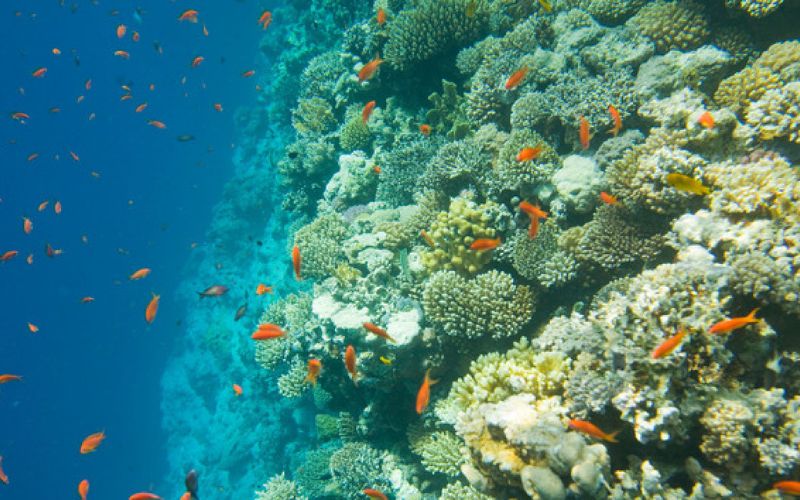
The shallow reef areas around the Blue Hole support marine life associated with the Red Sea.
Possible sightings include:
Butterflyfish: Often seen moving around coral structures, these colorful fish are among the recognizable inhabitants of tropical reefs.
Parrotfish: Known for their distinctive beak-like teeth and important ecological role in reef environments.
Anthias: Small, brightly colored fish that may appear in groups around reef structures.
Damselfish: Commonly associated with shallow reef habitats and coral formations.
Surgeonfish: Reef fish that move through different areas searching for food.
Wrasses: A varied family of fish that includes species with vivid colors and unusual patterns.
Groupers: Larger reef-associated fish that may shelter around rocky structures.
Lionfish: Distinctive fish with prominent spines. They should be observed from a safe distance and never touched.
Other marine animals may also be encountered, but no particular species is guaranteed.
Water temperature, visibility, conditions, and chance all influence what visitors see.
The Blue Hole’s greatest attraction is often the underwater landscape itself rather than the expectation of encountering large marine animals.
Is Blue Hole Snorkeling Suitable for Beginners?
It can be suitable for some beginners when conditions are favorable and a qualified guide selects a safe area.
However, the Blue Hole should not automatically be treated as an easy swimming pool.
Deep water exists close to sections of the reef, and conditions can change.
People who are uncomfortable in open water should be especially cautious.
A beginner-friendly experience should include:
- An appropriate snorkeling location.
- A professional guide.
- A properly fitted mask and snorkel.
- Suitable fins if needed.
- A flotation vest when appropriate.
- Clear instructions about where to swim.
- A defined route back to shore.
- An opportunity to stop immediately.
It is sensible to practice using the equipment in genuinely shallow, calm water before attempting a more exposed snorkeling location.
If you cannot swim confidently, a guided shallow-water experience at a more sheltered location may be a better choice.
A flotation vest is useful, but it does not replace supervision, swimming skills, or safe conditions.
The Best Way to Enjoy a First Snorkeling Experience
For first-time snorkelers, the goal should be comfort rather than distance.
Ask your guide to explain the entry point, where the group will remain, whether currents are present, and how to signal for help.
Once comfortable at the surface, concentrate on breathing normally and looking at the reef without rushing.
You do not need to dive below the surface to see fish.
In fact, remaining relaxed often improves the experience because sudden movements can disturb marine life and increase fatigue.
If the water feels too deep, or the conditions make you nervous, choose another location.
Dahab offers more than one snorkeling environment, and there is no reason to make the Blue Hole your first experience if the conditions are not suitable.
For additional destination comparisons, explore our guide to snorkeling in Egypt.
How Long Should You Spend Snorkeling?
The right duration depends on experience, water temperature, and the day’s conditions.
For a casual visitor, a short guided session may be sufficient.
A longer visit may include time to relax between activities, enjoy lunch, and explore nearby coastal scenery.
Consider the following planning approach:
| Visitor type | Suggested activity duration | Recommended approach |
| First-time snorkeler | 20–40 minutes in the water | Short, closely supervised session |
| Comfortable recreational snorkeler | 30–60 minutes | Guided exploration with breaks |
| Family with children | Flexible short sessions | Prioritize calm conditions and individual abilities |
| Photography enthusiast | Variable | Allow extra time without rushing |
| Non-swimmer | No water entry necessary | Shore sightseeing or a different suitable activity |
These are planning suggestions, not official activity schedules or minimum safety requirements.
Your guide should determine what is appropriate on the day.
Scuba Diving at the Dahab Blue Hole
Scuba diving is central to the Blue Hole’s identity, but not every part of the site is suitable for every diver.
The most important consideration is selecting a dive that matches your certification and actual experience.
A certified recreational diver can potentially enjoy suitable areas around the Blue Hole without going anywhere near the dangerous Arch.
The surrounding reefs and drop-offs can offer interesting underwater scenery at recreational depths.
However, an operator should assess conditions, qualifications, equipment, recent diving activity, and the individual diver before planning a specific route.
What Is a Typical Recreational Blue Hole Dive?
Recreational dives in the Blue Hole area generally focus on approved portions of the reef and underwater walls rather than deep technical features.
The appeal lies in the changing scenery.
Coral structures occupy the shallower areas. Steeper surfaces lead into darker water, and the contrast creates an unusual underwater perspective.
Depending on the selected dive site, divers may observe reef fish, coral formations, and areas where underwater topography changes abruptly.
An experienced local instructor or divemaster can help identify a route appropriate to the group.
Visitors should not copy dive profiles found in blogs, videos, or social media.
Descriptions of depths and routes are not substitutes for an individual dive plan.
Can Open Water Divers Visit the Blue Hole?
Some appropriately certified Open Water Divers may be able to participate in a suitable guided recreational dive in the Blue Hole area.
However, this depends on the operator’s assessment and the conditions.
An Open Water certification does not mean that every section of the Blue Hole is suitable.
The guide may recommend an alternative nearby reef for divers who have limited experience, have not dived recently, or are uncomfortable near steep underwater drop-offs.
That recommendation should be respected.
A pleasant dive at a shallower location is better than attempting a demanding dive to visit a famous name.
Is the Blue Hole Good for Advanced Divers?
The Blue Hole area can appeal to experienced recreational divers who enjoy reef walls and dramatic underwater scenery.
Advanced certification may provide opportunities to explore appropriately selected areas beyond basic Open Water training depths.
Nevertheless, certification alone is not enough.
Actual diving competence matters.
A person who completed an advanced course years ago but has rarely dived since may need a refresher or a less demanding dive.
Similarly, someone who has extensive experience in calm tropical conditions may require additional orientation before diving in unfamiliar currents or along exposed reef walls.
Advanced recreational diving and technical diving are different disciplines.
No ordinary recreational certification qualifies someone to attempt the Arch.
How to Choose a Responsible Diving Center
Egypt’s Chamber of Diving and Watersports (CDWS) maintains a directory of registered diving centers, including operators in Dahab.
The organization also publishes technical requirements and standards relevant to different types of diving activities. Its March 2026 technical-diving requirements distinguish specialized technical service providers from ordinary recreational diving centers.
cdws.travel+1
Before booking, ask:
- Is the diving center currently listed with the CDWS?
- Does the operator have the qualifications required for the planned activity?
- What certification and recent diving experience are required?
- Is suitable equipment included?
- Are equipment checks conducted before the dive?
- What emergency oxygen and first-aid arrangements are available?
- What is the group size?
- Who will lead the dive?
- What happens if conditions become unsuitable?
- Does the price include transport, equipment, and entrance fees?
Good operators should be comfortable answering practical safety questions.
Be cautious about any provider that minimizes risks, suggests diving beyond your qualifications, or encourages you to attempt a dangerous route to obtain unusual photographs.
What About Technical Diving?
Technical diving involves specialized training and procedures beyond ordinary recreational diving.
It may include planned decompression obligations, specialized breathing gases, redundant equipment, and more complex emergency management.
These subjects require formal instruction and supervised experience.
The Blue Hole is known internationally within technical-diving circles, but that does not make it an appropriate place for an untrained diver to experiment.
Technical diving should never be treated as a spontaneous holiday upgrade.
For most visitors, a recreational reef dive or supervised snorkeling session is the more appropriate way to experience the location.
Freediving at the Blue Hole: What Travelers Should Know
Dahab is internationally associated with freediving, and the Blue Hole is one of the locations connected to that reputation.
Freediving differs from scuba diving because participants dive while holding their breath rather than using compressed breathing gas underwater.
Training may focus on breath control, relaxation, technique, equipment, and safety.
However, the apparent simplicity of freediving should not create a false impression that it is inherently safe.
Breath-hold activities carry serious risks, including loss of consciousness underwater.
Can Beginners Try Freediving in Dahab?
Beginners can explore formal freediving instruction with a qualified instructor, but a deep Blue Hole session is not an appropriate introduction.
Initial training should take place in a controlled environment selected by the instructor.
It should cover essential safety principles, supervision, and the hazards associated with breath-holding.
A suitable introductory experience should never encourage someone to chase a depth record.
The purpose of beginner instruction is to develop foundational skills, not to reach the deepest possible point.
Why Is Freediving at the Blue Hole Challenging?
The open-water environment, considerable depth, and psychological impression of the underwater walls create a demanding setting.
Freediving performance can also be affected by stress, fatigue, water conditions, and individual physiology.
One particularly dangerous practice is hyperventilating before a breath-hold dive.
Hyperventilation can suppress the urge to breathe without ensuring adequate oxygen reserves, increasing the risk of underwater blackout.
Never practice prolonged breath-holding alone, and never rely on a casual swimming companion as a substitute for qualified safety supervision.
For visitors who simply want to enjoy marine life, snorkeling at the surface is usually the better choice.
Blue Hole, the Bells, and the Canyon: Understanding Dahab’s Dive Sites
One common source of confusion is the way different Dahab dive sites are grouped together in travel descriptions.
The Blue Hole is a specific underwater formation.
Nearby dive locations, including the Bells, offer different underwater environments.
The Canyon is another well-known Dahab dive site, but it is a separate location rather than an extension of the Blue Hole.
Understanding these differences helps visitors ask more precise questions when booking.
The Blue Hole
The Blue Hole is defined by its deep circular depression and surrounding reef.
Its central geological formation is the main attraction.
Depending on conditions and qualifications, suitable areas may be visited by recreational divers, while other sections are relevant only to highly trained specialists.
It is also a popular place for shore-based sightseeing and guided snorkeling.
The Bells
The Bells is a diving location north of the Blue Hole, known for its narrow reef opening and dramatic underwater topography.
It is sometimes included in discussions of the Blue Hole because certain professionally planned dive excursions involve the wider reef system.
The Bells can present a more demanding diving environment than a straightforward shallow reef.
Its suitability depends on the diver’s qualifications and the operator’s assessment.
It should not be assumed that a person who can snorkel at the Blue Hole is also qualified to scuba dive at the Bells.
The Canyon
The Canyon is another well-known Dahab diving location.
It features an underwater fissure or canyon-like geological structure.
Divers are attracted by its distinctive rock formations, coral habitats, and unusual underwater scenery.
However, not all sections are suitable for all experience levels.
Underwater passages and enclosed spaces can create additional risks.
Visitors should not assume that any passage visible underwater is safe to enter.
Which Diving Experience Is Best?
| Location | Main attraction | Who should consider it? | Main caution |
| Blue Hole | Deep circular formation and adjacent reef | Suitable visitors and certified divers under appropriate supervision | Extreme depth nearby |
| The Bells | Dramatic reef topography | Experienced certified divers when approved by the operator | Demanding entry and underwater terrain |
| The Canyon | Underwater rock formations | Divers whose skills match the selected route | Some sections involve advanced hazards |
| Lighthouse Reef | Accessible reef diving near Dahab town | Often considered for training and recreational diving | Conditions and activity zones still require assessment |
| Eel Garden | Reef and sandy seabed habitats | Qualified divers seeking a different underwater environment | Currents and conditions can vary |
The best site is not necessarily the deepest or most famous.
A traveler new to diving may have a better experience at a more sheltered site than at the Blue Hole.
An experienced diver may prefer a carefully selected reef wall rather than the central depression.
The ideal choice depends on skill level, interests, and environmental conditions.
How to Get to the Blue Hole from Dahab
The most practical way to reach the Blue Hole is by road from Dahab.
The journey usually takes approximately 15–30 minutes, depending on the departure point, vehicle, road conditions, and access arrangements.
Visitors commonly use local taxis, private transfers, organized excursions, or transportation arranged by a diving center.
The route follows the coast north of Dahab.
As the town gives way to a more exposed landscape, the road passes through an environment of rocky hills and coastal scenery.
The final approach can be rougher than ordinary urban roads, making suitable transportation important.
Option 1: Organized Blue Hole Excursion
An organized excursion is often the easiest choice for first-time visitors.
Depending on the package, it may include:
- Hotel pickup.
- Return transportation.
- Assistance with entrance procedures.
- Snorkeling equipment.
- A snorkeling guide.
- Time for sightseeing.
- Lunch or refreshments.
Do not assume that every package includes all these services.
Some tours advertised as Blue Hole excursions are primarily sightseeing trips.
Others include snorkeling.
Scuba diving may be sold separately and require certification.
Always check the precise itinerary before booking.
Option 2: Private Taxi or Transfer
A private taxi provides flexibility for visitors who want to spend a particular amount of time at the location.
It is especially convenient for couples, families, and people interested primarily in photography.
Agree on the total price before departure.
You should also clarify whether the driver will wait at the Blue Hole or return at an agreed time.
Do not assume that finding transportation back to Dahab will always be as straightforward as arranging the outbound trip.
Confirm whether the fare includes both directions.
Option 3: Transportation Through a Dive Center
For certified divers, this is often the most practical arrangement.
Many dive operators coordinate transportation together with equipment and guided activities.
It reduces the need to organize several separate services.
However, some charges may still be excluded, including park entrance fees, equipment hire, or special activity supplements.
Ask for an itemized quotation.
Is It Possible to Walk or Cycle from Dahab?
The Blue Hole is not a comfortable short walk from central Dahab.
Distances, exposed coastal conditions, heat, and uneven sections make walking the entire route impractical for many visitors.
Cycling may appeal to experienced cyclists in suitable weather, but it should not be treated as the default tourist option.
The return journey, road conditions, access rules, and heat exposure need consideration.
For most international travelers, an arranged vehicle is simpler.
How to Visit the Blue Hole from Sharm El Sheikh
The Blue Hole can be visited on a day trip from Sharm El Sheikh.
However, it requires substantially more transportation than visiting from Dahab.
Travelers should allow approximately 1.5–2 hours or more to reach Dahab from Sharm El Sheikh, depending on the route, traffic, and checkpoints.
Additional travel time is required to reach the Blue Hole itself.
For a comfortable excursion, plan most of the day rather than treating it as a brief outing.
What Does a Sharm El Sheikh to Blue Hole Day Trip Include?
Some excursions combine the Blue Hole with additional Sinai experiences.
Possible elements include:
- Scenic road transportation.
- Time in Dahab.
- A snorkeling stop.
- Coastal sightseeing.
- Lunch at a local restaurant.
- A desert or canyon excursion where authorized and operational.
Packages vary significantly.
An itinerary advertised as a combination of several attractions may leave relatively little time for enjoying the Blue Hole itself.
This is an important consideration for travelers whose primary goal is snorkeling or scuba diving.
A full-day itinerary is not necessarily better because it includes more named attractions.
Sometimes fewer stops create a more enjoyable experience.
Is the Drive Worth It?
The journey can be worthwhile for travelers who specifically want to see Dahab and the Blue Hole.
It is particularly appealing to visitors interested in the contrast between Sinai’s mountain scenery and the Red Sea coastline.
However, if your main priority is simply to see colorful fish underwater, a closer snorkeling location in Sharm El Sheikh may be more efficient.
The decision depends on whether the Blue Hole’s distinctive landscape is important to you.
Should You Stay Overnight in Dahab Instead?
If your schedule allows, staying one or two nights in Dahab can make the experience more relaxed.
You can visit the Blue Hole earlier in the day, enjoy Dahab’s restaurants and waterfront, and choose another activity without committing to a long same-day return journey.
An overnight stay also gives you some flexibility if wind or water conditions are unsuitable on your intended visiting day.
For people interested in more than one guided dive, Dahab is generally a better base than making repeated journeys from Sharm El Sheikh.
How Much Does Visiting the Dahab Blue Hole Cost in 2027?
The overall cost depends on entrance fees, transportation, equipment, guides, and whether you choose sightseeing, snorkeling, or scuba diving.
The most important distinction is between the official site-access fee and the total cost of an organized excursion.
Official Blue Hole Entrance Fee
Egypt’s Environmental Affairs Agency publishes a dedicated fee for the Blue Hole area within Abu Galum Protected Area.
Its published schedule lists:
| Visitor category | Published entrance fee |
| Egyptian visitor | EGP 25 |
| Foreign visitor | USD 10 |
These figures come from the official published fee schedule available during research in November 2026. The agency also indicates that protected-area fee information is being updated, so these rates are not guaranteed for 2027.
رسوم زيارة المحميات
Transport charges, operator fees, equipment rental, and other applicable access or service charges may be additional.
Some commercial websites quote higher totals without clearly separating government fees from other charges.
For accurate budgeting, ask your operator which charges are official entrance fees and which are part of the tour price.
Example Activity Costs
Published Dahab operator prices provide a useful starting point, although they should not be treated as confirmed 2027 rates.
Examples of advertised 2026 pricing include guided recreational dives around €40–€45 per dive and two-dive packages around €80, depending on the operator.
Equipment rental, protected-area fees, and transportation may be additional.
ScubaDahab+1
| Expense | Budgeting approach |
| Official Blue Hole entrance | Check the applicable protected-area fee |
| Taxi from Dahab | Obtain a current return quotation |
| Guided snorkeling | Request a price with equipment and transport specified |
| Certified recreational dive | Compare operator prices and inclusions |
| Full scuba-equipment rental | Confirm whether rental is separate |
| Private excursion | Ask for a complete group quotation |
| Food and refreshments | Allow for purchases at local cafés |
| Additional coastal excursion | Price separately unless included |
The published official entrance fee and sample operator rates should be used as references rather than a finalized 2027 price list.
A Better Way to Compare Tour Prices
A low advertised price does not necessarily mean better value.
Consider two hypothetical offers.
Offer A includes transportation and a short sightseeing stop but excludes snorkeling equipment, guiding, entrance fees, and lunch.
Offer B costs more but includes return transport, an appropriate guide, equipment, a reasonable amount of time at the site, and clearly stated inclusions.
The second option may provide better value if snorkeling is the primary purpose of the trip.
Before paying, request confirmation of the following:
- Exact activity included.
- Total duration.
- Time actually spent at the Blue Hole.
- Guide qualifications.
- Equipment provision.
- Entrance fees.
- Transportation arrangements.
- Cancellation conditions.
- Weather-related changes.
- Any additional required payments.
Comparing complete packages is more useful than comparing a single headline price.
Best Time to Visit the Blue Hole in Dahab in 2027
The Blue Hole can be visited throughout much of the year, but the experience changes with air temperature, wind, water conditions, and visitor numbers.
For many travelers, spring and autumn offer a comfortable combination of pleasant weather and suitable conditions for outdoor activities.
However, there is no single month when calm water is guaranteed.
Local wind and sea conditions are more important than a general seasonal recommendation when deciding whether to snorkel or dive.
Spring: March to May
Spring is a popular period for exploring Dahab.
Air temperatures generally become warmer without reaching the most intense summer heat.
This makes the season appealing for visitors who want to combine swimming with walking, sightseeing, and coastal excursions.
March can still bring relatively cool water and windy periods.
By April and May, water temperatures usually begin increasing, making longer sessions more comfortable for some visitors.
Spring is particularly suitable for travelers who want an active holiday rather than spending every day at a beach resort.
Summer: June to August
Summer in Dahab can be extremely hot on land.
Although the Red Sea becomes warmer, the combination of sunshine and exposed coastal terrain creates a substantial risk of heat exhaustion and dehydration.
Visitors should avoid assuming that being close to the sea automatically makes the weather comfortable.
Early departures are especially valuable during summer.
Bring adequate drinking water, sun protection, and suitable clothing.
For people planning a short sightseeing visit without entering the sea, summer heat may be the greatest practical challenge.
Snorkeling and diving can remain enjoyable under suitable marine conditions, but surface temperatures and wind exposure must be considered.
Autumn: September to November
Autumn is often an excellent period for a Dahab holiday.
The extreme heat of midsummer gradually decreases while the sea retains much of its warmth.
September can still be hot, but October and November generally provide more comfortable conditions for activities outside the water.
For many international travelers, October is a particularly attractive compromise between water temperature and daytime comfort.
Visitors planning to combine the Blue Hole with other attractions around Dahab may find autumn convenient.
Winter: December to February
Winter in Dahab is milder than winter in most of northern Europe and North America, but it should not be confused with tropical summer weather.
Air temperatures can feel cool, particularly when wind is present.
The sea is generally colder than in late summer and early autumn.
Divers and snorkelers may need additional thermal protection depending on personal comfort and activity duration.
Winter can still provide beautiful clear days for coastal sightseeing.
However, travelers should have flexible plans and avoid booking a demanding water activity without considering the forecast.
Seasonal Conditions at a Glance
| Season | Typical sea-temperature pattern | Main advantage | Main consideration |
| December–February | Roughly 21–23°C | Comfortable sightseeing weather | Cooler water and possible wind |
| March–May | Warming from roughly 21–24°C | Pleasant outdoor activities | Variable spring conditions |
| June–August | Approximately 25–28°C | Warmer water | Significant daytime heat |
| September–November | Cooling from roughly 26–25°C | Warm sea with improving air temperatures | Conditions vary by day |
These values are approximate seasonal planning references, not forecasts for 2027. Actual conditions can differ. Local dive operators publish comparable monthly water-temperature patterns for Dahab.
circledivers.com
What Time of Day Is Best?
Morning is often the most practical time to visit.
An early start can provide more comfortable temperatures, particularly during summer, and leave flexibility for changes in the day’s conditions.
However, it would be misleading to claim that the sea is always calmest in the morning.
Wind, currents, and local weather patterns vary.
The best time for a specific snorkeling or diving activity should be determined by the operator’s assessment.
Sightseeing visitors have greater flexibility.
They can enjoy the landscape whenever official access is permitted and the weather is comfortable.
What About Visiting During Public Holidays?
Busy holiday periods can affect transport availability, accommodation prices, and the atmosphere around Dahab.
Visitors traveling during Egyptian public holidays or international holiday periods should make arrangements in advance.
This is especially useful when booking a specific dive operator or a private excursion.
You do not necessarily need to avoid busy periods.
Instead, allow time for delays and avoid planning multiple tightly scheduled activities in one day.
For travelers combining Sinai with historical sightseeing, our best time to visit Egypt guide explains the wider seasonal considerations.
What to Expect When You Arrive at the Blue Hole
First-time visitors sometimes imagine a large, developed marine attraction with extensive facilities.
The reality is more informal.
The Blue Hole is a natural coastal site where the main attraction is the landscape and underwater environment.
You should expect a relatively simple setting rather than a major resort complex.
The coastline contains local businesses catering to visitors, but facilities may be limited compared with Dahab town.
The Arrival Experience
Visitors generally arrive by vehicle and follow the locally designated access arrangements.
There may be checkpoints, entrance procedures, and parking instructions.
The exact process can change, so follow official directions and your guide’s instructions.
Once at the site, you will notice how closely the coastal landscape combines mountains, rock, and sea.
The water’s contrasting colors are visible from the shoreline, although lighting and weather influence how dramatic they appear.
A sightseeing visit can include time to walk around permitted areas, sit near the shore, and enjoy refreshments.
The setting is generally more relaxed when visitors are not trying to fit several activities into a short period.
Are There Restaurants and Cafés?
Simple cafés and food outlets are commonly associated with the Blue Hole visitor area.
They may provide refreshments and local meals, depending on the business and operating conditions.
Do not expect the same range of restaurants available in central Dahab.
If you have specific dietary requirements, it is wise to bring appropriate food or arrange meals in advance.
Carry drinking water even if your excursion advertises refreshments.
In hot weather, dehydration can become a problem before visitors notice significant thirst.
Are There Toilets and Changing Facilities?
Facilities can be basic and may vary between operators and sections of the site.
Do not assume that private changing rooms, accessible bathrooms, showers, lockers, or secure storage are available.
Ask your guide what facilities will be available before leaving Dahab.
If you require a particular accessibility arrangement, obtain a clear answer rather than relying on a generic tour description.
Can You Pay by Card?
Cash is useful for entrance charges, small purchases, local transport, and other incidental expenses.
Some organized operators may accept electronic payment in advance.
However, smaller coastal businesses may not offer reliable card-payment facilities.
Bring enough appropriate cash for expected expenses, while avoiding unnecessary valuables.
Confirm accepted currencies and payment methods when making reservations.
What to Bring to the Dahab Blue Hole
Packing correctly can make a substantial difference to your comfort.
The Blue Hole is an exposed coastal environment, so prepare for sunshine, uneven ground, and possible wind.
Essential Packing Checklist
- Drinking water.
- Sun-protective clothing.
- Wide-brimmed hat or cap.
- Sunglasses.
- Reef-conscious sun protection.
- Swimsuit if entering the water.
- Towel.
- Suitable footwear for rocky surfaces.
- Light outer layer in cooler or windy weather.
- Small amount of cash.
- Phone with a charged battery.
- Identification when required.
- Relevant booking details.
- Personal medication.
- Waterproof bag for belongings.
For snorkeling, confirm whether your operator supplies a properly fitted mask, snorkel, fins, and suitable flotation equipment.
Poorly fitting rental equipment can reduce enjoyment and create unnecessary stress.
Certified divers should bring their certification details, dive log or recent experience information, and personal equipment where appropriate.
Should You Bring Your Own Snorkeling Equipment?
If you already own comfortable, well-fitting equipment, bringing it can be worthwhile.
A mask that seals properly is particularly important.
However, buying equipment for a single outing may not be necessary when a reliable operator provides suitable rental equipment.
The quality and fit matter more than whether the equipment is personally owned.
A professional guide should help you confirm that the equipment is appropriate before entering the sea.
What Should You Leave at the Hotel?
Avoid bringing unnecessary valuables.
The Blue Hole is not a place where you should expect extensive secure storage.
Large amounts of cash, expensive jewelry, and sensitive documents are better left in appropriate hotel storage when not required.
If you bring a camera, use a suitable protective case and be mindful of water exposure.
Never put yourself or other visitors at risk while trying to obtain a particular photograph.
The Blue Hole vs. the Blue Lagoon: Are They the Same Place?
No. The Dahab Blue Hole and the Blue Lagoon are two different places.
This is one of the most useful distinctions for first-time visitors.
The Blue Hole is a deep underwater formation surrounded by reef.
The Blue Lagoon is a shallow coastal lagoon farther north, associated with the Ras Abu Galum area.
Their names sound similar, and both are associated with Dahab, but the landscapes and activities differ.
Blue Hole vs. Blue Lagoon Comparison
| Feature | Blue Hole | Blue Lagoon |
| Main attraction | Deep marine formation | Shallow coastal lagoon |
| Signature appearance | Dark-blue underwater depression | Broad turquoise coastal water |
| Main activities | Sightseeing, guided snorkeling, diving | Relaxation, sightseeing, water activities where suitable |
| Diving reputation | Internationally famous | Not primarily known for extreme-depth diving |
| Access | Road from Dahab | More remote, with access arrangements varying |
| Typical visit | Half-day | Extended excursion or full-day |
| Atmosphere | Established dive destination | More isolated coastal setting |
| Main planning concern | Water safety and diving qualifications | Remoteness, transport, facilities, weather |
The Blue Lagoon can appeal to visitors who prioritize scenery, open landscapes, and a quieter coastal experience.
However, the location is remote and should not be treated as an ordinary developed beach.
Kitesurfing and other water activities may be associated with the wider area, depending on local conditions and available operators.
Can You Visit Both in One Day?
Yes, some organized excursions combine the Blue Hole with Ras Abu Galum and the Blue Lagoon.
However, the feasibility depends on the route, available transport, local regulations, conditions, and how much time you want to spend at each stop.
Transport may involve local boats, walking, or other arrangements appropriate to the route.
Services and access arrangements should be confirmed shortly before travel.
For travelers who want a relaxed day rather than a rushed sightseeing schedule, it can be better to prioritize one or two locations.
Which One Should You Choose?
Choose the Blue Hole if your main interests are:
- A famous Red Sea natural formation.
- Snorkeling under appropriate conditions.
- Certified scuba diving.
- Underwater geology.
- A shorter excursion from Dahab.
Consider the Blue Lagoon if your main interests are:
- Remote coastal scenery.
- A longer outdoor excursion.
- A quieter setting.
- Photography of the mountain-and-sea landscape.
- Exploring the wider Ras Abu Galum environment.
The two locations complement each other, but neither is automatically better.
Ras Abu Galum: Exploring the Landscape Beyond the Blue Hole
Ras Abu Galum is a protected area in South Sinai known for its mountain scenery, coastal environments, and marine ecosystems.
The Blue Hole is associated with this wider protected-area landscape.
For visitors interested in nature rather than diving alone, Ras Abu Galum adds another dimension to a Dahab excursion.
It reveals how closely the mountains of Sinai and the Red Sea interact.
The land is arid, yet the adjacent sea contains complex marine habitats.
This contrast is part of what makes the region environmentally distinctive.
What Can You Do Around Ras Abu Galum?
Depending on permitted access, available operators, and local conditions, experiences may include coastal sightseeing, guided walking, organized boat transfers, and time in areas used for local hospitality.
Any snorkeling activity should be assessed independently for safety.
Do not assume that a place is suitable for swimming simply because a tour advertises it as a lagoon or beach.
Water movement, entry conditions, and remoteness can change the level of risk.
Respecting Bedouin Communities
Bedouin communities are an important part of Sinai’s cultural landscape.
Visitors may encounter locally operated cafés, transport services, and hospitality businesses.
Supporting legitimate local enterprises can contribute to the regional visitor economy.
However, cultural encounters should be respectful rather than treated as performances.
Ask permission before photographing individuals, especially children.
Respect private spaces and local customs.
Agree on prices clearly before purchasing services.
A relaxed meal or conversation with local hosts can be a valuable part of the experience without turning it into a staged cultural attraction.
Is the Blue Hole Worth Visiting If You Do Not Swim?
Yes, particularly if you enjoy coastal landscapes and unusual natural formations.
The Blue Hole is visually interesting even from land.
The combination of dark water, reef, rock, and mountains creates a scene that differs substantially from many other Egyptian tourist destinations.
For non-swimmers, the best approach is to treat the Blue Hole as a sightseeing stop rather than purchasing an excursion centered on water activities.
What Can Non-Swimmers Do?
Possible activities include:
- Enjoying the coastal views.
- Taking landscape photographs.
- Relaxing at a local café.
- Watching organized diving activity from a permitted shore area.
- Learning about the formation from a guide.
- Combining the visit with Dahab sightseeing.
- Exploring other suitable coastal attractions.
This can make the Blue Hole worthwhile for mixed groups in which some people want to snorkel while others prefer to stay ashore.
However, if everyone in your group is primarily interested in restaurants, shopping, and developed beachfront facilities, central Dahab may offer more variety.
Is It Worth Visiting for Photography?
The Blue Hole provides interesting opportunities for landscape photography.
The strongest visual subjects are the contrast between the sea and the desert mountains, the shape of the coastline, and the changing color of the water.
Lighting conditions affect photographs considerably.
From shore level, the complete circular formation is not always apparent.
Many of the dramatic images seen online are aerial photographs, which reveal the shape more clearly.
If you do not have access to an elevated viewpoint, adjust your expectations accordingly.
Do not assume that drone photography is permitted.
Drones are subject to strict controls in Egypt, and tourists should not bring or operate one without the required authorizations.
For most visitors, ordinary photography from permitted areas is the simplest option.
Is the Dahab Blue Hole Suitable for Families with Children?
The Blue Hole can be suitable for a family sightseeing excursion.
However, the suitability of entering the water depends on each child’s swimming ability, age, confidence, and the conditions.
It is important not to confuse a family-friendly sightseeing destination with a universally safe swimming location.
The Blue Hole contains deep water near parts of the shore and should never be approached casually.
Family Safety Considerations
Parents should assess:
- Whether each child is a confident swimmer.
- Whether appropriate flotation equipment is available.
- Whether a qualified snorkeling guide can supervise the activity.
- Whether water conditions are genuinely suitable.
- Whether a simpler alternative would provide a better experience.
- Whether the child is comfortable using snorkeling equipment.
- Whether adequate shade, refreshments, and facilities are available.
Children should never enter the water without suitable supervision.
A child’s enthusiasm for snorkeling does not establish their ability to manage open-water conditions.
Is It Suitable for Young Children?
For young children, a shore visit may be more appropriate than snorkeling.
A short excursion with scenic views and refreshments can be enjoyable without taking unnecessary risks.
If your family wants children to try snorkeling for the first time, discuss appropriate locations with a qualified operator before deciding on the Blue Hole.
A sheltered reef environment elsewhere in Dahab may be more suitable.
The most successful family excursions are those that match the youngest or least confident participant’s abilities.
For broader planning, see our Egypt with kids travel guide.
Is the Blue Hole Accessible for Seniors or Travelers with Limited Mobility?
Some older travelers may enjoy visiting the Blue Hole for scenery and relaxation.
However, age alone does not determine suitability.
Physical mobility, balance, heat tolerance, transportation arrangements, and the ability to move safely around uneven surfaces are more relevant.
The site is not equivalent to an accessible urban attraction with consistently paved walkways.
Rocky terrain, basic facilities, and changing conditions can create difficulties.
Questions to Ask Before Booking
If you or someone in your group has limited mobility, ask:
- How close can the vehicle park to the main visiting area?
- Is there a level path to the café or viewpoint?
- Are steps or uneven surfaces involved?
- Is assistance available when entering and exiting the vehicle?
- Are suitable toilets accessible?
- Can the itinerary be shortened?
- Is the vehicle air-conditioned?
- Can the visitor remain comfortably ashore while others snorkel?
Obtain specific answers from the operator.
Do not assume that accessibility photographs from another Egyptian destination reflect conditions at the Blue Hole.
For someone who has difficulty walking on uneven terrain, a different coastal outing may provide a more comfortable experience.
Medical Considerations
Travelers with respiratory, cardiovascular, ear, sinus, or other relevant medical conditions should obtain appropriate medical advice before participating in diving activities.
Scuba diving involves physiological demands that differ from ordinary swimming.
Snorkeling also requires realistic assessment of swimming fitness and sea conditions.
A qualified operator may require medical screening or clearance.
Never conceal a medical issue because you are concerned about missing an excursion.
Blue Hole Safety in 2027: Travel Advisories, Guides and Insurance
Travel safety involves more than what happens underwater.
International travelers should consider regional travel advice, transport arrangements, insurance conditions, and emergency preparedness.
As of the latest research, the UK Foreign, Commonwealth & Development Office distinguishes several parts of Sinai in its travel guidance, while the United States Department of State maintains country-specific advice for Egypt.
These advisories can change and should be checked again immediately before a 2027 trip.
GOV.UK+1
It is inaccurate to treat every part of Sinai as having identical travel risks.
It is equally inaccurate to guarantee that any destination is completely safe.
Choose Appropriate Transportation
For first-time international visitors, an established local operator or properly arranged transfer is often preferable to an improvised journey.
Ask whether the route involves checkpoints and what identification you may need.
Follow the instructions of local authorities.
If you are combining Dahab with a more remote excursion, confirm that the transportation provider is authorized to operate the intended route.
Avoid unplanned travel into restricted or unfamiliar desert areas.
Understand Your Travel Insurance
Standard travel insurance may not automatically cover every diving activity.
Policies can include conditions related to:
- Maximum diving depth.
- Certification requirements.
- Supervision.
- Technical diving.
- Freediving.
- Equipment.
- Search and rescue.
- Emergency medical evacuation.
- Regional travel advisories.
A policy that covers recreational snorkeling may not cover technical diving.
A policy that covers ordinary scuba diving may exclude diving beyond specified depth limits.
Read the relevant terms before booking.
If necessary, contact the insurer and obtain written clarification about the planned activity.
Ask About Emergency Procedures
For diving activities, the operator should have a clear emergency response plan.
Ask about emergency oxygen, trained personnel, communication arrangements, transport, and the process for reaching appropriate medical facilities.
For serious suspected decompression illness, immediate professional medical evaluation is essential.
Do not rely on internet advice or attempt to manage symptoms independently.
For any excursion in a remote coastal setting, it is sensible to share your plans and expected return time with someone you trust.
Protecting the Blue Hole’s Coral Reefs
The Blue Hole is not simply a destination for visitors.
It is part of a marine environment that supports living coral and other organisms.
Coral reefs are complex habitats.
They provide shelter, feeding opportunities, and breeding environments for many marine species.
Damage to the reef can have consequences beyond the immediate appearance of the underwater landscape.
Tourism can contribute to local livelihoods, but poorly managed activities can also place pressure on fragile environments.
Never Touch or Stand on Coral
Corals are living animals.
Their structures may appear strong, but direct contact can break fragile branches or damage living tissue.
Standing on coral while adjusting snorkeling equipment is particularly harmful.
Visitors should avoid:
- Standing on reef structures.
- Holding coral for balance.
- Collecting shells or marine organisms.
- Feeding fish.
- Chasing wildlife.
- Dragging equipment across the seabed.
- Leaving litter behind.
Divers should maintain appropriate buoyancy control and keep equipment secured.
Snorkelers should remain aware of where their fins are positioned.
Choose Responsible Operators
A good operator should explain how to avoid damaging the reef before entering the water.
Environmental guidance should form part of the briefing rather than being treated as optional.
Look for operators who respect local protected-area rules and avoid encouraging visitors to touch marine animals.
Responsible tourism does not mean avoiding all natural destinations.
It means participating in ways that minimize unnecessary harm.
Why Reef Conservation Matters
Coral reefs face pressures from warming seas, pollution, physical damage, and other environmental changes.
Even small actions matter when repeated by large numbers of visitors.
A single person standing on fragile coral may cause damage that takes a long time to recover.
Choosing a guide who prioritizes reef protection helps make conservation part of the visitor experience.
It also improves the quality of the experience for future travelers.
For a broader perspective on combining nature with travel, explore our guide to outdoor activities in Egypt.
Suggested Blue Hole Itineraries for Different Travelers
The best itinerary depends on whether the Blue Hole is your main destination or one stop within a wider Dahab holiday.
The following plans are designed to avoid unnecessary rushing.
Option 1: A Short Blue Hole Visit — 2 to 3 Hours
Best for: Sightseeing visitors, couples, and travelers with limited time.
Suggested plan
- Depart Dahab in the morning.
- Arrive at the Blue Hole and complete entrance procedures.
- Spend time enjoying the coastal landscape.
- Join a short guided snorkeling session if appropriate.
- Relax with refreshments.
- Return to Dahab.
This is a sensible option for travelers who want to see the famous formation without committing an entire day.
The main advantage is flexibility.
You can extend the visit if the weather and atmosphere are pleasant or return early if conditions are uncomfortable.
Option 2: Blue Hole Half-Day Experience — 4 to 5 Hours
Best for: Recreational snorkelers and visitors who enjoy spending time by the sea.
Suggested plan
- Arrange transportation and guide services in advance.
- Travel to the Blue Hole in the morning.
- Attend the snorkeling or diving briefing.
- Participate in the activity suited to your experience.
- Allow time for rest and refreshments.
- Enjoy the coastal scenery before returning.
This option provides more breathing room than a short photo stop.
It is also more comfortable for visitors who want to change clothes, eat, or spend time outside the water.
For scuba divers, the actual program must be determined by the diving center rather than by a general sightseeing timetable.
Option 3: Full-Day Dahab Nature Experience
Best for: Travelers interested in coastal scenery and multiple outdoor experiences.
Suggested plan
| Part of the day | Suggested experience |
| Morning | Travel from Dahab to the Blue Hole |
| Late morning | Guided snorkeling or shore sightseeing |
| Lunch | Relaxed meal at an appropriate local venue |
| Afternoon | Explore another permitted coastal area or return toward Dahab |
| Late afternoon | Dahab waterfront and cafés |
| Evening | Dinner in Dahab |
This itinerary is deliberately flexible.
If weather conditions are unsuitable for snorkeling, you can spend more time sightseeing or return to Dahab.
Avoid adding remote coastal destinations solely to make the itinerary look more impressive.
Some places require transport arrangements that are not compatible with a tightly scheduled day.
Option 4: Two Days in Dahab
Best for: Couples, experienced snorkelers, and travelers making Dahab part of a longer Egypt holiday.
Day 1: Blue Hole and Dahab
Spend the morning exploring the Blue Hole with a suitable guide.
Return to Dahab for lunch and a relaxed afternoon.
In the evening, enjoy the waterfront restaurants and atmosphere of the town.
Day 2: Another Red Sea Experience
Choose an activity that complements the first day.
Possible options include a different snorkeling site, a professionally guided dive, a nature excursion, or a relaxed beach experience.
If you are considering Ras Abu Galum or the Blue Lagoon, arrange transport and confirm operating conditions beforehand.
The advantage of spending two days in Dahab is that it reduces the pressure to complete everything in a single excursion.
Option 5: Three Days in Dahab
Best for: Travelers who want a more complete introduction to the area.
Day 1: Arrive, explore the town, and enjoy a relaxed evening.
Day 2: Visit the Blue Hole, with snorkeling or diving if suitable.
Day 3: Choose a different coastal or cultural experience based on your interests and the weather.
This schedule also allows time for visitors who are learning to scuba dive or arranging several guided activities.
However, formal diving courses require their own schedules and should not be compressed to fit a sightseeing itinerary.
Where Should You Stay to Visit the Blue Hole?
Dahab is the most convenient base.
It allows shorter transfers, more flexibility, and easier access to local diving operators.
Sharm El Sheikh can also work if you want to include the Blue Hole in a holiday focused on larger resort facilities and other Sinai attractions.
Staying in Central Dahab
Central Dahab is convenient for restaurants, dive centers, cafés, and transport arrangements.
For many first-time visitors, staying near the town’s main visitor areas is easier than choosing accommodation far from local services.
You can arrange your Blue Hole excursion through an established operator and return to town afterward.
It is especially practical for travelers without their own vehicle.
Staying Near the Coast Outside Central Dahab
Accommodation outside the main town may appeal to people who prioritize quiet surroundings.
However, the distance from restaurants, transport options, and diving centers can make activities less convenient.
Check the exact property location before booking.
A hotel described as being in Dahab may be considerably farther from the main waterfront than expected.
Staying in Sharm El Sheikh
Sharm El Sheikh offers a wider range of large resort-style accommodation.
It may suit families or travelers who want hotel facilities and organized day trips.
However, visiting the Blue Hole involves a longer transfer.
For someone who wants to dive or snorkel around Dahab on several days, staying in Dahab itself is generally more efficient.
Dahab vs. Sharm El Sheikh vs. Hurghada
| Destination | Best suited to | Blue Hole access |
| Dahab | Independent travelers, divers, relaxed coastal holidays | Closest and most convenient |
| Sharm El Sheikh | Resort holidays and organized excursions | Practical as a long day trip |
| Hurghada | Red Sea resorts and marine excursions on Egypt’s mainland coast | Not convenient for a normal Blue Hole day trip |
Hurghada is on the opposite side of the wider Red Sea region.
Travelers staying there should not assume that the Blue Hole can be reached by a short drive.
If you are choosing between the two sides of Egypt’s Red Sea coastline, our Hurghada destination guide offers additional travel-planning information.
How to Include the Blue Hole in a Longer Egypt Trip
For international visitors, Dahab is often only one part of a larger Egyptian itinerary.
The country offers very different travel experiences within a single trip: archaeological sites in Cairo, historic temples in Luxor and Aswan, Nile cruises, deserts, and Red Sea resorts.
The Blue Hole can complement those experiences, but travel distances need consideration.
Cairo, Sharm El Sheikh and Dahab
One practical approach is to explore Cairo before traveling to South Sinai.
A visitor might spend several days discovering the pyramids and museums, continue to Sharm El Sheikh, and then travel to Dahab.
This arrangement combines cultural sightseeing with marine activities.
It is particularly attractive for travelers whose flights make Sharm El Sheikh a convenient arrival or departure point.
However, flight schedules and travel connections should be checked before finalizing the itinerary.
Cairo, Luxor and Dahab
Another possibility is to combine the major historical attractions of Cairo and Luxor with a Red Sea stay.
This creates a contrast between archaeological sightseeing and outdoor activities.
The main challenge is transport efficiency.
Dahab is not located near Luxor, so a flight or longer combination of journeys may be necessary.
Travelers with limited time should compare the logistics with alternative Red Sea destinations.
A Longer Egypt Holiday
If you have 10–14 days, it is easier to include Dahab without sacrificing too much time elsewhere.
For example, a longer itinerary may include:
- Several days in Cairo and Giza.
- Time in Luxor.
- Optional Nile cruise experiences.
- A Red Sea stay.
- A dedicated Blue Hole visit.
This is an example rather than a universal recommendation.
The actual order should depend on flight availability, total travel time, interests, and budget.
For a broader planning framework, see our Egypt itinerary guide.
Travelers who want a personalized route can also explore tailor-made Egypt holidays and arrange the itinerary around their preferred activities.
Planning a Blue Hole Visit from the USA, UK, Canada, Australia or Europe
International visitors should distinguish between entering Egypt and traveling within South Sinai.
The relevant entry requirements depend on nationality, passport type, arrival point, duration, and intended itinerary.
Do not rely on a general statement that every tourist receives the same visa.
Flying to Egypt
For travelers primarily visiting Dahab, Sharm El Sheikh International Airport is commonly the most convenient major airport.
From there, onward road transportation can be arranged to Dahab.
International flight availability varies by departure country and season.
Visitors may travel directly or connect through another airport.
If your trip also includes Cairo, Luxor, or Aswan, compare the cost and convenience of arriving at one airport and departing from another.
Entry and Visa Requirements
Some travelers entering through Sharm El Sheikh may qualify for a limited South Sinai entry permission rather than a standard Egyptian tourist visa.
For example, current UK government guidance describes a specific arrangement for eligible British passport holders arriving by air at Sharm El Sheikh and remaining within specified Sinai resort areas for a short stay.
GOV.UK
This permission is not universally available to every nationality or itinerary.
It may also be unsuitable if you intend to continue to mainland Egypt.
For 2027 travel, verify the rules using the relevant Egyptian authorities and your country’s official travel guidance.
Our guide to Egypt visa requirements provides a broader introduction to entry planning.
Travel Insurance for International Visitors
Before departure, check that your insurance covers your intended activities.
If you are planning scuba diving, confirm the applicable certification requirements and depth limits.
If you are planning only snorkeling, make sure that open-water activities are included.
Remember that regional travel advisories may affect the validity of some policies.
For travelers combining several destinations, the policy should cover the entire itinerary rather than only one resort area.
Allow Time Between Diving and Flying
This is especially important when scheduling the Blue Hole immediately before your return flight.
Divers Alert Network recommends a minimum preflight interval of 12 hours after a single no-decompression dive and at least 18 hours after multiple dives or multiple days of diving.
More demanding diving exposures require different precautions, and longer intervals provide a greater safety margin.
DAN World
Do not assume that completing a dive in the morning makes an evening flight appropriate.
Ask your diving professional about the recommended interval for your actual dive profile, and follow the more conservative applicable instruction.
This also matters when traveling to higher elevations after diving.
If possible, arrange sightseeing or other non-diving activities on the final day of a diving holiday.
Common Mistakes to Avoid at the Dahab Blue Hole
Many disappointing experiences result from planning mistakes rather than the destination itself.
The following problems are particularly easy to avoid.
Mistake 1: Assuming the Entire Site Is Beginner-Friendly
The Blue Hole contains areas with very different levels of difficulty.
A suitable snorkeling location does not make every surrounding part of the reef appropriate for beginners.
Choose the activity before choosing the route.
Mistake 2: Confusing Recreational Diving With the Arch
This is the most serious misconception.
The Arch is not an ordinary addition to a recreational dive.
It is a deep technical environment beyond standard recreational limits.
Mistake 3: Booking a Tour Without Checking Inclusions
A tour advertised as a Blue Hole adventure may include only transportation and a sightseeing stop.
Another may include guided snorkeling.
A certified scuba dive is a different service.
Read the description carefully.
Mistake 4: Expecting a Tropical Beach Resort
The Blue Hole is a natural coastal attraction, not a large resort.
Facilities can be basic.
If you want a developed sandy beach with extensive services, another location may suit you better.
Mistake 5: Underestimating Summer Heat
Even when the sea looks refreshing, the surrounding land can be extremely hot.
Bring water and sun protection.
Avoid unnecessary exposure during the hottest periods.
Mistake 6: Trying to Visit Too Many Locations
The Blue Hole, Ras Abu Galum, and Blue Lagoon are not interchangeable stops.
Each has different access and activity requirements.
A rushed excursion may leave little time to enjoy any of them.
Mistake 7: Choosing an Operator Based Only on Price
For snorkeling and diving, professional supervision and appropriate equipment matter more than a small saving.
Ask about qualifications, insurance, equipment, and safety procedures.
Mistake 8: Ignoring Conditions on the Day
Good weather in Dahab town does not guarantee suitable conditions at every snorkeling or diving location.
Operators may recommend another site.
Remain flexible.
Mistake 9: Touching Coral or Marine Animals
The reef is a living environment.
Avoid standing on coral, feeding fish, collecting marine organisms, or disturbing wildlife.
Mistake 10: Treating a Famous Dive Site as a Personal Challenge
The Blue Hole’s reputation should not encourage unnecessary risk-taking.
There is no reward for descending deeper than your training permits.
The experience is valuable because of the natural environment, not because a visitor attempts a dangerous depth.
Blue Hole Dahab vs. Other Red Sea Experiences
The Blue Hole is not automatically the best Red Sea attraction for every visitor.
Its appeal depends heavily on whether you value unusual underwater geography.
Someone interested in relaxing on a sandy beach may prefer a different destination.
A first-time snorkeler may enjoy a sheltered reef more than a famous deep-water location.
An experienced diver may find the Blue Hole area especially interesting because of its topography.
Which Red Sea Experience Is Right for You?
| Your main interest | Consider | Why |
| Unusual natural formations | Dahab Blue Hole | Distinctive underwater depression |
| Beginner snorkeling | A professionally selected sheltered reef | Conditions may be easier |
| Resort relaxation | Sharm El Sheikh or Hurghada | More developed accommodation options |
| Certified shore diving | Dahab | Established diving community |
| Desert-and-sea scenery | Dahab and the wider Sinai coast | Strong contrast between mountains and water |
| Family beach holiday | A suitable established resort | More predictable facilities |
| Technical diving | Specialist operators and approved sites | Requires separate training and planning |
The best choice depends on the experience you actually want.
Travelers interested in comparing coastlines can also explore our guide to Egypt’s beaches.
Is the Blue Hole in Dahab Worth Visiting in 2027?
Yes, the Blue Hole is worth visiting for travelers who appreciate unusual natural landscapes, Red Sea marine environments, and the atmosphere of Dahab.
It is especially worthwhile if you are already staying in Dahab or planning a wider South Sinai holiday.
However, it is not an essential stop for everyone visiting Egypt.
The Blue Hole is more appealing to some travelers than others.
The Blue Hole Is a Good Choice If You:
- Want to see one of Egypt’s recognizable natural marine formations.
- Enjoy snorkeling and have suitable swimming ability.
- Are a certified diver interested in appropriate reef experiences.
- Appreciate dramatic coastal scenery.
- Want an excursion outside a large resort.
- Plan to explore Dahab and its surroundings.
- Prefer outdoor activities and natural landscapes.
You May Prefer Another Destination If You:
- Want a wide sandy beach with extensive facilities.
- Are uncomfortable around open or deep water.
- Have limited mobility and require guaranteed step-free access.
- Are traveling with very young children and want supervised shallow swimming.
- Have only a short stay in Sharm El Sheikh and want to minimize road travel.
- Are primarily interested in historical attractions.
- Do not want to spend money on a trip centered on a marine site.
The Blue Hole’s international reputation can create unrealistic expectations.
It is not necessarily the most colorful reef, the easiest snorkeling location, or the best family beach in Egypt.
Its strongest feature is the remarkable geology and setting.
For visitors who appreciate that distinction, the experience can be very rewarding.
Frequently Asked Questions About the Dahab Blue Hole
1. Where is the Blue Hole in Egypt?
The Blue Hole is near Dahab in South Sinai, on the Gulf of Aqaba coast of the Red Sea. It is approximately 10 kilometers north of central Dahab. Visitors usually reach it by taxi, private transfer, or organized excursion. It is a separate destination from Sharm El Sheikh and Hurghada.
2. Can you swim at the Blue Hole without a diving certificate?
A diving certificate is not required for ordinary swimming or snorkeling, but this does not mean every part of the Blue Hole is safe for swimming. Conditions and permitted areas matter. Visitors should use an appropriate guide, stay in approved areas, and avoid entering deep or exposed water without the necessary ability and supervision.
3. Is the Blue Hole in Egypt the same as the Great Blue Hole in Belize?
No. The Dahab Blue Hole is located in Egypt’s Gulf of Aqaba, while the Great Blue Hole in Belize is a different underwater formation in the Caribbean region. Both are famous marine sinkholes, but they differ in geography, dimensions, surrounding ecosystems, and diving environments. Travel information for one should not be applied to the other.
4. What is the difference between the Blue Hole and the Blue Lagoon in Dahab?
The Blue Hole is a deep underwater depression surrounded by reef, whereas the Blue Lagoon is a shallow coastal lagoon farther north in the Ras Abu Galum area. The Blue Hole is famous for its diving environment, while the Blue Lagoon is associated more with coastal scenery and relaxation. Their transport arrangements also differ.
5. Can beginners scuba dive at the Blue Hole?
Some newly certified divers may be able to participate in an appropriately selected guided recreational dive if conditions and the operator’s assessment permit it. However, the Blue Hole is not automatically suitable for every beginner. A qualified diving center may recommend a shallower, more sheltered location. The deep Arch is never appropriate for recreational beginners.
6. Do you need to book the Blue Hole in advance?
Advance arrangements are recommended if you want transportation, guided snorkeling, scuba diving, or a combined excursion. Independent sightseeing may be possible subject to access procedures, but you should confirm current rules. Booking ahead is especially useful during busy travel periods and when you require a specific professional service.
7. Can you visit the Blue Hole from Hurghada?
The Blue Hole is not a convenient ordinary day trip from Hurghada. Hurghada lies on Egypt’s mainland Red Sea coast, while Dahab is on the Sinai Peninsula. Reaching the Blue Hole generally requires substantially more complex transportation than traveling from Dahab or Sharm El Sheikh. Visitors based in Hurghada may prefer nearby Red Sea snorkeling and diving opportunities.
8. How much time do you need at the Blue Hole?
Allow approximately two to three hours for a short sightseeing visit, including time at the site, but excluding some longer transfers. A half-day works well for a relaxed snorkeling excursion. Travelers combining the Blue Hole with other Dahab attractions may prefer a full day. Scuba diving schedules depend on operator procedures and the planned activity.
9. Is the Blue Hole open every day?
The Blue Hole is an established attraction, but visitors should not assume that access is guaranteed at all hours or under all conditions. Protected-area procedures, checkpoints, weather, activity restrictions, and operator schedules can affect visits. Confirm current opening and access arrangements with the relevant local authority or your operator shortly before departure.
10. Are there sharks at the Dahab Blue Hole?
The Blue Hole is part of the Red Sea, which supports various shark species in its wider marine ecosystem. However, shark sightings are not a standard or guaranteed part of a Blue Hole visit. Visitors should not expect to encounter sharks simply because the site is deep. As with other marine locations, follow local safety guidance and avoid disturbing wildlife.
11. What happens if the weather is bad on the day of your visit?
A responsible operator may modify the itinerary, choose another location, postpone the activity, or cancel water entry if conditions are unsuitable. The available options depend on the booking terms. Sightseeing may remain possible in some circumstances, but weather can also affect road and site access. Ask about cancellation and rescheduling policies before paying.
12. Is visiting the Blue Hole safe for tourists in 2027?
A responsible visit can be planned, but no operator can guarantee complete safety. Sightseeing, snorkeling, recreational diving, and technical diving involve very different risks. Choose appropriate supervision, follow local rules, check official travel advice, and ensure your insurance covers the activities you intend to undertake. Do not attempt the deep Arch without the necessary technical qualifications and professional arrangements.
Final Thoughts: How to Experience the Dahab Blue Hole Responsibly
The Dahab Blue Hole in Egypt is extraordinary because of the relationship between its dramatic underwater formation, the surrounding coral reefs, and the rugged landscape of South Sinai.
It is also a destination that deserves thoughtful planning.
For some visitors, the ideal experience is a short sightseeing stop overlooking the deep-blue water.
For others, it is a guided snorkeling excursion focused on the shallower reef environment.
Qualified recreational divers may enjoy appropriately planned dives around the area, while the deep Arch remains an entirely different technical undertaking.
The most important advice for 2027 is simple: choose the experience that matches your interests and abilities, book with suitable professionals, and never let the Blue Hole’s reputation encourage unnecessary risks.
If you are planning a wider Egyptian holiday that includes Dahab, Sharm El Sheikh, Cairo, or the Nile Valley, Touring In Egypt can help you explore the options through a customized itinerary.
With the right preparation, the Blue Hole can be an enjoyable and distinctive part of your journey through Egypt.