
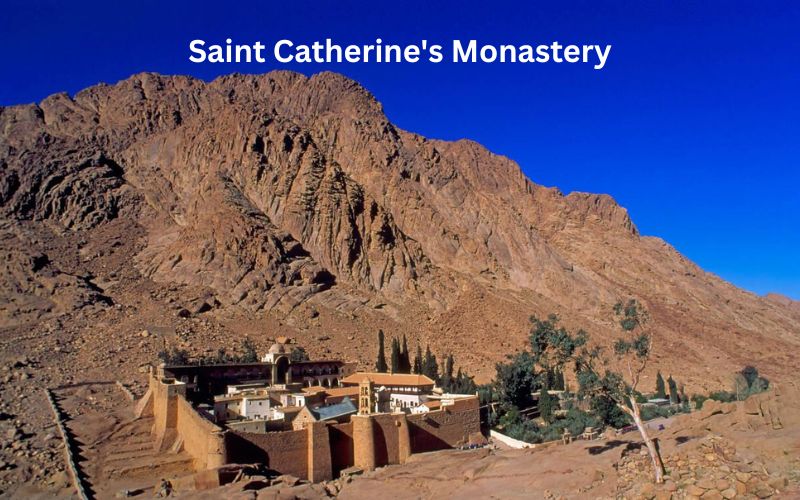
Saint Catherine’s Monastery is one of the most extraordinary places you will ever stand inside. Imagine walking through a fortified stone gateway and stepping straight into the 6th century, surrounded by towering granite peaks, ancient chapels, ancient manuscripts, and a living bush that pilgrims have venerated for thousands of years as the very Burning Bush of Moses. Tucked into a remote desert valley at the foot of Mount Sinai, Saint Catherine’s Monastery is not just a historical landmark. It is a living, breathing sanctuary where monks have prayed every single day for over fourteen centuries, making it one of the oldest continuously inhabited Christian monasteries on Earth.
For anyone planning a Saint Catherine’s Monastery tour, this complete guide covers everything you need: where Saint Catherine’s Monastery is located, its incredible history, the world-famous Christ Pantocrator icon, the legendary library, opening hours and tickets, safety, photo tips, and exactly what to expect on the day of your visit to Saint Catherine’s Monastery at Mount Sinai.
Where Is Saint Catherine’s Monastery Located?
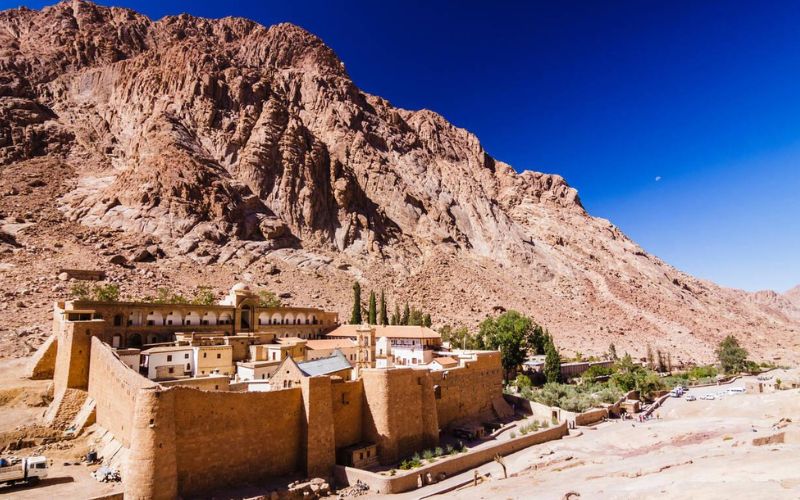
Saint Catherine’s Monastery sits in the southern part of Egypt’s Sinai Peninsula, wedged into a narrow valley right at the base of Mount Sinai (also known as Jebel Musa, or “Moses’ Mountain”). The nearest town, Saint Catherine, sits at an elevation of roughly 1,600 meters, surrounded by some of the highest peaks in Egypt.
This isolation is part of what makes a visit so memorable. There are no big highways or shopping centers nearby, just rust-colored mountains, scattered Bedouin settlements, and silence broken only by wind and the occasional bell. Most travelers reach the area from Sharm El Sheikh (around a three-hour drive), Dahab (about two hours), or Cairo (roughly six to seven hours).
A Quick History of Saint Catherine’s Monastery
To really appreciate a visit, it helps to know what you’re walking into. Saint Catherine’s Monastery was established in the 6th century under the Byzantine emperor Justinian, who had it built around a site already considered sacred for centuries, the spot where, according to tradition, Moses encountered the Burning Bush.
What makes this monastery so extraordinary isn’t just its age. It’s the fact that monks have lived and worshipped here continuously since its founding, making it widely regarded as one of the oldest working Christian monasteries on the planet. Through Persian invasions, the rise of Islam, the Crusades, Ottoman rule, and even Napoleon’s campaign through Egypt, the monastery was repeatedly granted protection by rulers of different faiths, a rare thread of respect that has kept it standing, almost untouched, for over 1,400 years.
Today it’s recognized as a UNESCO World Heritage Site, and it remains an active Greek Orthodox monastery, home to a small community of monks who still follow a rhythm of prayer that has barely changed in over a millennium.
The Burning Bush: Where Faith Meets History
Just inside the monastery walls grows a green, sprawling bush that, according to long-standing tradition, marks the very spot where Moses saw the bush that burned but was never consumed, the moment in which he was called to lead his people out of Egypt. Whether you visit as a pilgrim or simply as a curious traveler, standing next to this living plant (tended carefully for centuries) is one of those moments that tends to stick with people long after the trip ends.
Right beside it is the Chapel of the Burning Bush, a small but deeply atmospheric space that many consider the spiritual heart of the entire complex.
Christ Pantocrator: The Icon That Changed Art History
If there’s one single object that draws art lovers, historians, and the simply curious to Saint Catherine’s Monastery, it’s the icon known as Christ Pantocrator.
Painted sometime in the 6th century using an ancient technique called encaustic (pigments mixed with hot wax), this is believed to be the oldest surviving icon of Christ anywhere in the world. For centuries, much of the Christian world destroyed religious images during periods of iconoclasm, but because this monastery sat in such a remote corner of the desert, the icon survived completely untouched by that destruction.
What makes the Christ Pantocrator from Saint Catherine’s Monastery so striking is its design: the two halves of Christ’s face are deliberately different. One side appears calm, almost serene, representing the divine. The other side looks weathered and more human, representing his earthly nature. Art historians often point to this as one of the earliest and most powerful visual expressions of the idea of Christ as both fully divine and fully human, a concept central to early Christian theology.
For over a thousand years, the icon was tucked away in the monastery’s collection until conservators rediscovered its true age in the 1960s, after removing layers of later overpainting. Today, it’s considered one of the most important surviving works of Byzantine art, and seeing it in person, in the very place it has resided for roughly 1,500 years, is something photographs simply can’t replicate.
Inside the Monastery: What You’ll Actually See
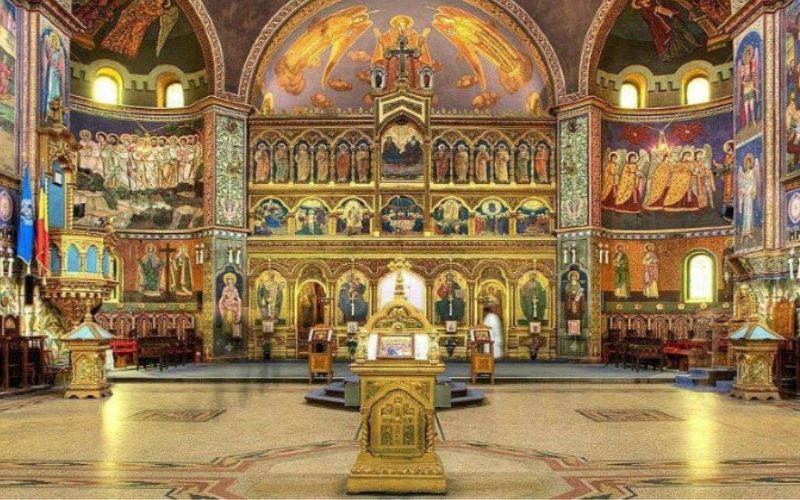
Saint Catherine’s Monastery isn’t a single building; it’s more like a small fortified town. Thick stone walls enclose a cluster of chapels, monks’ quarters, gardens, a mosque, an ossuary, and the main basilica.
The main church, the Basilica of the Transfiguration, is the centerpiece. Its heavy wooden entrance doors, carved with intricate floral and animal patterns, date back to the original Byzantine construction. Inside, gold mosaics, oil lamps, and centuries-old icons line the walls, many of which are part of the monastery’s enormous art collection.
There’s also a small museum where some of the monastery’s most valuable items are displayed, including a rotating selection from its extraordinary library and icon collection.
Saint Catherine’s Monastery Library: A Treasure Trove of Ancient Texts
Few places in the world hold a manuscript collection as significant as the one kept at Saint Catherine’s Monastery. The library houses thousands of handwritten manuscripts and texts in numerous ancient languages, including Greek, Arabic, Syriac, Armenian, Georgian, and Coptic.
Among its most famous holdings is a portion of one of the earliest known complete copies of the Christian Bible, a manuscript so old and so significant that scholars have spent decades studying it. The library also holds centuries-old letters of protection issued by Muslim rulers, guaranteeing the monastery’s safety, physical proof of the unusual interfaith respect this site has commanded throughout its long history.
Because of their fragility, most manuscripts aren’t on public display, but a curated selection is sometimes shown in the monastery’s museum, giving visitors a small glimpse into one of the most significant archives of the ancient world.
Saint Catherine’s Monastery Photos: What to Expect (and How to Get Great Shots)
If you’re hoping to come away with great photos, a few tips:
- Golden hour is everything. Early morning light hits the surrounding mountains beautifully, especially if you’re coming down from a Mount Sinai sunrise hike.
- Photography rules apply inside. Many interior spaces, particularly chapels and the area near the Christ Pantocrator icon, restrict photography to protect the artwork. Always check signage or ask before photographing inside churches.
- The exterior is incredibly photogenic. The contrast between the pale stone walls, the surrounding red-rock mountains, and the deep blue desert sky makes for striking wide shots.
- Don’t forget the Burning Bush. It’s one of the most-photographed spots on site, so be patient if there’s a small queue.
Can You Visit Saint Catherine’s Monastery? Opening Hours, Tickets & Practical Info
Yes, Saint Catherine’s Monastery is open to visitors, though hours are limited and can shift around religious holidays, so it’s worth confirming before you travel.
As a general guide:
- The monastery typically opens to visitors only during late morning hours, for a few hours at a time.
- It’s usually closed on Sundays and during major religious holidays.
- Entrance fees are modest, and most visitors only need a small amount of local currency for entry and any optional donations.
Because visiting hours are short, most travelers join an organized tour, which usually combines a sunrise hike up Mount Sinai with a visit to the monastery afterward. A typical itinerary looks something like this:
- Depart in the evening from Cairo, Sharm El Sheikh, Dahab, or a nearby base.
- Begin the ascent of Mount Sinai in the early hours of the morning, reaching the summit in time for sunrise.
- Descend the mountain and head straight to the monastery for the morning visiting window.
- Explore the grounds, church, Burning Bush, and museum before heading back.
Is It Safe to Visit Saint Catherine’s Monastery?
This is one of the most common questions travelers ask, and understandably so. The South Sinai region, including the area around Saint Catherine, is generally considered safe for tourism and is regularly visited as part of organized excursions from Sharm El Sheikh and Dahab. That said, travel conditions can change, so it’s always wise to check current travel advisories from your government before booking, and to travel with a reputable local guide or tour operator, especially for the overnight Mount Sinai hike.
Best Time to Visit Saint Catherine’s Monastery
The cooler months, roughly October through April, offer the most comfortable conditions, both for the monastery visit itself and for the Mount Sinai hike many travelers pair it with. Summer temperatures in the Sinai interior can be intense, particularly during the midday hours when the sun is at its strongest.
If you’re hoping to combine your visit with the sunrise hike up Mount Sinai, plan for cooler nights even in the warmer months. Temperatures at altitude before dawn can drop significantly, so pack a warm layer regardless of the season.
Hiking Mount Sinai: What to Expect on the Climb
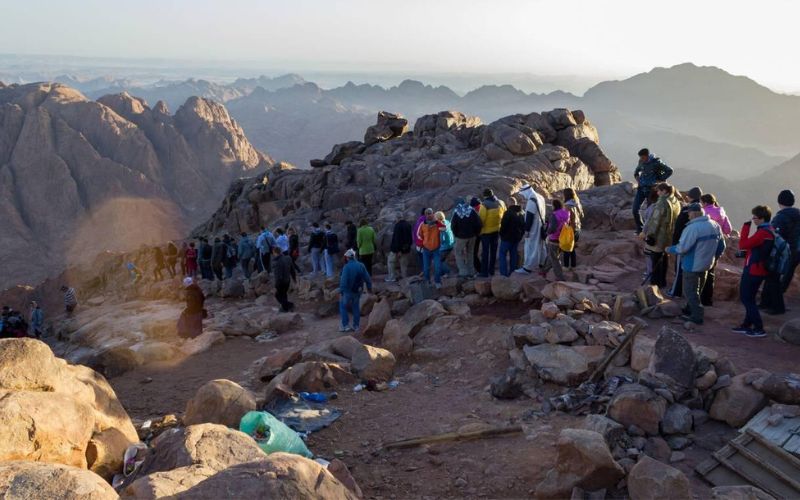
For many travelers, the visit to Saint Catherine’s Monastery is only half the adventure; the other half is the climb up Mount Sinai itself. There are two main routes to the summit: the Siket El Bashait, often called the Camel Path, and the Siket Sayidna Musa, known as the Steps of Repentance.
The Camel Path is the more popular choice, and the one most tour groups follow. It’s a gradual, winding trail that takes most hikers between two and three hours to reach the summit, and camels are available along the way for those who prefer to ride part of the route. The Steps of Repentance is the older, steeper option, a dramatic staircase of roughly three thousand steps carved directly into the rock by monks centuries ago. It’s shorter in distance but far more demanding on the legs.
Most visitors begin the climb around midnight or in the very early hours of the morning, timing the ascent so they reach the summit just before sunrise. Watching the sun rise over the jagged peaks of the Sinai, with the silhouette of Saint Catherine’s Monastery visible far below in the valley, is often described as one of the most unforgettable moments of any trip to Egypt. Near the top, small stalls run by local Bedouins sell hot tea, coffee, and blankets, a welcome comfort after a cold night climb. After soaking in the sunrise, hikers descend back down to the monastery in time for its morning visiting hours.
The Bedouin Communities of the Sinai
No visit to Saint Catherine’s Monastery and Mount Sinai is complete without an appreciation for the people who call this rugged landscape home. The Sinai’s Bedouin communities, particularly the Jabaliya tribe, have lived in the shadow of the monastery for generations, and their history is deeply intertwined with its own.
In fact, the Jabaliya Bedouins have traditionally served as guardians, guides, and caretakers for the monastery and the surrounding mountains, a relationship that stretches back centuries. Many of the guides who lead hikers up Mount Sinai, the camel handlers along the trail, and the families running small tea stalls near the summit are part of these same communities.
Travelers who spend time in the town of Saint Catherine often have the chance to learn more about Bedouin traditions, from their distinctive hospitality and tea culture to their deep knowledge of desert survival and navigation. Some tours include visits to Bedouin camps or gardens tucked into nearby valleys, offering a glimpse into a way of life shaped by centuries of living alongside this sacred desert landscape.
What to Pack for Your Visit
Because a trip to Saint Catherine’s Monastery often involves a combination of desert heat, high altitude, and an overnight mountain hike, packing thoughtfully makes a big difference. Here’s a practical checklist:
- Layers of clothing. Daytime desert temperatures can be warm, while nighttime and pre-dawn temperatures on Mount Sinai can be surprisingly cold, even in summer. A warm jacket, hat, and gloves are essential for the sunrise hike.
- Comfortable, sturdy footwear. Whether you take the Camel Path or the Steps of Repentance, the terrain is rocky and uneven, so proper hiking shoes or boots are a must.
- Modest clothing. As covered earlier, the monastery requires shoulders and knees to be covered, so pack at least one outfit that meets this dress code.
- A headlamp or flashlight. Most hikes up Mount Sinai begin in complete darkness, so a reliable light source is essential.
- Water and snacks. While small stalls along the trail sell drinks and snacks, prices are higher, and availability isn’t guaranteed, so it’s wise to carry your own.
- Cash in small denominations. For entrance fees, donations, tea stops, and any souvenirs along the way.
- A power bank. Cold temperatures and long nights can drain phone batteries quickly, especially if you’re using your phone for photos at sunrise.
- Sun protection. Sunglasses, sunscreen, and a hat are important for the daytime portions of your visit, even in cooler months.
Final Thoughts: Why Saint Catherine’s Monastery Belongs on Your Egypt Itinerary
It’s easy to spend an entire trip to Egypt focused on the pyramids, Luxor’s temples, and the Nile, and miss one of the country’s most remarkable living monuments entirely. Saint Catherine’s Monastery offers something genuinely different: a place where history isn’t just preserved behind glass, but still lived, prayed in, and cared for every single day, exactly as it has been for nearly a millennium and a half.
Whether you’re drawn by the art, the history, the religious significance, or simply the chance to stand somewhere truly ancient surrounded by desert silence, a visit to Saint Catherine’s Monastery with Touring in n Egypt is one of those rare travel experiences that feels bigger than the sum of its parts.