
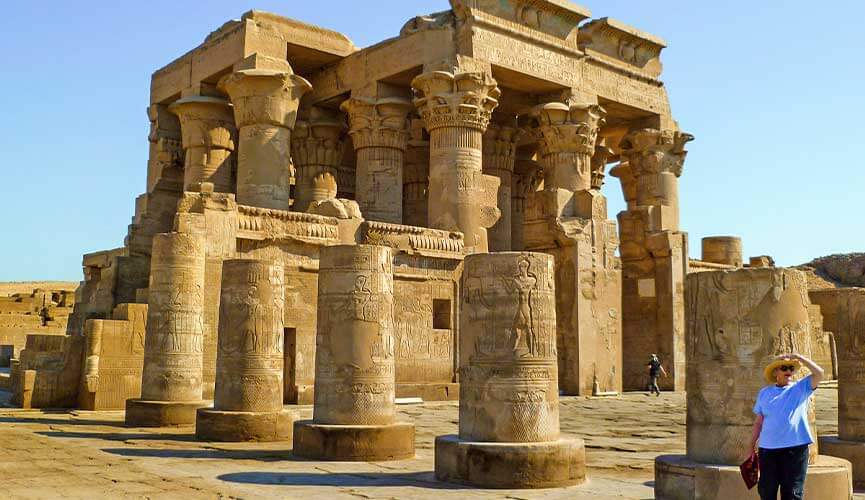
Have you ever heard of a temple dedicated to two gods at once? Kom Ombo Temple is one of Egypt’s most fascinating ancient Egyptian temples, and it’s completely unique. Standing tall on the banks of the Nile River, Kom Ombo Temple has amazed visitors for over 2,000 years with its perfect mirror design. Unlike any other ancient temple in Egypt, Kom Ombo Temple honors both Sobek, the crocodile god, and Horus, the falcon god, in one incredible monument.
In this guide, you’ll discover everything about this remarkable temple, where it is, why it was built, what makes it special, and how to visit. Whether you’re planning a trip to Egypt or just curious about the history of ancient Egypt, this complete guide to Kom Ombo Temple will answer all your curiosity questions.
Where is Kom Ombo Temple Located?
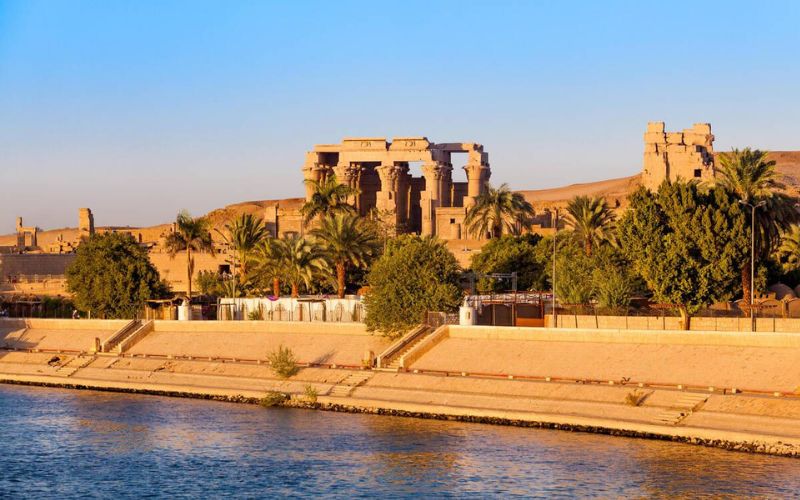
Kom Ombo Temple sits on the east bank of the Nile River in Aswan Governorate, Upper Egypt. You’ll find this ancient temple in Egypt, about 28 miles (45 kilometers) north of Aswan and roughly 103 miles (165 kilometers) south of Luxor. The temple stands in the small town of Kom Ombo, right on a beautiful bend in the river.
How to Get to Kom Ombo Temple
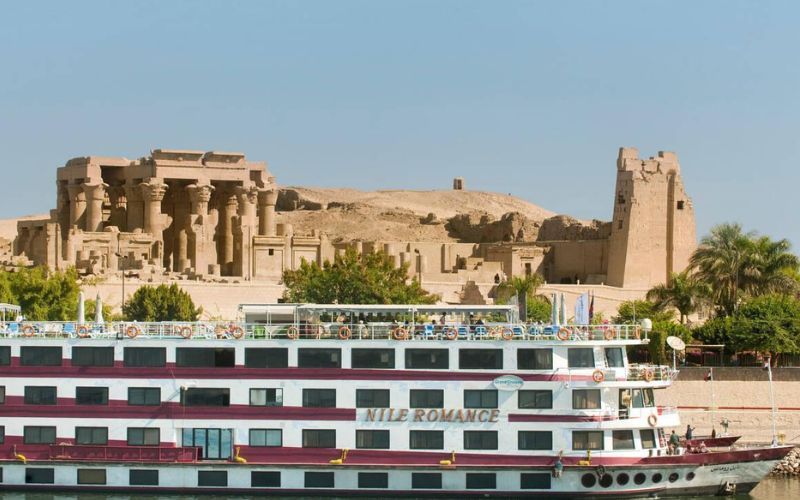
Most people visit Kom Ombo Temple during a Nile cruise between Luxor and Aswan. Approaching the temple by boat gives you an amazing view, just like ancient travelers saw it thousands of years ago. If you’re traveling independently, you can easily reach the temple of Sobek and Horus by car from Aswan (about one hour drive) or from Luxor (around two and a half hours).
This Egyptian temple sits high up on a hill overlooking the Nile. This smart location protected it from flooding and gave ancient Egyptians a perfect view of boats coming down the river.
Why is Kom Ombo Temple So Special?
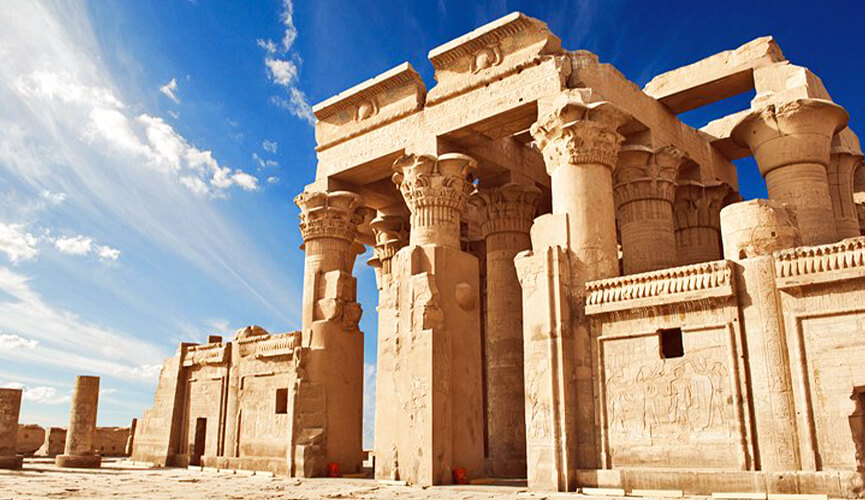
It’s the Only Double Temple in Egypt
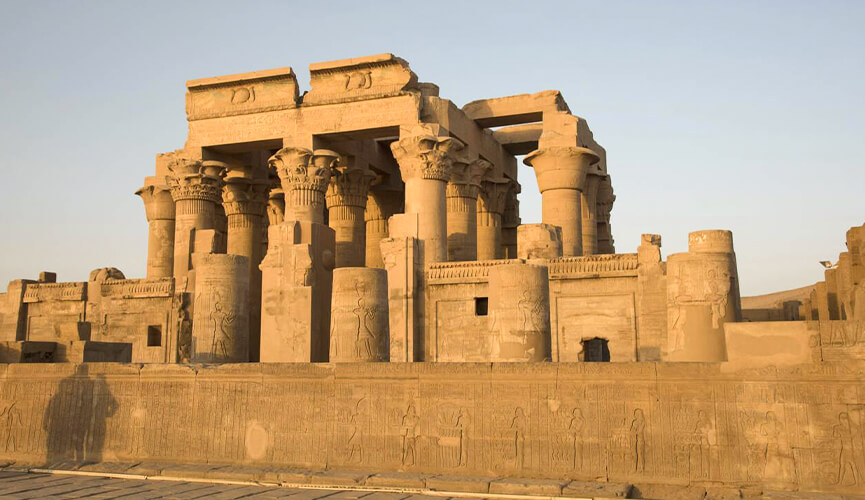
Here’s what makes Kom Ombo Temple truly unique: it’s perfectly split down the middle. One half belongs to Sobek, the crocodile god. The other half belongs to Horus the Elder, the falcon god. Everything is doubled: two entrances, two halls, two sanctuaries( That is why it is called the Double Temple of Kom Ombo) This mirror-image design exists nowhere else in Egypt.
The ancient Egyptians built the temple of Sobek and Horus this way to show balance between opposing forces. Sobek represented the wild, unpredictable power of the Nile and its crocodiles. Horus represented order, kingship, and the sky. Together in one temple, they showed how opposite forces can work in harmony.
Ancient Medical Knowledge Carved in Stone
Walk through the temple of Kom Ombo, and you’ll see something incredible on the walls: detailed carvings of surgical instruments. These aren’t just decorations. They show real medical tools used over 2,000 years ago: scalpels, bone saws, dental tools, and even forceps for childbirth.
These carvings prove that ancient Egyptian doctors were far more advanced than most people think. The temple also has a Nilometer (a tool for measuring the river’s water level) and astronomical calendars carved into the ceiling. Kom Ombo Temple was a center of both religious worship and scientific knowledge.
Sacred Crocodile Mummies
One of the most exciting parts of visiting Kom Ombo Temple is the Crocodile Museum. Inside, you’ll see mummified crocodiles, some over 13 feet long! Ancient Egyptians raised these crocodiles in special pools at the temple. They fed them the best food, decorated them with gold jewelry, and treated them like gods. When the crocodiles died, priests mummified them with the same care they gave to human pharaohs.
The History: Who Built Kom Ombo Temple?
The Ptolemaic Rulers
The Kom Ombo Temple you see today was built mainly by Greek rulers called the Ptolemies who controlled Egypt after Alexander the Great. Construction started around 180 BCE under Ptolemy VI Philometor. Different pharaohs added to the temple over nearly 400 years.
Even Cleopatra’s brother, Ptolemy XIII, worked on decorating Kom Ombo Temple. Later, Roman emperors like Tiberius and Caracalla added their own carvings and inscriptions. This long building period explains why you see different artistic styles throughout the temple.
Earlier Temples on the Same Spot
Although the current temple at Kom Ombo dates to Greek and Roman times, this sacred spot is much older. Evidence shows that earlier pharaohs like Thutmose III built temples here during Egypt’s New Kingdom (around 1550-1295 BCE). The Ptolemies rebuilt and expanded these older shrines into the magnificent double temple we see today.
Why Was Kom Ombo Temple Built?
Religious Worship
The main reason for building Kom Ombo Temple was to worship two important gods and their families. The southern half honored Sobek the crocodile god, along with his wife Hathor and son Khonsu. The northern half belonged to Horus the Elder, his wife Ta-Sent-Nefert, and their son Panebtawy.
Why crocodiles? The Nile near Kom Ombo Temple had many crocodiles. These powerful, dangerous animals needed to be respected through worship. By honoring Sobek, ancient Egyptians hoped to stay safe from crocodile attacks and receive the god’s blessings for good harvests and military strength.
Political Power
The Greek Ptolemies built this Ptolemaic wonder partly to prove they were legitimate Egyptian rulers. Even though they were foreigners, they spent huge amounts of money building traditional Egyptian temples. This showed the Egyptian people and powerful priests that the Ptolemies respected Egyptian religion and deserved to rule.
Healing Center
The Kom Ombo Temple wasn’t just for prayers; it was also a medical center. Priests who worked at the temple practiced medicine using the advanced techniques shown in the wall carvings. Sick people came to Kom Ombo Temple seeking both divine healing from the gods and practical medical treatment from knowledgeable priest-doctors.
Strategic Location
The location of Kom Ombo made it important for controlling trade and protecting Egypt’s southern border. Goods from Africa, gold, ivory, ebony, and exotic animals, passed by Kom Ombo Temple on their way north. The temple helped Egyptian authorities monitor this valuable trade.
What to See at Kom Ombo Temple
The Grand Entrance
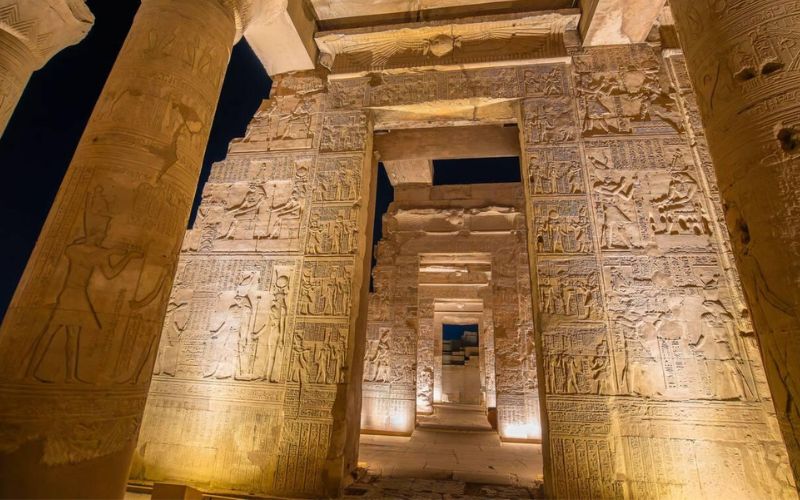
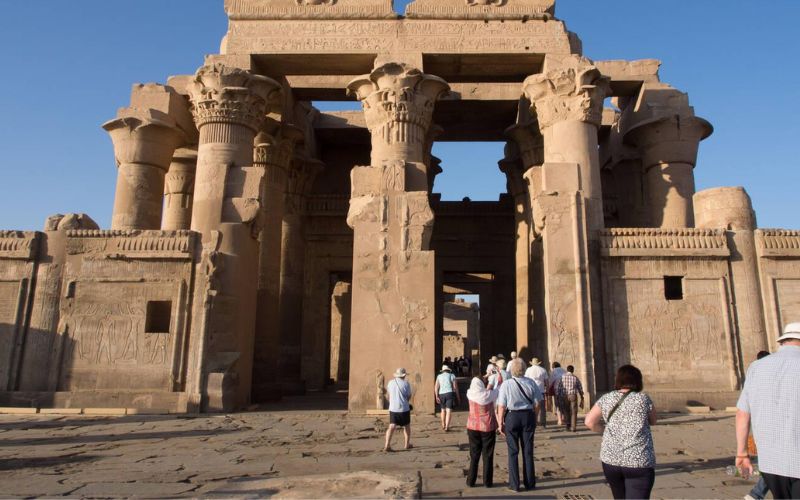
When you enter Kom Ombo Temple, you’ll immediately notice the double doorways. Take a moment to appreciate the massive columns in the outer courtyard. Many still have their original colors, reds, blues, and golds that have lasted over 2,000 years.
The Hypostyle Halls
Walk deeper into Kom Ombo Temple and you’ll pass through two columned halls. Look up at the column tops, you’ll see beautiful carvings of palm leaves and lotus flowers. The ceilings once had paintings of stars and flying vultures. Some of these amazing decorations are still visible.
The Wall Carvings
Every wall in Kom Ombo Temple tells a story. You’ll see pharaohs making offerings to gods, religious ceremonies, and battle scenes. Don’t miss the famous medical instruments panel, it’s on the inner corridor walls. These detailed carvings have helped modern historians understand ancient Egyptian medicine.
Look also for the Egyptian calendar carved into the stone. Ancient Egyptians at Kom Ombo Temple used this to track seasons, predict Nile floods, and plan religious festivals.
The Twin Sanctuaries
At the very back of Kom Ombo Temple are the two sanctuaries, the holiest rooms where only high priests could enter. Though partially ruined now, you can still feel the sacred atmosphere. Imagine ancient priests performing secret rituals here by lamplight.
The Nilometer
On the temple’s side, you’ll find a deep well with stairs leading down, this is the Nilometer. Priests at Kom Ombo Temple measured the Nile’s water level here every year. High water meant good floods and plentiful crops. Low water warned of possible famine. This simple tool was crucial for Egypt’s survival.
The Crocodile Museum
Don’t leave Kom Ombo Temple without visiting the small crocodile museum nearby. The mummified crocodiles are absolutely fascinating. Some are tiny babies, others are massive adults. You’ll also see crocodile coffins and eggs. This unique museum brings the ancient crocodile cult to life.
Temple of Sobek: Understanding Crocodile Worship
The southern half of Kom Ombo Temple dedicated to Sobek gives us amazing insights into how ancient Egyptians viewed these fearsome reptiles. Sobek appears in carvings as either a full crocodile or a man with a crocodile head wearing a fancy crown.
Why worship crocodiles? Ancient Egyptians living near Kom Ombo Temple saw crocodiles kill people every year. These apex predators commanded respect and fear. By worshipping Sobek at the temple, Egyptians hoped to gain protection and harness the crocodile’s power for their pharaoh and army.
Priests raised sacred crocodiles in pools at Kom Ombo Temple. They fed these special crocodiles honey cakes, roasted meat, and wine. They adorned them with gold bracelets and earrings. When a sacred crocodile died, it received full mummification and burial with expensive materials, just like a pharaoh.
Best Time to Visit Kom Ombo Temple
You can visit Kom Ombo Temple any time of year, but some seasons are better than others.
Winter (November to February) is ideal. Temperatures stay comfortable at 68-77°F (20-25°C), perfect for exploring the temple without overheating. This is peak tourist season, so expect more visitors.
Spring and Fall (March-April, October-November) offer good weather with fewer crowds. Temperatures are warm but manageable.
Summer (May to September) can be brutally hot, with temperatures often exceeding 104°F (40°C). If you visit Kom Ombo Temple in summer, go early morning or late afternoon.
Most Nile cruises in Egypt arrive at Kom Ombo Temple in the late afternoon. This creates beautiful lighting for taking some memorable Kom Ombo temple photos, but also means bigger crowds. For the best experience, try visiting early morning when it’s cooler and quieter.
Book Your Egyptian Nile Cruise with Us Now & Experience the Best of Kom Ombo Temple!
Practical Tips for Visiting Kom Ombo Temple

Tickets and Hours
Kom Ombo Temple opening hours are generally from 7:00 AM to 9:00 PM (sometimes hours might differ due to some circumstances). Skip the ticket line hassle, when you book your Egypt Nile cruise trip with us, all entrance fees to Kom Ombo Temple and everything you wish to be in the itinerary will be included! We handle everything so you can focus on enjoying this incredible ancient wonder.
What to Bring
- Water bottle: It gets hot and there’s limited shade at Kom Ombo Temple.
- Comfortable walking shoes: You’ll walk on uneven ancient stones.
- Sun protection: Hat, sunglasses, and sunscreen.
- Camera: Photography is allowed without flash.
- Cash: For Extra preferences, tipping, and souvenirs.
Hire a Guide
While you can explore Kom Ombo Temple on your own, hiring an Egyptologist guide makes a huge difference. Guides explain the Egyptian hieroglyphics, point out easy-to-miss details, and tell fascinating stories about daily life at the ancient temple. When you book with us, you get expert Egyptologist guides included in your Egypt tour package, no extra fees, no searching for qualified guides, just experts who bring Kom Ombo Temple’s and other Egypt’s hidden gems history to life and ensure you don’t miss a single amazing detail!
Photography Tips
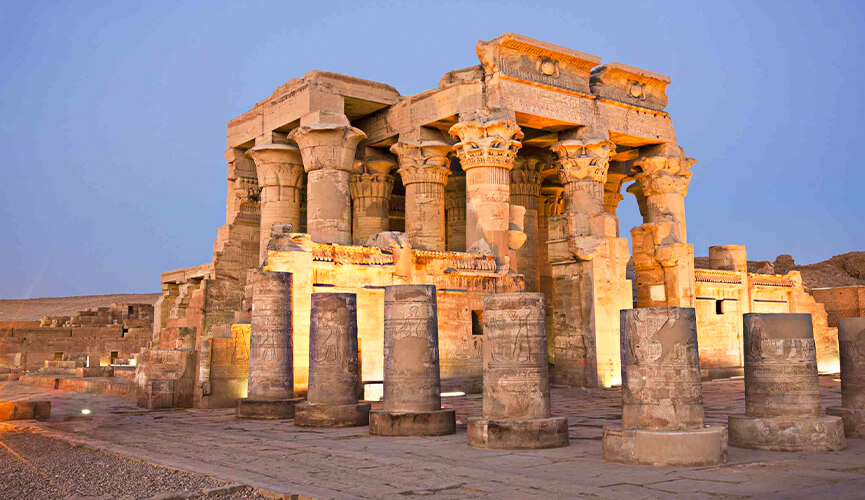
For the best photos of Kom Ombo Temple, arrive during the “golden hour” just before sunset. The sandstone glows beautifully in warm evening light. The double entrance makes a perfect symmetrical shot. Don’t forget to photograph the Nile view from the temple, it’s stunning.
Combining Kom Ombo Temple with Other Sites
Most visitors see Kom Ombo Temple as part of a longer Egypt itinerary. Popular combinations include:
- Luxor to Aswan Nile Cruise: Stops at Karnak Temple, Luxor Temple, Valley of the Kings, Hatshepsut Temple, Colossi of Memnon, Kom Ombo Temple, Edfu Temple,, and Philae Temple, Aswan High Dam, and the Unfinished Obelisk. You could also have an optional tour to Abu Simbel Temples or the Nubian Village from Aswan.
- Aswan Day Trip: Visit Kom Ombo Temple, Edfu Temple, and return to Aswan.
- Full Egypt Travel Package: Cairo Attractions, Luxor Attractions, Aswan Attractions, and Abu Simbel.
The temple of Kom Ombo works perfectly in any southern Egypt itinerary. Its riverside location makes it a natural stop for Nile cruise ships.
Interesting Facts About Kom Ombo Temple
- Perfect Symmetry: Every single element in Kom Ombo Temple appears twice in mirror image.
- Ancient Hospital: The temple functioned as a medical school and healing center.
- Crocodile Pools: Live sacred crocodiles once swam in pools right at the temple.
- Star Maps: Astronomical charts on the ceiling helped ancient priests track time.
- Birth Scenes: Carvings show the divine birth of pharaohs, linking rulers to gods.
- Earthquake Damage: The temple’s ruined state comes partly from ancient earthquakes.
- Stone Recycling: Local people took stones from Kom Ombo Temple over centuries to build houses.
- Night Illumination: The temple is beautifully lit at night when cruise ships dock.
The Legacy of Kom Ombo Temple Today
Kom Ombo Temple remains one of Egypt’s most important archaeological sites in Egypt. Conservation teams work constantly to preserve the fragile carvings and prevent further erosion. UNESCO and the Egyptian Ministry of Antiquities consider the temple a priority heritage site.
For modern visitors, Kom Ombo Temple offers something magical, a chance to step back over 2,000 years into ancient Egyptian religion, medicine, and daily life. The unique double design, the crocodile mummies, and the beautiful Nile setting create an unforgettable experience.
Standing in Kom Ombo Temple, you can imagine ancient priests conducting ceremonies, sacred crocodiles basking in the sun, doctors treating patients, and astronomers studying the stars. Every stone tells a story of human achievement, devotion, and the timeless fascination with the divine.
Last But Not Least…
Kom Ombo Temple deserves its place on every Egypt travel itinerary. Whether you love ancient history, architecture, medicine, or just want to see something truly unique, this double temple delivers. Its perfect symmetry, fascinating crocodile cult, and stunning riverside location make it unlike anywhere else in Egypt.
From the moment you approach Kom Ombo Temple by boat or road, you’ll understand why ancient Egyptians chose this special spot to honor their gods. The temple stands as proof of human creativity, religious devotion, and architectural genius that has survived millennia.
Plan your visit to Kom Ombo Temple thoughtfully with Touring in Egypt, hire a good guide, bring water, wear comfortable shoes, and allow enough time to truly appreciate this wonder. You’ll leave with amazing photos, fascinating knowledge, and memories of one of Egypt’s most unique temples.
The sacred crocodiles may be gone, but the magic of Kom Ombo Temple lives on, waiting to amaze every new visitor who walks through its double doors.