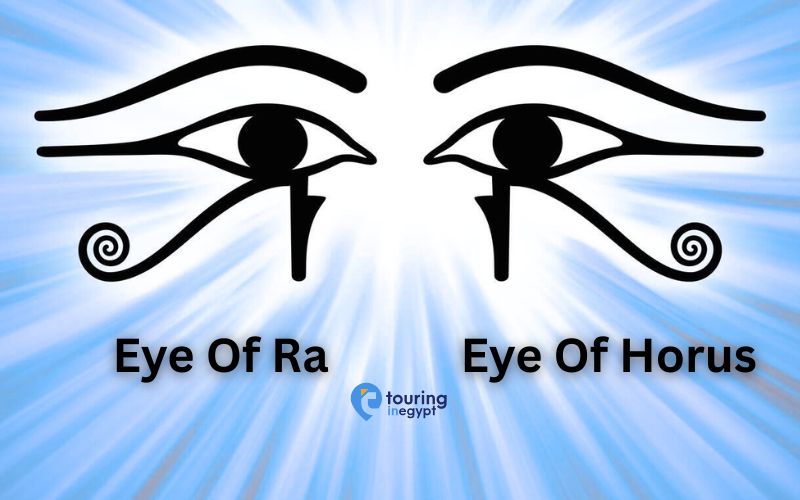
Have you ever wondered about the difference between the Eye of Horus vs Eye of Ra? These two iconic ancient Egyptian symbols from ancient Egypt look remarkably similar, yet they carry completely different meanings and stories. Understanding the Eye of Horus vs Eye of Ra isn’t just about knowing Egyptian mythology, it’s about uncovering thousands of years of spiritual wisdom, protection, and divine power that shaped one of history’s greatest civilizations. The Eye of Horus vs Eye of Ra comparison reveals fundamental truths about how ancient Egyptians understood the cosmos, the gods, and the forces that governed their world.
Many people wonder about the actual difference between these two eyes, which one represents healing versus power, and what they meant to the ancient Egyptians who created them. The Eye of Horus vs Eye of Ra debate has intrigued scholars and enthusiasts alike for centuries. Some want to know which eye is the right eye and which is the left, while others are curious about the mythological stories behind each symbol.
Understanding the Eye of Horus vs Eye of Ra significance helps us appreciate the depth of ancient Egyptian religious thought. By the end of this article, you’ll have clear answers to all these questions and understand why these symbols were among the most important religious and protective emblems in ancient Egyptian culture.
Understanding the Eye of Horus

The Eye of Horus, also called the Wedjat or Wadjet eye, is one of ancient Egypt’s most beloved symbols. This powerful emblem represents healing, protection, wholeness, and royal power. But where does it come from? When exploring the Eye of Horus vs Eye of Ra, it’s essential to understand each symbol’s individual story and significance first.
The Story Behind the Eye of Horus
The mythology of the Eye of Horus comes from one of Egypt’s most dramatic battles. Horus, the falcon-headed god of the sky, fought his uncle Set to avenge his father Osiris’s death and claim his rightful place as ruler of Egypt. During this fierce battle, Set tore out Horus’s left eye, ripping it into six pieces.
Here’s where the story gets hopeful: Thoth, the god of wisdom and magic, found the pieces and restored Horus’s eye completely. This restoration transformed the eye into a symbol of healing and wholeness. The Eye of Horus became associated with the moon because the waxing and waning phases reminded ancient Egyptians of the eye being destroyed and then restored.
What Does the Eye of Horus Symbolize?
The Eye of Horus represents healing and restoration after injury or trauma, making it a powerful symbol for anyone who has overcome difficult times. It embodies protection from evil spirits and negative energy, royal power and divine authority, as well as wholeness and completeness. When comparing the Eye of Horus vs Eye of Ra, this healing aspect of the Eye of Horus stands in stark contrast to Ra’s aggressive power. Ancient Egyptians associated this symbol with the moon and its cycles, seeing the waxing and waning phases as a reminder of the eye being destroyed and then restored. The eye also represents sacrifice and recovery, showing that even great loss can lead to renewal.
Ancient Egyptians used the Eye of Horus in amulets, jewelry, and even in mathematical measurements for medicine. It was a passive guardian, watching over people with gentle, protective care rather than aggressive defense.
Understanding the Eye of Ra

Now let’s talk about the Eye of Ra vs Eye of Horus difference. The Eye of Ra is a completely different symbol with a much more aggressive energy. This eye represents the raw power of the sun god Ra himself.
The Story Behind the Eye of Ra
The Eye of Ra has a fierce origin story. When humanity began to rebel against Ra and disrespect his divine authority, the sun god grew furious. He sent out his eye as a weapon to punish the wrongdoers. The eye transformed into the goddess Sekhmet, a fierce lioness deity who unleashed destruction upon the earth.
The Eye of Ra became so violent and out of control that Ra himself feared it would destroy all creation. He had to trick the eye by giving it beer mixed with mandrake, which made it drunk and calm enough to return to him. After this, Ra placed the eye on his forehead as his personal protector.
What Does the Eye of Ra Symbolize?
The Eye of Ra represents fierce power and authority, embodying the sun and its burning energy. This symbol carries the weight of divine wrath and retribution, offering protection through aggression rather than passive watching. The Eye of Horus vs Eye of Ra contrast becomes clear when examining their respective energies and purposes. It encompasses both creation and destruction, the dual forces that maintain cosmic balance.
Interestingly, the Eye of Ra often manifests as feminine divine power, personified as goddesses like Sekhmet or Hathor. Unlike the Eye of Horus, which watches peacefully, the Eye of Ra is an active force that doesn’t just observe but acts, defends, and sometimes destroys to maintain cosmic order. The Eye of Horus vs Eye of Ra distinction is fundamental to understanding ancient Egyptian theology.
Eye of Ra vs Eye of Horus: The Key Differences
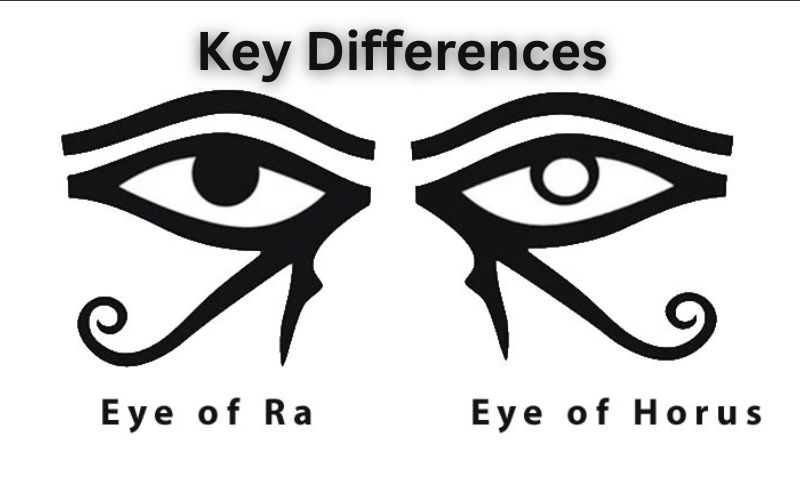
When comparing Eye of Ra vs Eye of Horus, several crucial differences emerge that help us understand why ancient Egyptians created two distinct symbols.
The most fundamental difference lies in which eye each symbol represents. The Eye of Horus is the left eye, associated with the moon and its gentle, cyclical nature. Meanwhile, the Eye of Ra is the right eye, connected to the sun’s powerful, constant presence. This positioning matters deeply in Egyptian symbolism, with the right representing the sun’s masculine energy and the left embodying the moon’s feminine energy. The Eye of Horus vs Eye of Ra positioning reflects the cosmic duality that ancient Egyptians saw in all of nature.
Each eye belongs to a different deity. The Eye of Horus naturally belongs to Horus, the falcon-headed sky god who fought to reclaim his rightful throne. The Eye of Ra, on the other hand, belongs to Ra, the supreme sun god and creator of all existence.
The energy and nature of these symbols couldn’t be more different. The Eye of Horus emanates passive, protective, healing, and gentle energy. It watches over you like a caring guardian. Conversely, the Eye of Ra pulses with active, aggressive, destructive, and powerful force. It doesn’t just watch; it intervenes forcefully when necessary. This fundamental difference in the Eye of Horus vs Eye of Ra energy explains why ancient Egyptians used them in different contexts and rituals.
When discussing Eye of Horus vs Ra in terms of symbolic meanings, we see stark contrasts. The Eye of Horus represents healing after battle, restoration from brokenness, wholeness regained, and sacrifice that leads to personal growth. The Eye of Ra symbolizes divine authority that cannot be questioned, punishment for wrongdoing, and the awesome power to both create life and destroy it.
While both symbols look like stylized eyes at first glance, subtle visual differences distinguish them. The Eye of Horus often appears with markings resembling a falcon beneath it, including a distinctive spiral and a teardrop shape. The Eye of Ra frequently appears with a cobra, known as the uraeus, or accompanied by various solar symbols that emphasize its connection to the sun god. These visual distinctions in the Eye of Horus vs Eye of Ra imagery helped ancient Egyptians immediately recognize which divine power was being invoked.
Their celestial associations further highlight the Eye of Horus vs Eye of Ra distinction. The Eye of Horus connects to the moon and its ever-changing phases, waxing and waning like the symbol’s own story of destruction and restoration. The Eye of Ra connects to the sun and its daily journey across the sky, never wavering in its path or power. The Eye of Horus vs Eye of Ra celestial connection reflects the ancient Egyptian understanding of cosmic balance between lunar and solar forces.
The Sacred Use of These Symbols in Ancient Egypt
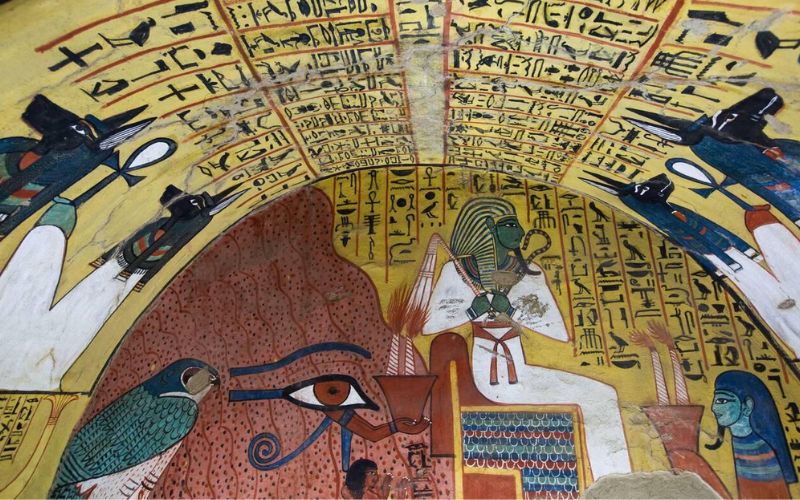
The ancient Egyptians didn’t simply admire these symbols from afar, they integrated the Eye of Horus vs Eye of Ra into every aspect of their civilization, from royal regalia to common protective amulets. The Eye of Horus vs Eye of Ra appeared in temples, tombs, jewelry, and daily religious practices throughout ancient Egypt.
The Eye of Horus in Ancient Egyptian Life
The Eye of Horus held a special place in Egyptian society as a symbol of restoration and protection. Ancient Egyptians wore Eye of Horus amulets made from precious materials like gold, lapis lazuli, and carnelian. These amulets were believed to protect the wearer from evil spirits, illness, and misfortune. The symbol appeared frequently in funerary contexts, painted on coffins and placed among burial goods to ensure the deceased’s safe passage through the afterlife. When examining the Eye of Horus vs Eye of Ra in daily life, the Eye of Horus was more commonly worn by ordinary people for personal protection.
Perhaps most remarkably, the Eye of Horus played a crucial role in ancient Egyptian mathematics and medicine. The six parts of the eye each represented a fraction used in measuring grain and medicine: one half, one quarter, one eighth, one sixteenth, one thirty-second, and one sixty-fourth. Physicians used these measurements when preparing remedies, believing that the healing power of Horus would be invoked through the symbol itself.
Temple walls throughout Egypt displayed the Eye of Horus, particularly in temples dedicated to Horus himself, such as the magnificent temple at Edfu. Priests invoked this symbol during healing rituals and ceremonies meant to restore balance and wholeness to individuals or the kingdom itself.
The Eye of Ra in Ancient Egyptian Life
The Eye of Ra commanded a different kind of reverence, one mixed with awe and fear. Egyptian pharaohs closely associated themselves with the Eye of Ra, wearing it on their crowns in the form of the uraeus, the rearing cobra that symbolized the eye’s fierce protective power. This wasn’t merely decorative; it announced to all who saw the pharaoh that he carried the destructive might of Ra himself and could unleash it against enemies of Egypt.
In religious ceremonies, the Eye of Ra represented the king’s divine right to punish wrongdoers and maintain cosmic order. Priests performed rituals to appease the Eye of Ra, particularly during the annual “Festival of Drunkenness” which commemorated the story of how Ra tamed his own eye by making it drunk on beer mixed with red ochre to resemble blood.
The symbol appeared on temple walls as a protective barrier, warning evil forces that the sun god’s power guarded this sacred space. Unlike the gentle watching of the Eye of Horus, the Eye of Ra actively threatened any who would disturb cosmic harmony or challenge divine authority.
Royal Regalia and Divine Authority
Egyptian kings understood the Eye of Ra vs Eye of Horus distinction deeply and used both symbols to legitimize their rule. They wore the Eye of Horus to show they were the rightful heirs of Horus, the god-king who reclaimed his throne after his father Osiris’s murder. This connected them to the divine lineage and showed their rule was ordained by the gods themselves.
Simultaneously, they displayed the Eye of Ra to demonstrate they wielded supreme power and could act as Ra’s representative on earth. The combination of both symbols in royal iconography sent a clear message: the pharaoh had both the legitimate right to rule (Horus) and the divine power to enforce that rule (Ra). The Eye of Horus vs Eye of Ra symbolism in pharaonic crowns and regalia demonstrated the complete divine mandate of Egyptian kingship.
The Religious and Mythological Significance: Eye of Ra vs Horus
Beyond their practical uses, the Eye of Ra vs Horus comparison reveals the core of ancient Egyptian religious thought and cosmology.
The Eye of Horus in Egyptian Theology
The Eye of Horus embodied fundamental Egyptian beliefs about death, resurrection, and the triumph of order over chaos. The story of Horus’s eye being torn apart by Set and then restored by Thoth represented the Egyptian concept of renewal and the cyclical nature of existence. Just as the moon waxes and wanes, disappearing and returning, so too could what was broken be made whole again.
Ancient Egyptians saw in this symbol a promise that death was not final, that the deceased could be restored in the afterlife just as Horus’s eye was restored. This is why the Eye of Horus, called the Wedjat meaning “the whole one” or “the healthy one,” appeared so frequently in tomb paintings and on sarcophagi. It assured the dead that Thoth’s wisdom and Horus’s triumph over Set would protect and restore them in the realm of Osiris. The Eye of Horus vs Eye of Ra theological meaning differed significantly, while Horus promised restoration, Ra promised judgment and protection.
The eye also represented the concept of offerings to the gods. When priests made offerings at temples, they sometimes referred to these gifts as “the Eye of Horus,” symbolizing something precious that had been damaged but could be given to restore cosmic balance and please the deities.
The Eye of Ra in Egyptian Theology
The Eye of Ra embodied a different but equally important theological concept—the terrifying power of divine retribution and the necessity of cosmic order known as Ma’at. The stories of the Eye of Ra going forth to punish humanity taught the Egyptians that the gods would not tolerate chaos or disrespect of the divine order.
Interestingly, the Eye of Ra was often personified as a goddess rather than simply a symbol. It could manifest as Sekhmet the lioness, Hathor the cow goddess, Wadjet the cobra, or Bastet the cat. This feminine aspect of Ra’s power represented the creative and destructive forces of nature, nurturing life like a mother but capable of fierce protection and terrible vengeance when aroused.
The annual flooding of the Nile was sometimes associated with the Eye of Ra. Just as the eye had to be calmed with beer to prevent it from destroying all humanity, so too did the Nile’s flooding need to be the right amount, not too much to cause destruction, not too little to cause famine. This connection shows how deeply the Eye of Ra vs Eye of Horus symbolism was woven into Egyptian understanding of natural phenomena. The Eye of Horus vs Eye of Ra influenced how ancient Egyptians interpreted both celestial events and earthly cycles.
How Ancient Egyptians Used These Symbols
Understanding Eye of Horus vs Eye of Ra historically helps us appreciate their importance in daily Egyptian life, religious practices, and royal power.
In daily life, ancient Egyptians wore both eyes as amulets and jewelry for protection against harm. The Eye of Horus appeared on measuring tools for potions and medicines, showing how deeply integrated this symbol was into practical healing work. Both symbols were carved into architecture, decorating temples and tombs with protective and powerful imagery. In funerary practices, these eyes were painted on coffins to protect the deceased on their journey through the afterlife. The Eye of Horus vs Eye of Ra usage in daily life reflected their different protective qualities, gentle healing versus fierce guarding.
Religious practices incorporated these symbols extensively. The Eye of Horus represented offerings to the gods, a way of giving something precious and meaningful. The Eye of Ra symbolized the god’s presence and watchfulness over temple spaces. Both symbols were invoked in spells and prayers for various purposes, and priests used these symbols in rituals to connect with divine power. The Eye of Horus vs Eye of Ra invocation in temple rituals depended on whether priests sought healing or divine judgment.
For Egyptian rulers, both symbols played crucial roles in demonstrating their right to rule. The Eye of Horus showed their legitimate right to the throne, as Horus was the rightful king who reclaimed his inheritance. The Eye of Ra demonstrated their divine authority and power, connecting them to the supreme creator god himself. Understanding the Eye of Horus vs Eye of Ra in royal contexts reveals how pharaohs claimed both legitimacy and might.
Common Misconceptions About Eye of Horus vs Eye of Ra
Let’s clear up some confusion about Eye of Ra vs Eye of Horus that often circulates in popular culture. Many misunderstandings about the Eye of Horus vs Eye of Ra persist even today, so it’s important to address them directly.
One common myth suggests they’re the same symbol. In reality, while they look similar and are sometimes used interchangeably in modern culture, they are distinct symbols with different origins, deities, and meanings. Confusing them would be like mixing up two different gods entirely.
Another misconception portrays the Eye of Ra as evil or malevolent. The truth is more nuanced, the Eye of Ra isn’t evil but rather powerful and potentially destructive. It serves to maintain cosmic order and protect Ra’s divine authority. It represents necessary force and justified retribution, not malevolence for its own sake.
Some people believe you can only choose one symbol and must reject the other. This couldn’t be further from the truth. Many people embrace both symbols because they represent complementary energies that we all need in our lives. Life requires both the healing gentle energy of Horus and the fierce protective power of Ra.
Finally, some dismiss these as merely historical curiosities with no modern relevance. However, these symbols remain actively used in spiritual practices, jewelry, art, and personal symbolism worldwide. They’re living symbols that continue to evolve and speak to people, not just ancient artifacts gathering dust in museums.
Where to See Eye of Horus and Eye of Ra in Egypt Today
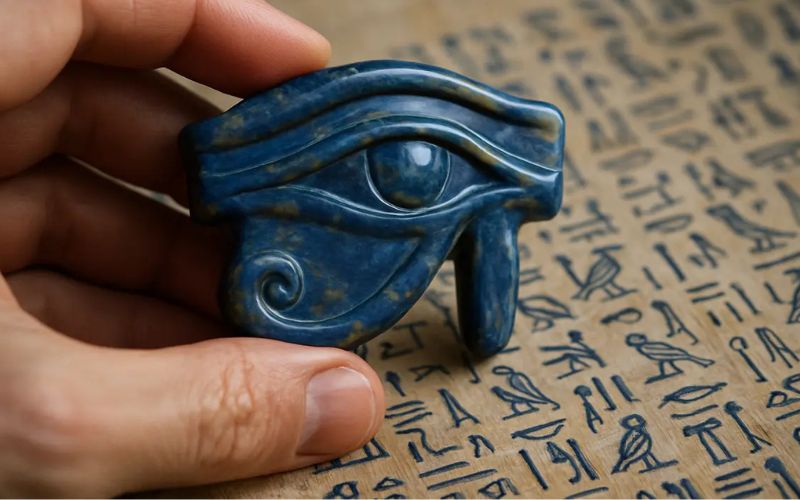
If you’re fascinated by the Eye of Horus vs Eye of Ra and want to see them firsthand, Egypt offers incredible opportunities to witness these symbols in their original context. Visiting Egypt allows you to experience the Eye of Horus vs Eye of Ra carved in ancient stone rather than just reading about them.
Edfu Temple, dedicated to Horus, features extensive Eye of Horus imagery throughout its well-preserved walls and chambers. Karnak Temple, connected to Ra, showcases solar symbolism throughout its massive complex. The Valley of the Kings contains tombs decorated with both symbols, protecting the pharaohs in their eternal rest. The Egyptian Museum in Cairo houses countless amulets and artifacts bearing these eyes, allowing you to see how ancient Egyptians actually wore and used these symbols. The temples of Luxor feature walls covered in hieroglyphs and eye symbols, telling stories thousands of years old.
Egyptian markets, like Khan El Khalili today sell Egyptian souvenirs of both symbols in many forms. You can find papyrus artwork hand-painted with traditional methods, jewelry crafted in gold, silver, and brass, amulets, such as the famous ancient Egyptian Eye of Horus amulet, and talismans for personal protection, home decorations ranging from small statues to wall hangings, and t-shirts and textiles featuring these iconic designs.
Artistic Representations in Ancient Egyptian Art
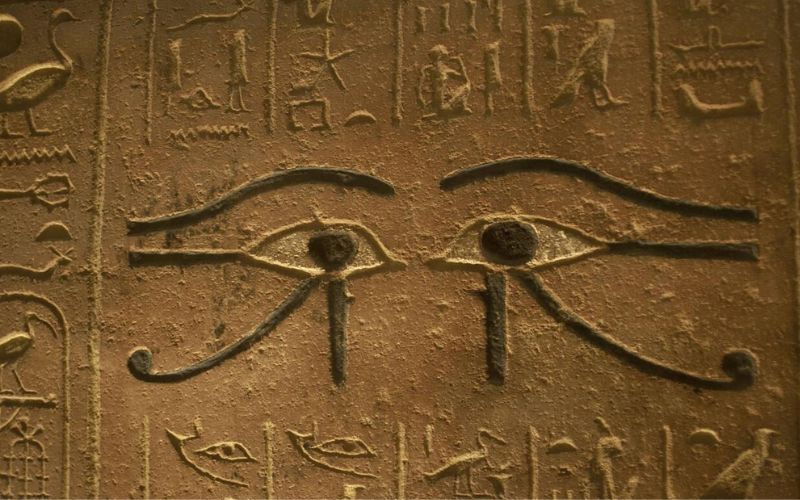
The Eye of Ra vs Horus appears throughout ancient Egyptian art in diverse and meaningful ways, each representation carefully crafted to convey specific religious and protective messages. The artistic depictions of the Eye of Horus vs Eye of Ra reveal how ancient Egyptians visually communicated complex theological concepts.
In Temple Architecture
Egyptian temples served as houses of the gods, and the placement of these eye symbols was never random. The Eye of Horus often appeared in areas associated with healing and restoration, particularly in the sanctuaries where priests performed rituals for the sick. The symbol was carved into stone walls, painted in vibrant colors that have faded over millennia, and incorporated into hieroglyphic inscriptions that told the story of Horus’s battle and restoration. The Eye of Horus vs Eye of Ra placement in temples reflected their distinct sacred functions.
The Eye of Ra typically appeared in more prominent, commanding positions. It adorned the tops of temple pylons, the massive gateways that led into sacred spaces. The eye looked outward, warning potential defilers that they entered under the watchful, powerful gaze of the sun god himself. Temple ceilings sometimes depicted the Eye of Ra as part of elaborate astronomical scenes showing the sun’s daily journey across the sky.
In Royal Iconography
Pharaohs incorporated both symbols into their crowns, jewelry, and ceremonial objects. The famous death mask of Tutankhamun features inlaid eyes that draw upon this symbolism, watching over the young king in death. Royal scepters and staffs often bore these symbols, physical manifestations of the king’s divine authority and protective power.
The difference in how royalty used the Eye of Horus vs Eye of Ra tells us much about Egyptian political theology. The Eye of Horus appeared on objects related to legitimate succession and rightful kingship, while the Eye of Ra appeared on objects related to the exercise of power and military might.
In Funerary Art
Egyptian tombs provide some of the most spectacular examples of these symbols. Coffins were painted with both eyes, positioned to watch over and protect the deceased. The Eye of Horus appeared frequently because of its association with restoration and resurrection, exactly what the deceased hoped to achieve in the afterlife.
Papyrus scrolls containing the Book of the Dead, the collection of spells meant to guide the deceased through the afterlife, incorporated both symbols at key points. The Eye of Horus appeared in spells of healing and protection, while the Eye of Ra appeared in spells dealing with divine judgment and the power to overcome obstacles in the underworld.
Ancient Egyptian Rituals Involving These Symbols
The ancient Egyptians didn’t merely wear or display the Eye of Horus vs Eye of Ra, they actively incorporated these symbols into complex religious rituals that sustained cosmic order and protected individuals and the kingdom. The ritual use of the Eye of Horus vs Eye of Ra was central to Egyptian religious practice and varied significantly based on which eye was invoked.
Rituals for the Eye of Horus
Egyptian priests performed healing rituals invoking the Eye of Horus, particularly for ailments of the eyes and head. These ceremonies recreated symbolically the restoration of Horus’s eye by Thoth. The priest would recite spells from sacred texts while touching the afflicted area with an amulet bearing the Eye of Horus, calling upon Thoth’s wisdom and Horus’s restored wholeness to heal the patient.
During funerary rites, the “Opening of the Mouth” ceremony used instruments shaped like or marked with the Eye of Horus to restore the deceased’s senses, allowing them to eat, breathe, and see in the afterlife. This ritual directly connected to the mythology of restoration, just as Horus’s eye was made whole, so too would the deceased be made whole and functional in the realm of the dead.
Temple offerings were sometimes ritually designated as “Eyes of Horus,” transforming ordinary bread, beer, or incense into sacred gifts imbued with the power of restoration and divine favor. This practice showed how deeply the symbol permeated Egyptian religious consciousness.
Rituals for the Eye of Ra
The Eye of Ra required different rituals, often focused on appeasement rather than invocation. The “Festival of Drunkenness” celebrated the taming of the Eye of Ra when it had become too destructive. During this festival, Egyptians drank beer colored red with ochre or pomegranate juice, ritually reenacting how Ra saved humanity by tricking his rampaging eye into drinking beer it thought was blood.
Daily temple rituals acknowledged the Eye of Ra as the sun’s power. At dawn, priests performed the “Opening of the Doors” ceremony, greeting Ra and his eye as they emerged from the underworld to begin their journey across the sky. At sunset, they performed rituals to help Ra safely navigate the dangerous underworld during the night, ensuring the eye’s return at dawn.
Royal coronation ceremonies invoked the Eye of Ra to transfer divine authority to the new pharaoh. The uraeus crown, representing the Eye of Ra as a cobra, was placed on the king’s brow in a ritual that made him the earthly vessel of Ra’s power and judgment.
The Balance of Both Powers
Some rituals cleverly incorporated both symbols, recognizing that the Eye of Ra vs Eye of Horus represented complementary forces that together maintained Ma’at, the cosmic order. Temple ceremonies marking the new year often acknowledged both the healing, renewing power of the Eye of Horus and the protective, ordering power of the Eye of Ra, asking the gods to grant Egypt another year of prosperity, health, and security. The Eye of Horus vs Eye of Ra balance in New Year rituals symbolized the complete protection and renewal the gods could provide.
Conclusion: The Enduring Legacy of Eye of Horus vs Eye of Ra
The Eye of Horus vs Eye of Ra distinction reveals fundamental truths about how ancient Egyptians understood their world, their gods, and the forces that governed existence. The Eye of Horus vs Eye of Ra comparison is not merely an academic exercise but a window into the soul of ancient Egyptian civilization. The Eye of Horus taught them that healing and restoration were always possible, that even devastating loss could be overcome through wisdom and divine intervention. The Eye of Ra reminded them that cosmic order required power, that the gods would not hesitate to unleash destruction when necessary to maintain Ma’at.
These two symbols, though different in their Eye of Ra vs Eye of Horus characteristics, worked together in Egyptian religious thought to create a complete theological framework. Together, they represented the full spectrum of divine action, the gentle restoration of Horus balanced against the fierce protection of Ra, the moon’s quiet cycles complementing the sun’s commanding journey across the sky.
The ancient Egyptians created these symbols thousands of years ago to express their deepest religious convictions and cosmic understanding. The Eye of Horus appeared on amulets worn by commoners seeking protection, on temple walls where priests performed healing rituals, and in tombs where the dead awaited resurrection. The Eye of Ra adorned the crowns of pharaohs who claimed divine authority, decorated temple gates that warned away chaos, and appeared in myths that explained both creation and destruction.
Understanding the Eye of Horus vs Ra comparison allows us to glimpse how an ancient civilization wrestled with universal questions about power and healing, destruction and restoration, justice and mercy. These weren’t abstract philosophical concepts to the Egyptians but living realities embodied in symbols they could see, touch, and invoke in their daily religious lives.
The temples of Egypt still bear these symbols on their walls, weathered by millennia but still clearly visible. When you visit Edfu and see the Eye of Horus carved into stone, or stand before Karnak and observe the Eye of Ra watching over the great hypostyle hall, you’re witnessing more than ancient art. You’re seeing the physical manifestation of how an entire civilization understood the divine, protected themselves from chaos, and sought to maintain cosmic harmony.
The Eye of Ra vs Horus question has fascinated historians, archaeologists, and students of ancient religions for generations, and now you understand the profound theological and mythological distinctions that made these two symbols essential to Egyptian civilization. These weren’t merely decorative emblems but powerful religious tools that helped the ancient Egyptians navigate the complexities of life, death, and the divine realm that connected them both.
Interested in discovering more about the difference between the Eye of Horus and Eye of Ra? Book with Touring in Egypt to organize your perfect tour, where you can see these ancient symbols and Egypt’s incredible monuments with your own eyes. Experience the ankh, scarab beetle, temple hieroglyphs, and pyramids firsthand. Discover the rich symbolic heritage of one of history’s most fascinating civilizations. Contact us today!