
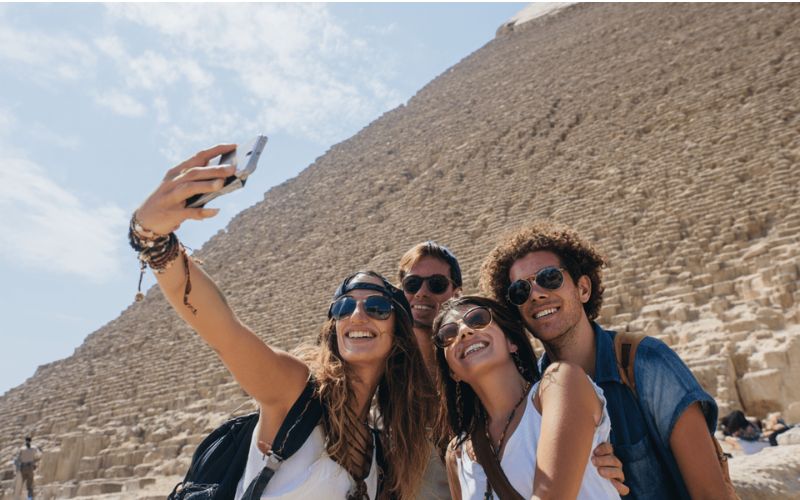
Egypt is one of the world’s most rewarding travel destinations, home to ancient wonders, vibrant cities, and stunning coastlines along the Red Sea and Mediterranean. Whether you’re drawn by the pyramids, the temples of Luxor, or the beaches of the Sinai Peninsula, this guide covers the best Egypt tourist places to help you plan an unforgettable trip and shows you where to book, when to go, and what to expect.
Egypt draws millions of international visitors every year, and for good reason. It’s one of the few destinations on Earth where you can stand beside a 4,500-year-old pyramid in the morning, wander a Roman-era catacomb by lunch, and watch the sun set over the Red Sea the same evening. This guide walks through the country’s most important sites region by region, plus the practical details, timing, transport, and booking strategy, you’ll need to turn a wish list into a workable itinerary.
Why Egypt Should Be on Your Travel List
Few countries pack as much history, culture, and natural beauty into one itinerary. Egypt is one of the most popular tourist areas in Egypt on the map for travelers seeking both things to do in Egypt that are steeped in history and modern comforts like world-class resorts, Nile cruises, and desert safaris. From the moment you land in Cairo, you’re surrounded by more than 5,000 years of civilization, and it’s all accessible with the right planning.
Beyond the monuments, Egypt offers genuine variety. Upper Egypt (the Nile Valley south of Cairo) is where most of the ancient temples and tombs are concentrated. Lower Egypt, including Cairo and Alexandria, blends antiquity with a bustling, modern Arab capital and a Mediterranean port city. And the coasts, the Red Sea to the east, the Mediterranean to the north, give travelers a reason to extend their trip beyond history into relaxation and outdoor adventure. Few countries let you combine all three so easily in a single two-week trip.
Tourist Places in Cairo, Egypt
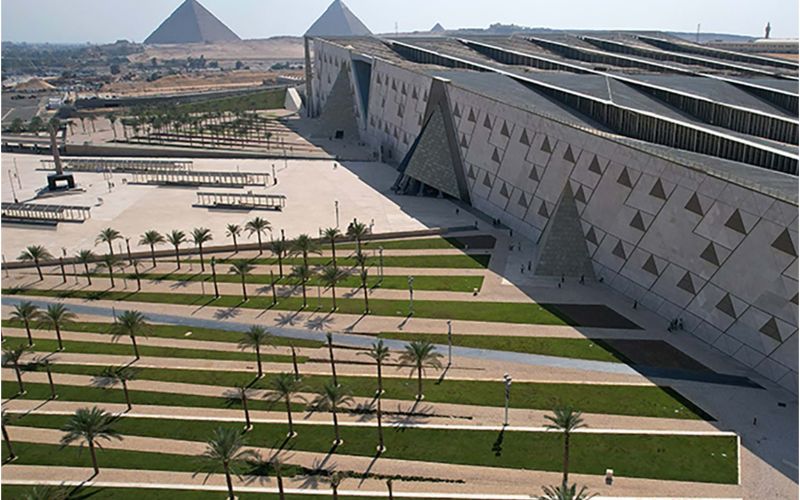
Cairo is the natural starting point for most visitors, and it offers some of the most famous tourist places in Cairo, Egypt.
The Giza Pyramids and the Sphinx
No list of tourist places in Egypt, Cairo, is complete without the Great Pyramid of Giza, the Pyramid of Khafre, the Pyramid of Menkaure, and the Great Sphinx. This is the last surviving wonder of the ancient world, and it’s easily combined with a camel ride across the plateau or a sound-and-light show in the evening. Book tickets in advance during peak season (October–April) to avoid long lines. Arriving right at opening time is the best way to beat both the heat and the tour-bus crowds, and it gives you the clearest photos of the plateau before the midday haze sets in.
For travelers who want to go deeper than a drive-by photo stop, it’s worth paying the additional entry fee to go inside the Great Pyramid itself, or booking a ticket for the Solar Boat Museum, which displays a fully reconstructed 4,600-year-old wooden vessel found buried beside the pyramid. Many guided tours also include a stop at a nearby panoramic viewpoint, which offers one of the best angles for photographing all three pyramids together.
The Egyptian Museum and the Grand Egyptian Museum
Home to thousands of artifacts, including treasures from Tutankhamun’s tomb, the Egyptian Museum in Tahrir Square remains a must-visit. The newly opened Grand Egyptian Museum near Giza has quickly become one of the top Egypt attractions, housing the most complete Tutankhamun collection ever displayed together. Its scale is enormous, galleries span multiple floors and cover everything from prehistoric Egypt through the Greco-Roman period, so it’s worth allocating a half day rather than rushing through in an hour or two.
If you only have time for one museum, the Grand Egyptian Museum is generally the better choice for first-time visitors thanks to its modern presentation and English-language signage, though history enthusiasts often enjoy visiting both to compare the older, denser displays at the original Tahrir Square museum with the newer galleries at Giza.
Khan el-Khalili Bazaar
For a taste of local life, this centuries-old market in Islamic Cairo is ideal for souvenirs, spices, jewelry, and traditional coffee houses. It’s consistently ranked among the top places to visit in Egypt for cultural immersion and shopping. Wandering the narrow alleyways, you’ll find everything from handmade copperware and alabaster carvings to spice stalls and perfume shops selling essential oils by weight.
El Fishawy, one of Cairo’s oldest coffeehouses, sits right in the heart of the bazaar and makes a good stop for mint tea or Turkish coffee while people-watching. As with most markets in Egypt, bargaining is expected, starting at roughly half the initial asking price is a reasonable opening move for souvenirs and textiles.
Islamic Cairo and Coptic Cairo
Explore the Citadel of Saladin, the Alabaster Mosque, and the historic churches of Coptic Cairo, including the Hanging Church, all within a short taxi ride of downtown. Islamic Cairo also includes the Al-Azhar Mosque, one of the oldest universities in the world, and the Sultan Hassan Mosque-Madrasa, known for its soaring interior and dramatic scale.
Coptic Cairo, sometimes called Old Cairo, preserves some of the earliest Christian sites in Egypt, including the Church of St. Sergius and Bacchus, which, according to tradition, sits above a crypt where the Holy Family sheltered during their flight into Egypt. The Ben Ezra Synagogue nearby adds another layer to this compact but historically dense neighborhood.
Memphis and Saqqara
Just outside Cairo, the ancient capital of Memphis and the necropolis of Saqqara are often overlooked by first-time visitors but reward the extra half day. Saqqara is home to the Step Pyramid of Djoser, generally considered the earliest large-scale stone building in history, along with numerous smaller tombs decorated with well-preserved reliefs. Many private tours combine Giza, Memphis, and Saqqara into a single day trip.
Famous Tourist Places in Egypt Beyond Cairo
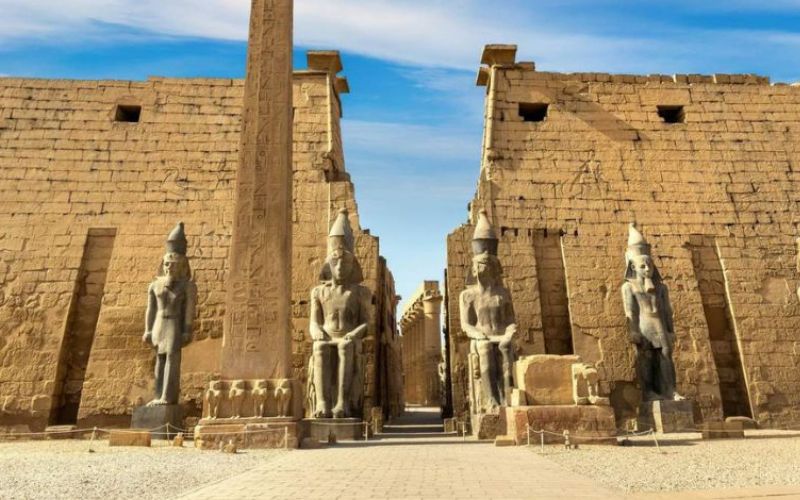
While Cairo anchors most itineraries, some of the most famous tourist places in Egypt lie further afield.
Luxor: The World’s Greatest Open-Air Museum
Luxor is home to the Karnak Temple Complex, the Valley of the Kings, the Temple of Hatshepsut, and the Colossi of Memnon. A hot air balloon ride over the West Bank at sunrise is one of the most popular experiences travelers book when visiting this region, offering sweeping views over the Theban Necropolis as the sun comes up over the Nile.
Karnak alone is worth a half day; it’s the largest religious complex ever built, with a hypostyle hall of 134 massive columns that dwarfs visitors walking through it. Across the river, the Valley of the Kings holds more than 60 tombs, including that of Tutankhamun, though only a rotating selection is open to the public at any given time to help with preservation. The Temple of Hatshepsut, built into the cliffs at Deir el-Bahari for Egypt’s most famous female pharaoh, is another highlight, distinctive for its terraced, colonnaded design that looks strikingly modern despite being over 3,400 years old.
Aswan and Lake Nasser
Aswan offers a slower pace, with the Philae Temple, the Aswan High Dam, and Nubian villages accessible by boat. Many travelers combine Luxor and Aswan with a multi-day Nile cruise, one of the most sought-after commercial travel packages in Egypt. The Philae Temple, dedicated to the goddess Isis, was relocated to Agilkia Island in a major UNESCO engineering effort during the 1960s and 70s to save it from flooding after the Aswan High Dam was built. The boat ride out to the island at sunset is one of the most peaceful excursions in the region.
Aswan is also a good base for exploring Nubian culture. Colorful Nubian villages along the Nile welcome visitors for traditional meals and house tours, and the Nubian Museum in Aswan provides useful context on the history and relocation of monuments affected by the dam project.
Abu Simbel
The twin rock temples of Ramses II near the Sudanese border are a bucket-list stop, especially for travelers interested in ancient engineering and astronomy. The temple aligns with the sun twice a year in a precise solar event, illuminating the inner sanctuary statues on February 22 and October 22. Like Philae, the temples were relocated block by block in the 1960s to save them from the rising waters of Lake Nasser, a feat considered one of the great archaeological rescue projects of the 20th century.
Most visitors reach Abu Simbel via a short flight from Aswan or an early-morning convoy drive through the desert, and it’s typically done as a long day trip rather than an overnight stay, since accommodation options near the site are limited.
Dendera and Abydos
For travelers with extra time, the temples of Dendera (dedicated to the goddess Hathor) and Abydos (home to the Temple of Seti I) offer some of the best-preserved ceiling artwork and reliefs in Egypt, largely because their remote locations kept them protected from later reuse and damage. These sites see far fewer visitors than Luxor or Karnak, making them a good option for travelers who prefer a quieter experience.
Alexandria Egypt Tourist Places
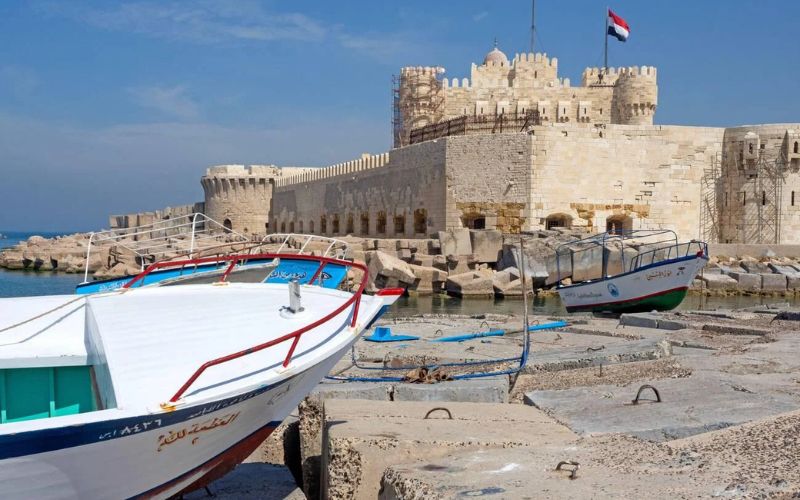
On the Mediterranean coast, Alexandria offers a different side of the country entirely, making it one of the best Alexandria, Egypt tourist places for history and seaside charm combined.
- The Bibliotheca Alexandrina, a modern tribute to the ancient Library of Alexandria, with stunning architecture, a planetarium, and cultural exhibits spread across a striking disc-shaped building facing the sea.
- Qaitbay Citadel, a 15th-century fortress built on the site of the legendary Lighthouse of Alexandria, one of the Seven Wonders of the Ancient World. The waterfront setting makes it a popular spot for photos at sunset.
- The Catacombs of Kom el Shoqafa, a fascinating blend of Egyptian, Greek, and Roman burial traditions carved underground, discovered by accident in the late 19th century and still one of the largest known Roman-era burial sites in Egypt.
- Montaza Palace and Gardens, ideal for a relaxed afternoon by the sea, with royal gardens, palm-lined paths, and views over the Mediterranean.
- Pompey’s Pillar, a towering ancient Roman column, one of the largest of its kind still standing, surrounded by remnants of a Serapeum temple complex.
- Alexandria’s Corniche, the long seafront promenade is worth a stroll or a relaxed seafood dinner, especially in the evening when the city’s cafes fill up along the water.
Alexandria makes an easy day trip from Cairo by train (roughly two and a half hours each way) or a relaxing overnight stay if you want more time to explore without rushing. Its Mediterranean climate and slower pace make it a nice contrast to the intensity of Cairo and the desert heat of Upper Egypt.
Sites to See in Egypt for Beach and Nature Lovers
Beyond the ancient monuments, Egypt’s Red Sea coast is one of the top sites to see in Egypt for diving, snorkeling, and resort getaways.
- Hurghada, a major resort town with all-inclusive hotels and easy access to coral reefs, plus boat trips to nearby islands like Giftun for snorkeling day trips.
- Sharm el-Sheikh, a premier diving destination on the Sinai Peninsula, close to Ras Mohammed National Park, with some of the most consistent visibility and marine biodiversity in the Red Sea.
- Dahab, a laid-back alternative for divers and backpackers, known for the Blue Hole, a world-famous but advanced dive site, alongside calmer lagoon areas suitable for beginners and snorkelers.
- Siwa Oasis, a remote desert escape with natural hot springs and salt lakes, perfect for travelers seeking something off the beaten path, along with the ruins of the Oracle Temple where Alexander the Great is said to have consulted the priests.
- The White Desert and Bahariya Oasis, surreal chalk-white rock formations rising out of the desert, best visited on an overnight camping safari under some of the clearest night skies in the country.
- Mount Sinai and St. Catherine’s Monastery, for travelers interested in religious history, the pre-dawn hike up Mount Sinai followed by a visit to St. Catherine’s, one of the oldest working monasteries in the world, is a popular multi-day add-on from Sharm El Sheikh or Dahab.
Things to Do in Egypt: Planning Your Trip
When mapping out things to do in Egypt, most travelers combine three elements:
- Historical sightseeing in Cairo, Luxor, and Aswan
- Nile cruising between Luxor and Aswan (typically 3–7 days)
- Beach relaxation in Hurghada or Sharm el-Sheikh to unwind after a busy history-focused itinerary
A well-rounded trip usually takes 7–12 days, though shorter 4–5-day Cairo-focused trips are popular for first-time visitors or stopovers.
Best Time to Visit
October through April offers the most comfortable temperatures for sightseeing, especially in Upper Egypt (Luxor and Aswan), where summer heat can be extreme. Coastal areas like Hurghada and Sharm el-Sheikh are enjoyable nearly year-round.
How to Get Around
Domestic flights connect Cairo, Luxor, Aswan, and Hurghada quickly, while private guided tours and Nile cruises are the most convenient way to see multiple tourist areas in Egypt without the hassle of arranging transport yourself.
Booking Tips
- Book Grand Egyptian Museum and Giza Pyramid tickets online in advance.
- Choose licensed tour operators for desert excursions and Nile cruises.
- Consider a private guide for the Egyptian Museum and Luxor temples; the historical context significantly improves the experience.
- Compare Nile cruise packages carefully, as inclusions (meals, excursions, guides) vary widely between operators.
Sample Itineraries for Different Trip Lengths
Because Egypt rewards both short stopovers and longer trips, it helps to match your itinerary to how much time you have.
- 4–5 days (Cairo-focused): Two days covering the Giza Pyramids, the Grand Egyptian Museum, Khan el-Khalili, and Islamic and Coptic Cairo, plus a day trip to Alexandria or Saqqara.
- 7–8 days (Cairo plus Nile Valley): The most common first-time itinerary, two to three days in Cairo, then a flight to Luxor followed by a three- or four-night Nile cruise or overnight train down to Aswan, with an optional day trip to Abu Simbel.
- 10–12 days (the full circuit): Add a few days on the Red Sea coast after the Nile Valley leg to balance sightseeing with relaxation, or extend into Alexandria for a slower, more varied trip.
- 14+ days (in-depth Egypt): Add the White Desert, Siwa Oasis, and Mount Sinai to the standard circuit for a fuller picture beyond the best-known monuments.
Budgeting for a Trip to Egypt
Egypt remains one of the more affordable major destinations for the sheer scale of what’s on offer, though costs vary widely by travel style. Budget travelers can keep costs low by staying in budget hotels, using shared group tours, and eating at local restaurants. Mid-range travelers booking private guides, four- or five-star hotels, and a standard Nile cruise cabin will spend considerably more, but still less than comparable trips in Western Europe. Luxury travelers can book five-star Nile cruise ships, private Egyptologist guides, and top-tier Red Sea resorts for a fully curated experience.
Entrance fees for major sites add up quickly if visited individually, so many travelers find that bundled tour packages or multi-site passes offer better value than paying per attraction.
Practical Travel Tips
- Visas: Most visitors can obtain an Egypt visa on arrival at major airports or apply online for an e-visa in advance; requirements vary by nationality.
- Currency: The Egyptian pound is the local currency; USD and EUR are widely accepted at hotels and tourist sites, but local currency is useful for markets, tips, and taxis.
- Tipping (baksheesh): Small tips are customary for guides, drivers, restaurant staff, and site custodians.
- Dress code: Modest clothing is recommended when visiting mosques and rural areas; swimwear is fine at resort pools and beaches.
- Health: Bottled water is recommended over tap water, and travelers should check recommended vaccinations before departure.
Frequently Asked Questions
What are the most famous tourist places in Egypt? The Giza Pyramids and Sphinx, the Egyptian Museum and Grand Egyptian Museum, Karnak Temple, the Valley of the Kings, and Abu Simbel are consistently ranked among the country’s top attractions.
How many days do you need to see Egypt’s main sites? A minimum of 7 days allows time for Cairo and the Nile Valley (Luxor and Aswan); 10–14 days allows for a more relaxed pace with time added for the Red Sea coast or Alexandria.
Is Cairo or Luxor better for a short trip? Cairo offers the widest range of sites in one place, including the pyramids and both major museums, making it the better choice if you only have a few days. Luxor is better suited to travelers with at least a week who can also see Aswan.
What’s the best time of year to visit Egypt? October through April offers the most comfortable weather for sightseeing, particularly in Luxor and Aswan, where summer temperatures can be extreme.
Do you need a guide to visit the pyramids and temples? It isn’t required, but a licensed guide significantly improves the experience by providing historical context that isn’t always available on-site signage, especially at Karnak, Luxor, and the Valley of the Kings.
Final Thoughts
From the pyramids of Giza to the coral reefs of the Red Sea, Egypt offers an unmatched range of tourist places for every type of traveler. Whether you’re most interested in famous tourist places in Egypt like Luxor and Karnak, the coastal charm of Alexandria, Egypt tourist places, or simply want a checklist of the best Egypt attractions, a well-planned itinerary combining Cairo, the Nile Valley, and the Red Sea coast will give you the fullest possible picture of this remarkable country.
Ready to start planning? Compare guided tour packages, Nile cruise itineraries, and hotel options early, peak season dates for popular sites like Abu Simbel and the Grand Egyptian Museum can book out weeks in advance