

Ancient Egyptian jewelry remains one of the most influential forms of adornment in human history. From royal gold necklaces and gemstone amulets to sacred scarab jewelry and symbolic ankh pendants, the jewelry of ancient Egypt reflected power, spirituality, beauty, and eternal life. Today, the fascination with ancient Egyptian jewelry continues across fashion, luxury accessories, museums, and modern Egyptian-inspired jewelry collections. Whether people search for Egyptian jewelry for women, Egyptian jewelry men styles, or authentic Egyptian necklaces, the influence of Egypt’s ancient civilization remains stronger than ever.
The History of Ancient Egyptian Jewelry

The history of ancient Egyptian jewelry dates back more than 5,000 years to the early dynasties of ancient Egypt. Jewelry evolved alongside Egyptian civilization and became a defining symbol of wealth, religion, and royal authority. During the Old Kingdom, simple beadwork and amulets were common, while the Middle Kingdom and New Kingdom introduced more sophisticated gold jewelry, gemstone inlays, and ceremonial ornaments.
Ancient Egyptians believed jewelry connected humans to divine forces. As a result, jewelry was worn during daily life, religious rituals, and burial ceremonies. The importance of jewelry increased dramatically during the reigns of powerful pharaohs, when elaborate necklaces, crowns, bracelets, and rings became symbols of immortality and sacred power.
The Importance of Jewelry in Ancient Egypt
Jewelry in ancient Egypt was not simply decorative. It carried religious meaning and social importance, serving as a symbol of wealth, divine protection, and status within Egyptian society. Egyptian Pharaohs, queens, priests, and nobles wore elaborate pieces crafted from gold, silver, turquoise, lapis lazuli, and precious stones. Even ordinary Egyptians wore jewelry because it was believed to protect the body and soul from evil spirits while bringing health, prosperity, and spiritual balance.
This deep symbolic value is one reason ancient Egyptian jewelry still captivates modern audiences and collectors around the world. Ancient Egyptians believed jewelry had magical powers, and many pieces were buried with the dead to ensure protection and guidance in the afterlife. The connection between spirituality and adornment made Egyptian civilization’s jewellery unlike any other in the ancient world.
What Jewelry Did Ancient Egyptians Wear?
When discussing “What jewelry did ancient Egyptian wear ?“, historians often point to broad collar necklaces, bracelets, anklets, rings, earrings, and ceremonial amulets. Egyptian necklaces were among the most recognizable accessories, especially the wide beaded collars worn by royalty and high-ranking officials. These collars combined colorful gemstones, gold detailing, and symbolic patterns inspired by Egyptian gods and sacred animals.
Jewelry Worn by Pharaohs

One of the greatest discoveries in the history of ancient Egyptian jewelry was the treasure found inside the tomb of Pharaoh Tutankhamun. His collection included extraordinary gold necklaces, scarab jewelry, ceremonial rings, gemstone amulets, and royal ornaments crafted with unmatched precision and artistry. These masterpieces revealed the incredible skill of ancient Egyptian goldsmiths and demonstrated how jewelry symbolized power, immortality, and divine protection in ancient Egypt.
Today, much of the jewelry of Tutankhamun is displayed at the Grand Egyptian Museum, one of the largest archaeological museums in the world. Visitors can admire the famous golden treasures, intricate Egyptian necklaces, sacred amulets, and royal jewelry collections that once belonged to the boy king himself. Seeing these ancient masterpieces up close offers a rare opportunity to experience the beauty and symbolism of authentic ancient Egyptian civilization jewellery in person.
If you want to explore the treasures of Tutankhamun and discover the fascinating world of ancient Egyptian jewelry, you can book a full-day tour to Grand Egyptian Museum with us. Experience the history, luxury, and craftsmanship of ancient Egypt while viewing some of the most valuable and iconic jewelry collections ever discovered.
Jewelry Worn by Ancient Egyptian Queens
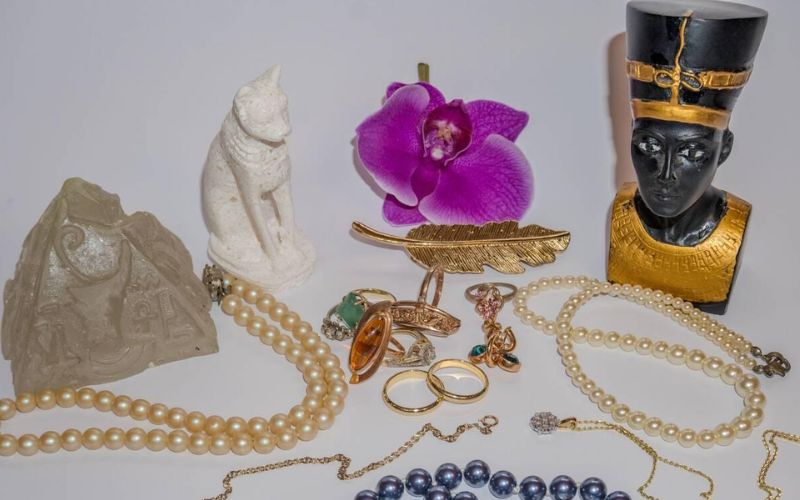
Ancient Egyptian queens and noblewomen in ancient Egypt wore some of the most elegant jewelry ever created. Cleopatra, Nefertiti, and other royal women became symbols of luxury and beauty through their elaborate Egyptian necklaces, gemstone crowns, and gold bracelets.
Ancient Egyptian jewelry for women often included lotus-inspired earrings, layered bead necklaces, anklets, and symbolic amulets designed to represent fertility, divine femininity, and protection. These designs continue to inspire luxury jewelry collections today.
Jewelry Worn by Common Egyptians
While royalty wore luxurious gold ornaments, common Egyptians also used jewelry in everyday life. Simpler pieces made from copper, faience, beads, and colored glass were widely popular among ordinary people. Even these modest designs carried symbolic importance and often represented fertility, protection, and spiritual strength.
What Was Ancient Egyptian Jewelry Made Of?
A common question many people ask is “What was ancient Egyptian jewelry made of ?” Ancient Egyptian artisans used a variety of luxurious and natural materials to create their jewelry designs.
Gold in Ancient Egyptian Jewelry
Gold was the most prized material because it never tarnished and symbolized eternal life. Ancient Egypt had access to rich gold mines, especially in Nubia, allowing royal craftsmen to create magnificent necklaces, bracelets, rings, and ceremonial ornaments. Gold jewelry became a symbol of divine authority and eternal beauty.
Gemstones and Precious Materials
Craftsmen also used lapis lazuli, turquoise, carnelian, garnet, amethyst, and colored glass to produce vibrant jewelry pieces filled with symbolic meaning. Blue and green stones were especially important because they represented rebirth, fertility, protection, and prosperity.
Egyptian artisans also developed faience, a glazed ceramic material used to imitate precious gemstones while creating brilliant colors and textures. This innovation allowed jewelry makers to produce stunning decorative pieces at a lower cost.
Ancient Egyptian Necklace Designs
The Egyptian necklace remains one of the most iconic jewelry styles in fashion history. Ancient Egyptian necklaces were often wide collars decorated with gold, colorful stones, and symbolic imagery inspired by gods, animals, and nature.
These necklaces were worn during ceremonies, royal events, and religious rituals. Many featured falcons, cobras, lotus flowers, scarabs, and sun disks to symbolize divine power and spiritual protection. Modern Egyptian necklace designs continue to draw inspiration from these ancient masterpieces, making them popular in luxury fashion and handmade jewelry collections.
Ancient Egyptian Rings and Bracelets
Ancient Egyptian rings and bracelets served both decorative and spiritual purposes. Rings often featured scarab symbols, hieroglyphic inscriptions, or protective deities believed to guard the wearer against evil forces.
Bracelets were commonly made from gold, beads, and gemstones, with elaborate designs reserved for royalty and temple priests. Modern Egyptian jewelry men collections frequently recreate these bold bracelet styles using contemporary materials while preserving ancient symbolism.
How Was Ancient Egyptian Jewelry Made?
People interested in historical craftsmanship frequently search for “How was ancient Egyptian jewelry made?” because the techniques used by Egyptian goldsmiths were remarkably advanced for their time. Ancient artisans mastered metal casting, gemstone carving, engraving, beadwork, and intricate inlay techniques thousands of years ago.
Egyptian Jewelry workshops often operated near temples and royal palaces where skilled craftsmen produced ceremonial ornaments, royal necklaces, and sacred amulets. Every design carried meaning, from lotus flowers symbolizing rebirth to falcons representing divine kingship. The sophistication of ancient Egyptian jewelry making still influences luxury jewelry designers and fashion houses today.
How to Make Ancient Egyptian Jewelry Today
Modern creators and hobbyists also search for how to make ancient Egyptian jewelry because Egyptian-inspired accessories continue to trend in fashion and handmade jewelry markets. Contemporary recreations often include ankh pendants, scarab charms, layered Egyptian necklaces, and hieroglyphic bracelets inspired by ancient Egyptian art.
Jewelry makers frequently use gold-plated metals, turquoise stones, and colorful beads to capture the luxurious appearance of authentic Egyptian jewelry. These modern interpretations blend ancient symbolism with contemporary style, making Egyptian jewelry popular among both collectors and fashion enthusiasts.
Ancient Egyptian Jewelry Ankh Meaning
Among the most iconic symbols in ancient Egyptian jewelry is the ankh. Ancient Egyptian jewelry ankh designs remain highly recognizable because the ankh symbol represented eternal life, divine wisdom, and spiritual protection.
The ankh was often carried by gods in Egyptian art and worn by pharaohs as a sign of sacred authority. Today, ankh necklaces and pendants remain popular in Egyptian jewelry for women and Egyptian jewelry men collections because they combine spiritual symbolism with bold historical aesthetics. The enduring popularity of the ankh demonstrates how ancient Egyptian culture continues to shape modern jewelry trends.
Ancient Egyptian Scarab Jewelry
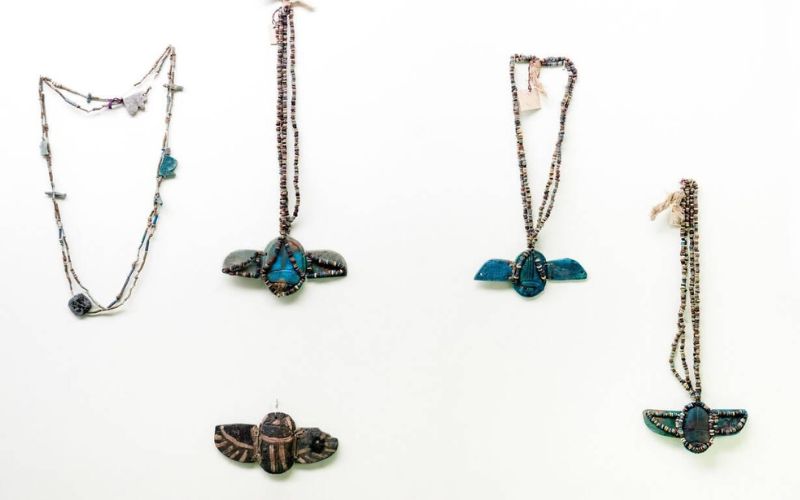
Ancient Egyptian scarab jewelry represented rebirth, transformation, protection, and resurrection. Egyptians associated the scarab with the sun god Khepri, who symbolized the rising sun and the cycle of renewal.
Scarab amulets were commonly buried with the dead because they were believed to protect the soul in the afterlife. Today, scarab necklaces, rings, and bracelets remain among the most sought-after forms of Egyptian-inspired jewelry because of their rich symbolism and striking appearance. Ancient Egyptian scarab jewelry continues to inspire luxury collections, handmade accessories, and historical reproductions worldwide.
Ancient Egyptian Karnak Jewelry
Ancient Egyptian Karnak jewelry has also gained attention among collectors and designers inspired by the grandeur of Karnak Temple in Luxor. These jewelry styles often feature intricate goldwork, lotus motifs, hieroglyphic engravings, and solar imagery inspired by ancient Egyptian temples and religious architecture.
Karnak-inspired jewelry reflects the elegance and sacred artistry associated with one of the greatest religious complexes in ancient Egypt. Modern luxury collections frequently reinterpret these historical designs for contemporary audiences interested in timeless Egyptian aesthetics.
The Symbolism Behind Ancient Egyptian Jewelry
One reason ancient Egyptian jewelry remains so fascinating is its rich symbolic meaning. Every gemstone, animal, and design element carried spiritual significance. Cobras represented royal authority and divine protection, while falcons symbolized the sky god Horus. Lotus flowers represented rebirth and spiritual awakening because they bloomed each morning with the rising sun.
Even colors held symbolic importance in ancient Egyptian civilization jewellery. Blue symbolized the heavens and protection, green represented fertility and life, while red reflected energy and strength. These symbolic meanings transformed jewelry into sacred objects rather than simple accessories.
Egyptian Jewelry for Women
The modern demand for Egyptian jewelry for women continues to grow because these designs combine elegance, symbolism, and cultural heritage. Egyptian-inspired necklaces, gold cuffs, gemstone earrings, and layered pendants appeal to women seeking statement jewelry with historical meaning.
Many luxury brands and artisan jewelry makers continue to create collections inspired by ancient Egyptian queens, goddesses, and royal treasures. Egyptian jewelry remains popular because it blends ancient sophistication with modern fashion trends.
Egyptian Jewelry Men Styles
Egyptian jewelry men collections featuring scarab rings, ankh pendants, and pharaoh-inspired bracelets have become increasingly popular in modern fashion. These pieces reflect strength, spirituality, masculinity, and connection to one of the world’s most admired ancient civilizations.
Men’s Egyptian necklaces often feature bold hieroglyphic designs, gold finishes, and symbolic motifs inspired by ancient warriors and rulers. The combination of history and luxury makes Egyptian-inspired jewelry highly appealing in contemporary men’s fashion.
Why Ancient Egyptian Jewelry Still Inspires the World
Ancient Egyptian jewelry continues to fascinate people because it represents far more than beauty alone. Every necklace, amulet, ring, and bracelet carried spiritual significance connected to religion, power, identity, and eternal life.
From ancient Egyptian scarab jewelry and ankh pendants to royal gold collars and Karnak-inspired masterpieces, the legacy of Egyptian jewelry remains timeless. The influence of ancient Egyptian civilization jewellery can still be seen across luxury fashion, modern jewelry design, museum exhibitions, and contemporary accessories, proving that the artistry of ancient Egypt continues to inspire the world thousands of years later.
Ancient Egyptian Jewelry and Religion
Religion played a central role in the design and purpose of ancient Egyptian jewelry. Egyptians believed the gods could communicate through symbols, gemstones, and sacred objects, which is why jewelry was often used during religious ceremonies and temple rituals. Priests and priestesses wore highly symbolic ornaments decorated with images of Horus, Isis, Ra, and Hathor. These pieces were believed to provide spiritual protection and strengthen the connection between humans and the divine world.
Ancient Egyptian jewelry was also closely connected to funerary practices. Jewelry placed inside tombs was meant to guide and protect the deceased in the afterlife. Sacred amulets, scarab jewelry, and ankh pendants were commonly wrapped within mummy linens or placed near the body to ensure eternal life and spiritual rebirth. This spiritual dimension is one reason ancient Egyptian jewelry remains culturally significant thousands of years later.
The Role of Jewelry in Ancient Egyptian Burial Rituals
Burial rituals in ancient Egypt included extraordinary collections of jewelry because Egyptians believed material possessions could accompany the soul into eternity. Pharaohs and nobles were buried with gold necklaces, gemstone rings, ceremonial crowns, and protective amulets designed to safeguard them in the underworld.
The discovery of royal tombs revealed the incredible importance of jewelry in Egyptian civilization. The treasures found in Tutankhamun’s tomb included elaborate broad collars, scarab bracelets, gold sandals, and richly decorated pendants that demonstrated the unmatched craftsmanship of ancient Egyptian goldsmiths. These discoveries transformed modern understanding of ancient Egyptian jewelry and inspired worldwide fascination with Egyptian art and luxury design.
Ancient Egyptian Amulets and Protective Jewelry

Amulets were among the most important categories of ancient Egyptian jewelry. Egyptians believed these sacred objects carried magical properties capable of protecting the wearer from illness, bad luck, and evil spirits. Amulets were worn by children, adults, royalty, and even the dead.
Popular ancient Egyptian amulets included the Eye of Horus, scarab beetles, ankhs, cobras, and falcons. Each symbol had a specific meaning connected to protection, healing, strength, or resurrection. Ancient Egyptian jewelry ankh pieces were especially important because they represented eternal life and divine energy. Even today, protective Egyptian-inspired jewelry remains highly popular among people attracted to spiritual symbolism and historical aesthetics.
The Influence of Nature on Ancient Egyptian Jewelry
Nature deeply influenced ancient Egyptian jewelry designs. Egyptian artists drew inspiration from the Nile River, desert landscapes, sacred animals, and native plants. Lotus flowers appeared frequently in Egyptian necklaces and bracelets because they symbolized rebirth and purity. Papyrus plants represented growth and prosperity, while cobras and falcons symbolized royal authority and divine power.
Ancient Egyptian scarab jewelry also reflected this connection to nature. The scarab beetle became a sacred symbol because Egyptians observed how beetles rolled balls of earth, associating this behavior with the movement of the sun across the sky. This blending of nature and spirituality gave Egyptian jewelry a unique artistic identity that still influences modern jewelry collections.
Ancient Egyptian Jewelry Colors and Their Meanings
Color symbolism played a major role in ancient Egyptian civilization jewellery. Egyptians carefully selected gemstone colors based on their spiritual and cultural meanings. Blue stones such as lapis lazuli represented the heavens, truth, wisdom, and divine protection. Green stones symbolized fertility, rebirth, and healing, making turquoise and green faience extremely popular in ancient Egyptian jewelry.
Red gemstones like carnelian represented strength, vitality, and energy, while gold symbolized immortality and the eternal power of the gods. Black stones represented resurrection and the fertile soil of the Nile River, connecting life and death within Egyptian spiritual beliefs. The use of meaningful colors transformed jewelry into sacred art rather than ordinary decoration.
Ancient Egyptian Jewelry in Modern Fashion
Ancient Egyptian jewelry continues to inspire luxury designers, fashion houses, and modern accessory brands across the world. Egyptian-inspired necklaces, statement cuffs, scarab rings, and ankh pendants regularly appear in runway collections and celebrity fashion trends. The bold geometric shapes, symbolic motifs, and luxurious gold finishes of ancient Egyptian jewelry remain timeless in contemporary style.
Modern Egyptian jewelry for women often combines traditional symbols with minimalist designs, creating elegant accessories that appeal to modern tastes while preserving ancient heritage. Egyptian jewelry men collections also continue to expand, with bold rings, layered necklaces, and hieroglyphic pendants becoming increasingly popular in luxury streetwear and designer fashion.
Why Gold Was So Important in Ancient Egyptian Jewelry

Gold held unmatched importance in ancient Egyptian culture because Egyptians believed it was the flesh of the gods. Unlike other metals, gold did not tarnish or decay, making it a perfect symbol of immortality and eternal life. This belief explains why gold dominated royal jewelry, burial masks, ceremonial crowns, and sacred ornaments throughout Egyptian history.
Ancient Egyptian goldsmiths became famous for their exceptional craftsmanship and ability to create highly detailed jewelry pieces using primitive tools. Gold necklaces, bracelets, earrings, and rings were often combined with colorful gemstones to produce luxurious designs associated with divine power and royal prestige. Even today, gold remains central to Egyptian-inspired jewelry because of its historical and symbolic significance.
Ancient Egyptian Jewelry and Social Status
Jewelry in ancient Egypt was also a powerful indicator of social class and political authority. Wealthy nobles and royal families displayed elaborate jewelry collections to demonstrate their status and influence within society. The more detailed and luxurious the jewelry, the higher the social position of the wearer.
However, jewelry was not exclusive to royalty. Ordinary Egyptians also valued adornment and wore simpler pieces made from beads, copper, shells, and faience. This widespread use of jewelry shows how deeply personal adornment was woven into Egyptian culture. Ancient Egyptians viewed jewelry as both a practical form of protection and a visible expression of identity.
The Global Legacy of Ancient Egyptian Jewelry
The global fascination with ancient Egyptian jewelry has continued for centuries. Archaeological discoveries, museum exhibitions, films, and fashion trends have all contributed to the enduring popularity of Egyptian-inspired jewelry. Luxury designers frequently reinterpret ancient Egyptian motifs in modern collections, while travelers visiting Egypt often seek authentic Egyptian necklaces, scarab jewelry, and ankh pendants as cultural souvenirs.
The timeless appeal of ancient Egyptian jewelry comes from its perfect blend of spirituality, artistry, symbolism, and luxury. From ancient temples and royal tombs to contemporary fashion and designer accessories, the influence of Egyptian civilization jewellery continues to shape the world of jewelry and decorative arts today.